Category: Video
-
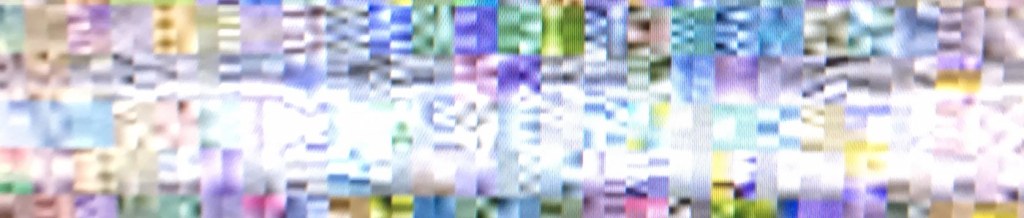
A secret message from my treadmill?


Here are some shots of the TV screen on the treadmill at my gym.
What does it mean? Is it random? Is it a self-critique about the difficulty of what meaning can be derived from images and sound out of a treadmill screen, when the gym is a noisy place and my concentration should be on things like form, breathing, and effort? Were the screens responding to my workout? Is this a new form of participatory video art? Participatory found art?
-

Video: Sun Yuan and Peng Yu’s “Can’t Help Myself”
In Sun Yuan and Peng Yu’s “Can’t Help Myself,” an industrial robot works away inside a glass box at the Guggenheim Museum.
What’s it made of? Kuka industrial robot, stainless steel and rubber, cellulose ether in colored water, lighting grid with Cognex visual-recognition sensors, and polycarbonate wall with aluminum frame.
Is it making art? Is it commenting on how art is made? As a robot uses a giant brush to push liquid around, are we watching a creative act or a programmed act? What determines these actions? Where does this leave viewers? In awe of a machine in motion?
Check out one of the Guggenheim’s newest additions to its collection:
-
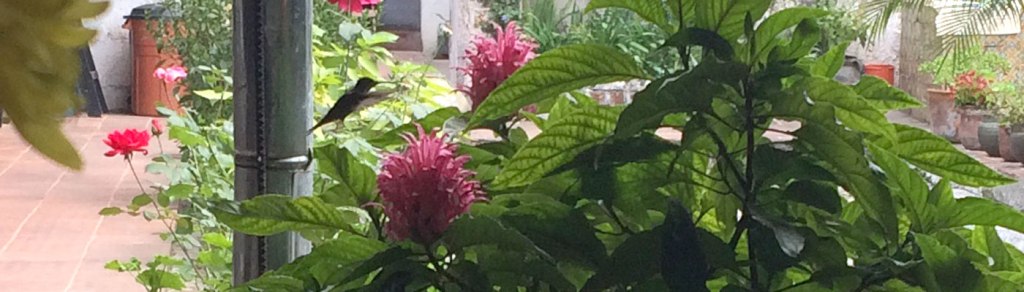
Video: A humming bird at home in Guatemala
I was just sitting down to lunch at the home I’m staying at in Antigua, Guatemala, when a hummingbird stopped by.
That’s when I got my camera, in case the humming bird stopped by again. It did.
-

Sports, Philippines and the artist Paul Pfeiffer
For your enjoyment, two videos about the Philippine-born, NYC-based artist Paul Pfeiffer. He’s represented by Paula Cooper Gallery in NYC. Of interest to me is his exploration of images of basketball, especially considering the long history of basketball in the Philippines. (A quick history of it can be found here.)
-
A little summer scene for a cold winter’s day
Here’s a view of a beach in Maine from August 2014 as a reminder that winter’s do end.
You’re welcome.
-
Scenes from Antigua, Guatemala
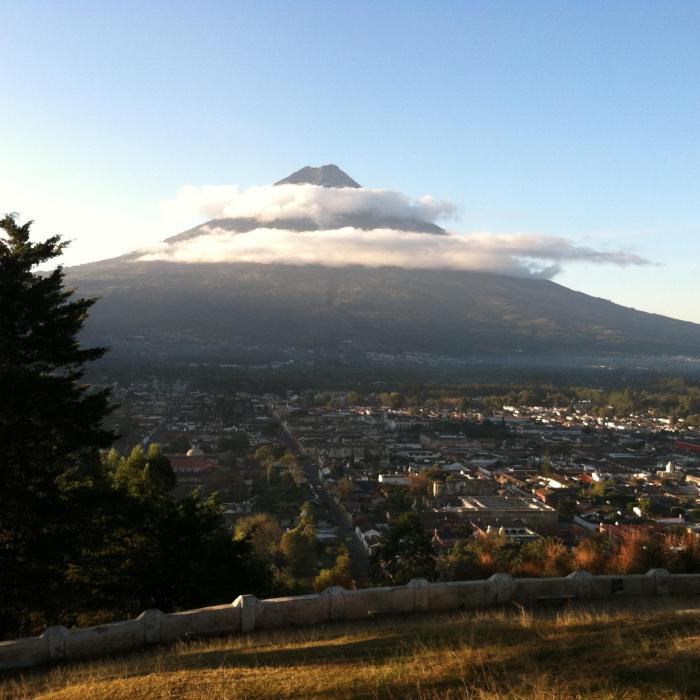
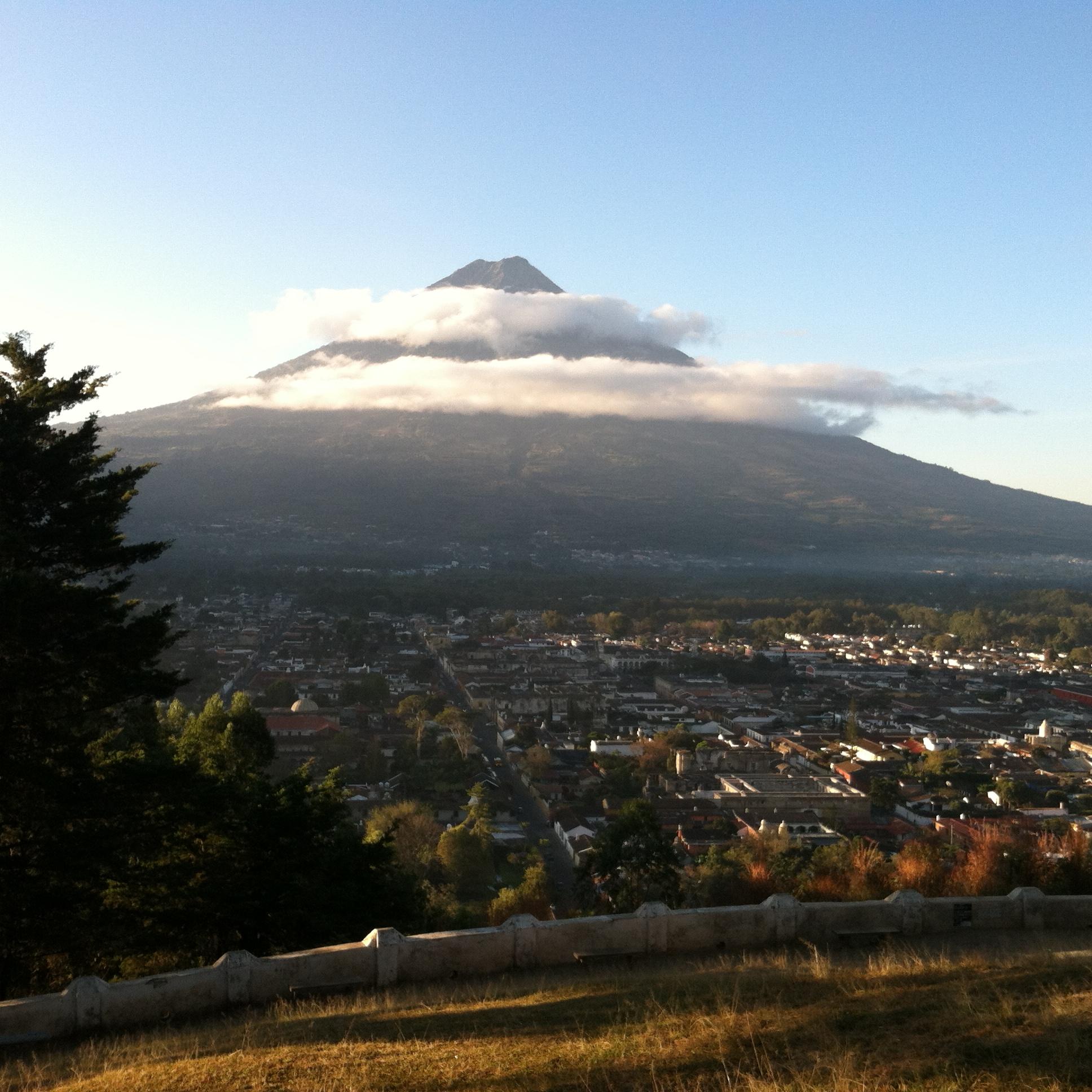
Agua Volcano looms over Antigua Guatemala to the south, as seen from Cerro de la Cruz to the north. When thinking about going abroad, I always have these equations in mind:
Tourist = Seeing others as others
Traveler = Discovering self as other
My take is that most people are a little of both: you can’t help but feel strange being in a new place, as long as you are open to learning about that place; you can’t truly let go of who you are — the sense of identity that allows you to feel at home in your skin no matter where you are.
With that in mind, my wife and I headed to Guatemala, where a friend was house-sitting in the former colonial capital, Antigua Guatemala.
Here’s a video of the yard of the house we stayed in:
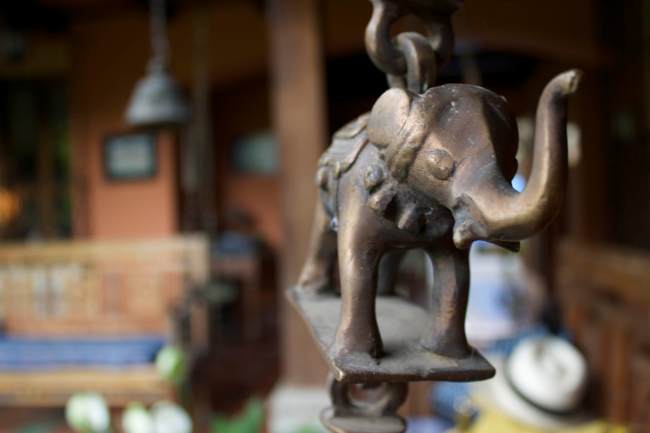 The owners of the home, Americans who worked in international aid and development, had brought a few touches from past postings to their home, including lots of furniture from India. That includes this elephant, which was part of a chain that supported a bench swing just outside the bedrooms and facing the back yard. The yard was verdant with a green lawn and flowering bushes, including rose bushes. The city itself is referred to as the “land of eternal spring,” with low temperatures in the mid 50s and highs in the 70s year-round.
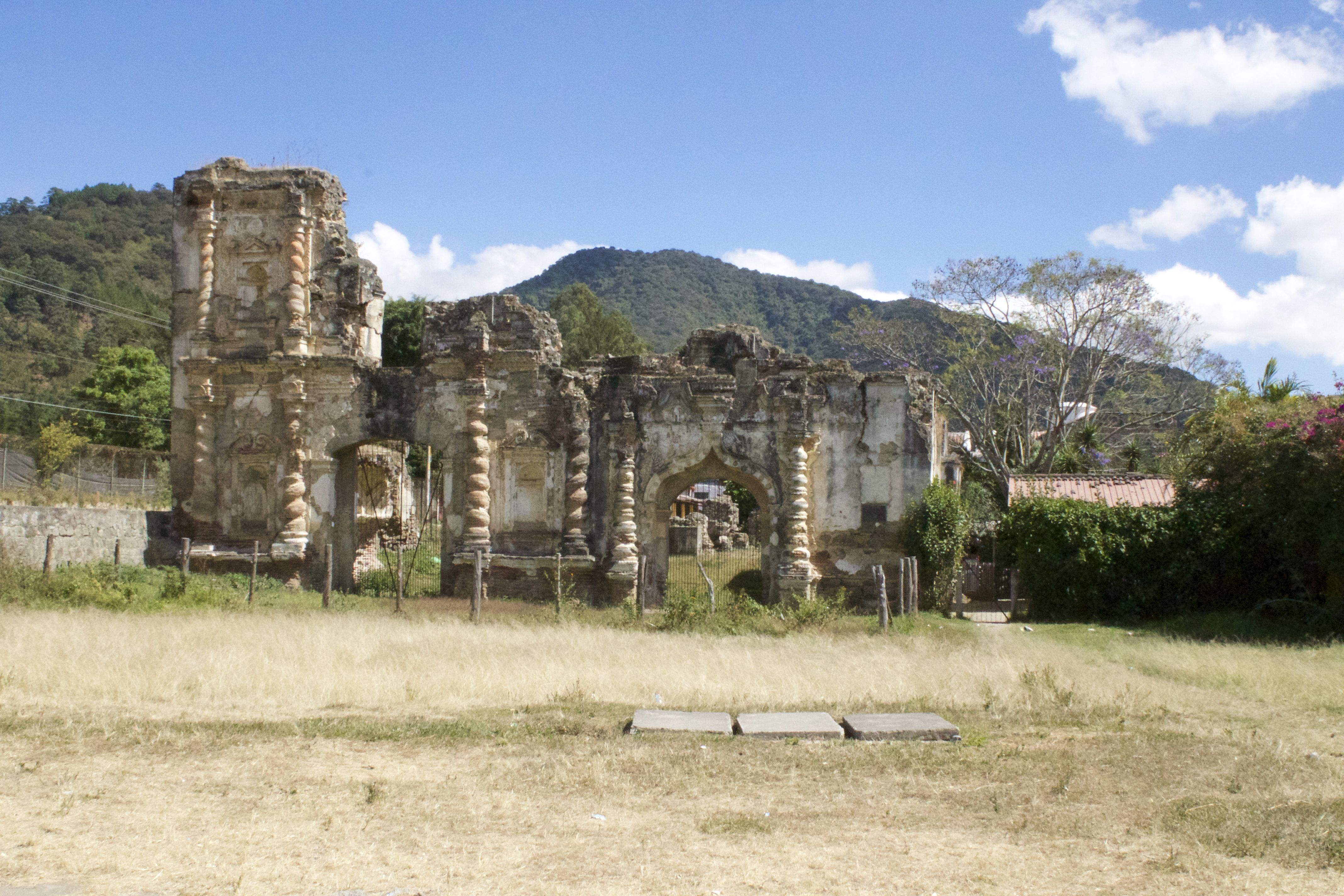
The house is in the Candelaria section of the town, named for the ruins of a Spanish church adjacent to the property. Antigua had been the colonial capital until an earthquake in the 1770s destroyed nearly all the buildings, including this church.
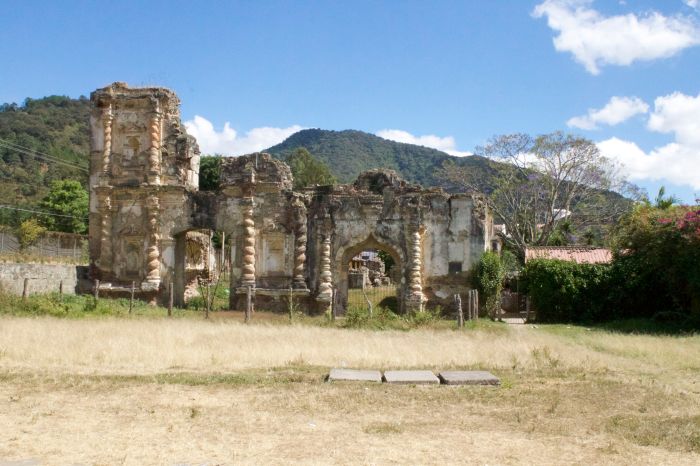
The ruins of the church in the Candelaria section of Antigua, Guatemala. Some of the major tourist attractions of Antigua are the ruins of churches that have been converted into museums, but the one at Candelaria just sits there, protected by some rusty and sad-looking barbed wire. I took the photo standing on a basketball court, which must’ve once been the courtyard of the ruined church. Teens played there every day, and a fruit vendor and a tortilla vendor set up in the space between the street and the basketball court, so the area has maintained its use as a public gathering spot. (more…)