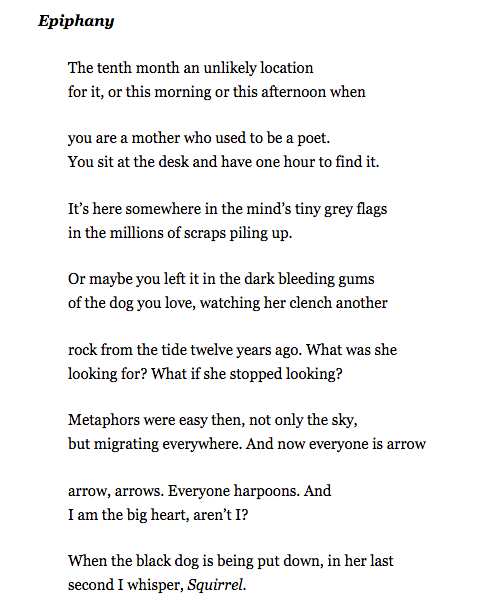
Here’s a poem that has stayed with me, Epiphany by S.E. Venart:

Fifty-six blog posts published so far this year
Number one, most-read blog post: Review of Justin Cronin’s “City of Mirrors”
Number one, most-watched videos: Sun Yuan and Peng Yu’s “Can’t Help Myself” from the Guggenheim Museum
Two poems published: “That Day in Assisi” and “For Your Own Safety”
One short story published: “Auntie Lovely Says Goodbye”
Two countries visited: Guatemala, South Korea
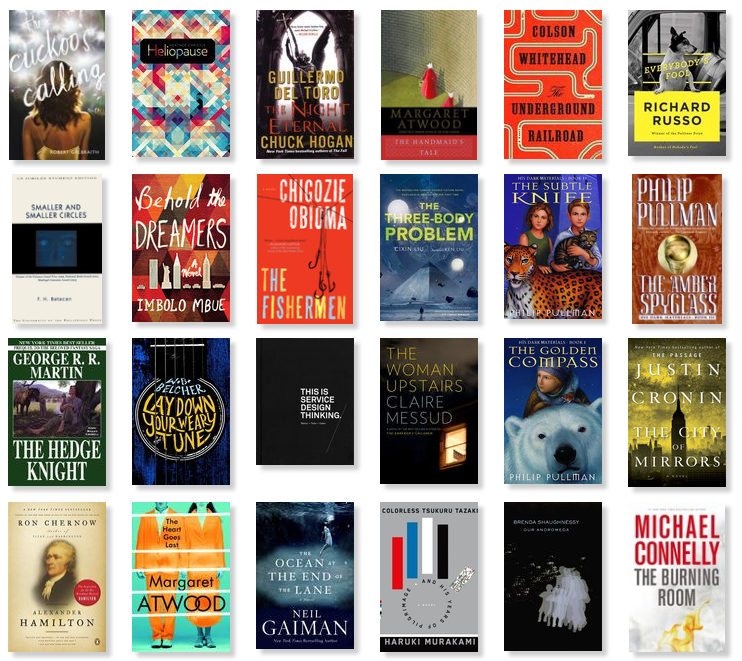
Twenty-four books read

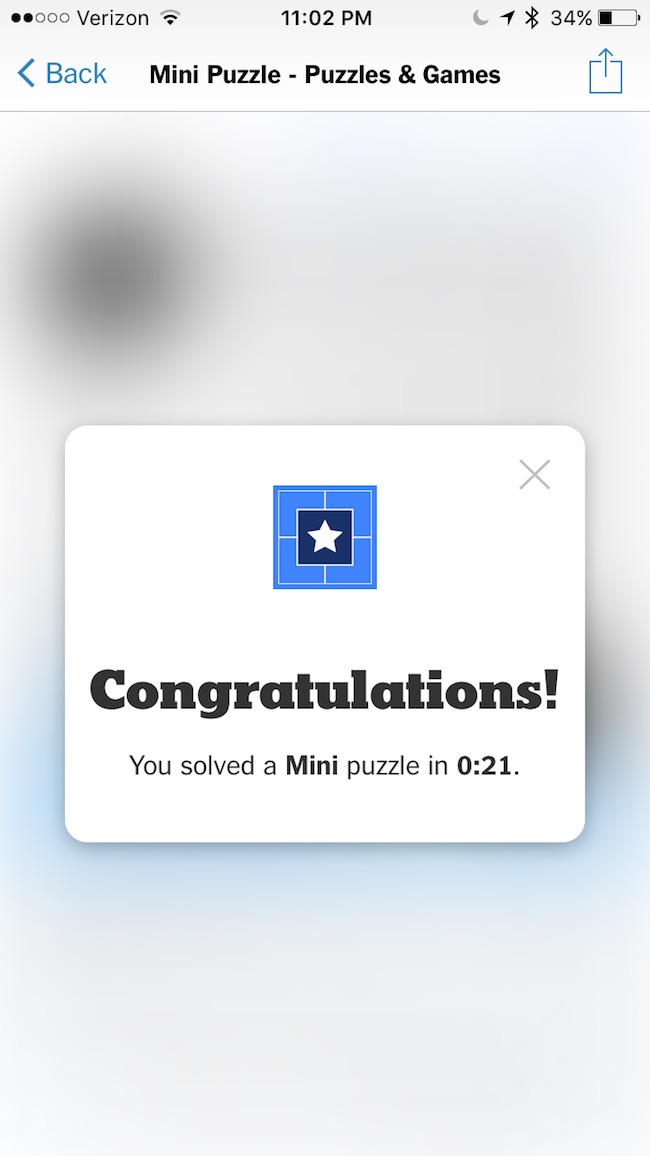
Twenty-one seconds: Best completion time of the NYTimes mini puzzle

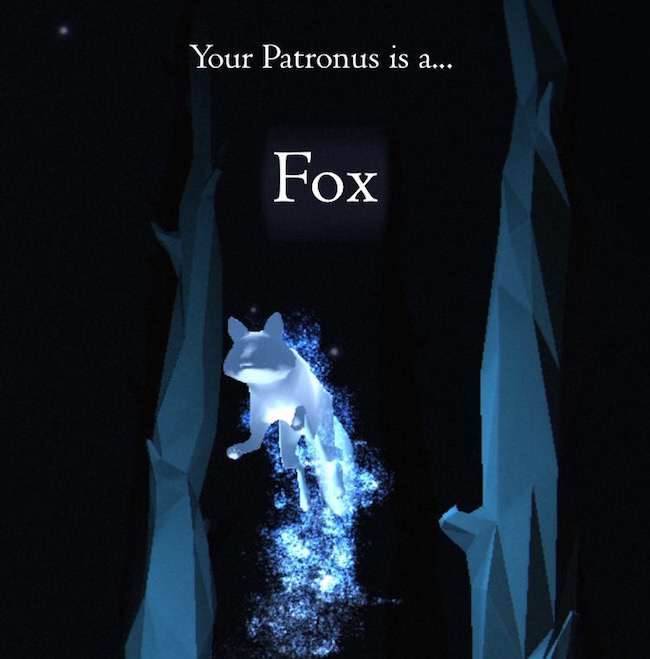
Patronus: Fox

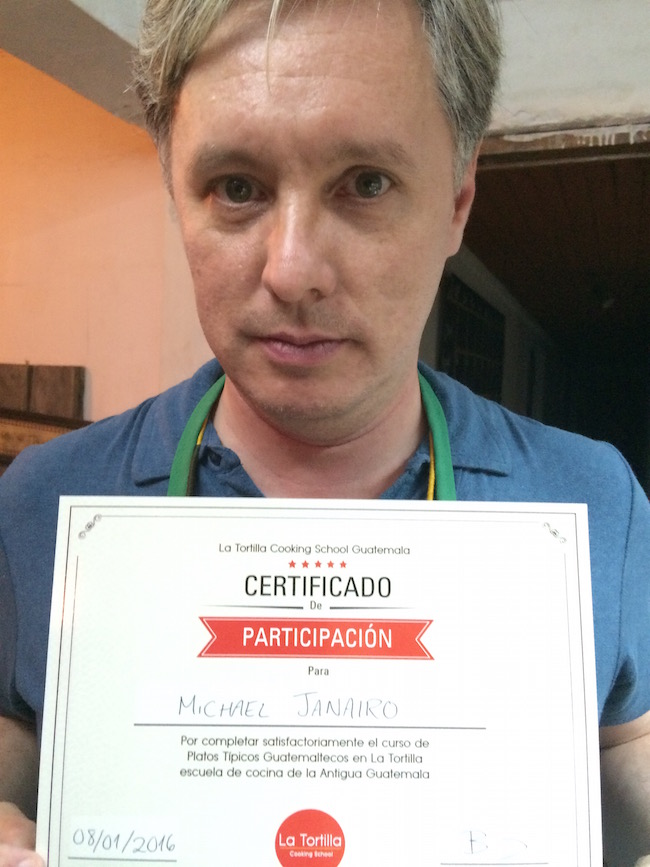
Participation Award: La Tortilla Cooking School, Antigua, Guatemala


Outlaw. Writer. Professor.
Chuck Kinder was my professor at the University of Pittsburgh’s MFA program. Like many of his students, I benefited greatly from his imaginative approach to writing, the often imaginative worlds opened up by his constant question: “What if?”
In an exciting turn of events, his 1978 novel “The Silver Ghost” is coming back into print through the work of Braddock Avenue Books where one of the publishers just so happens to be another one of Chuck Kinder’s former students, Jeffrey Condon.
What is the future of science fiction?
It could be in the pages of Up and Coming: Stories by the 2016 Campbell Eligible Authors.
You can download the book here: http://www.badmenagerie.com/
Hurry up, though, the download will only be available until March 31, 2016.
What is a “Campbell Eligible Author” you may ask? These are writers who are new to the science fiction and fantasy field with their first professionally paid publications. The John W. Campbell Award is presented at the World Science Fiction Convention (this year, it will be held in Kansas City, Mo., in August). More info on the awards is available here: http://www.writertopia.com/awards/campbell
I was happy to see lots of writers that are familiar to me from my reading of shot stories and/or SFF-related blogs, including:
So you could consider this list of writers as a point of entry into this tome. You may find plenty of your gems in it, though.
Let me know what you find and recommend.
So this has been on my mind for the past couple of years, and now there’s a web series coming soon. Very cool.
A young person I know recently said something along the lines that Twitter was going down the drain. I don’t where that idea came from. I’ve been using Twitter since Sept. 19, 2008. (which is longer than 99.755% of all other Twitter users, according to http://twopcharts.com/howlongontwitter).
Perhaps the young person was thinking of sponsored contents like the ad here from the Alliance for Quality Education of New York. I ignore most Twitter ads but this one got me because of the words “ET HE UGLY RUTH.”
Continue reading →
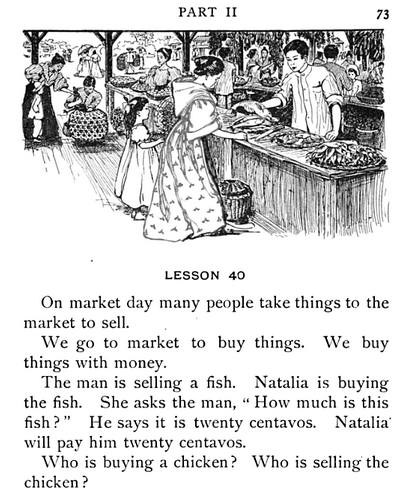
As part of the U.S.’s colonial policies of “benevolent assimilation” in the Philippines, they set up a system of universal education. At first, the primers were geared toward U.S. children (with references to things outside of most Filipino experiences such as snow), and then new primers were made.
This page comes from a 1908 Revised Edition of the First Primary Language Book by O.S. Reimold.
This is the entirety of the essay and image to go with lesson 40 (what follows it are a description of centavos and pesos, and then “Written Exercises” such as “Write the names of ten things that you can buy in the market.”).
The questions the passage raises for me are: Who is the we? Is it the teacher (whether a Filipino or American) and the school children in the moment of the lesson? Or maybe I’m reading the “We” all wrong, and perhaps it refers to all the members of the colonial system? After all, wouldn’t it be too much to expect school children to have spending money for the market? So then is the “We” supposed to be a generalized “everyone,” as in “everyone goes to the market”? Then again, the “we” seems to be in opposition to the “many people” in the previous sentence? Couldn’t it be possible that some of the Filipino children learning to read, speak and write in English through this lesson be part of the “many people”? Is there a class distinction at play here that may be confusing to some of the student? Doesn’t the act of naming the shopper (Natalia) as opposed to the seller (“the man”) further that kind of class difference? And then, if the narrator can name one of the people depicted in the image, how is a child supposed to respond to those final questions about who is buying and selling the chicken? Are children supposed to know the names of the people? Are they supposed to respond with a gender identification (“the woman”/”the man”)?
I quit a book the other day.
I’ve seen Harlan Coben books everywhere, but I had never looked at one. At the library, I picked up the audiobook version of “Six Years,” read by Scott Brick (who I think has done a great job with Justin Cronin’s “The Passage” and “The Twelve”).
I only made it through the first disc.
The novel’s title “Six Years” refers to the length of time from when the narrator, Jake, attends his ex-lover’s wedding to when he reads of her husband’s death (and attends the funeral). He reads the obituary, and then he attends the funeral and is surprised to find out that the dead husband was a doctor, had a teenage son, and his wife was some other woman instead of Jake’s ex-lover.
Here’s the problem: those facts (that he was a doctor, his wife’s name being different from the name of his ex-lover) are all things that should’ve been part of the obituary. Sure, I’ve worked in journalism for many years, and maybe that gives me a specialist’s knowledge about how a professional would write an obituary. Though I’m pretty sure most people would expect that kind of information. So it made me not trust this book. After all, Jake’s surprise – his need to get to the truth of the matter – seems to be the main engine of the book. But because it required him to go to this funeral, even though the obituary should’ve given him the same surprising information, the contrivance of the plot revealed itself too me far too readily.
Have you quit a book because the author tried, and failed, to use something in your area of expertise?