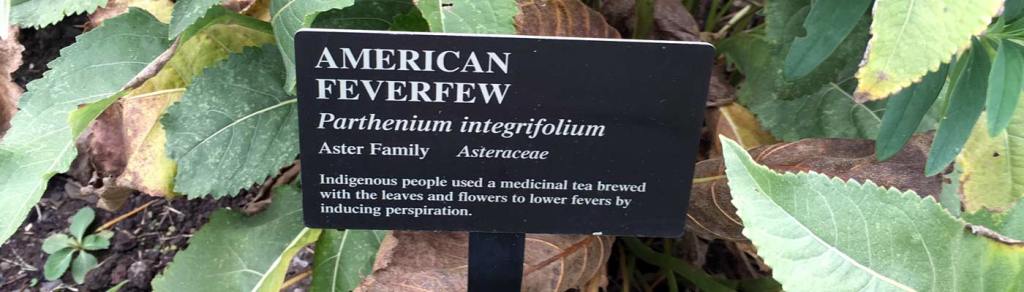
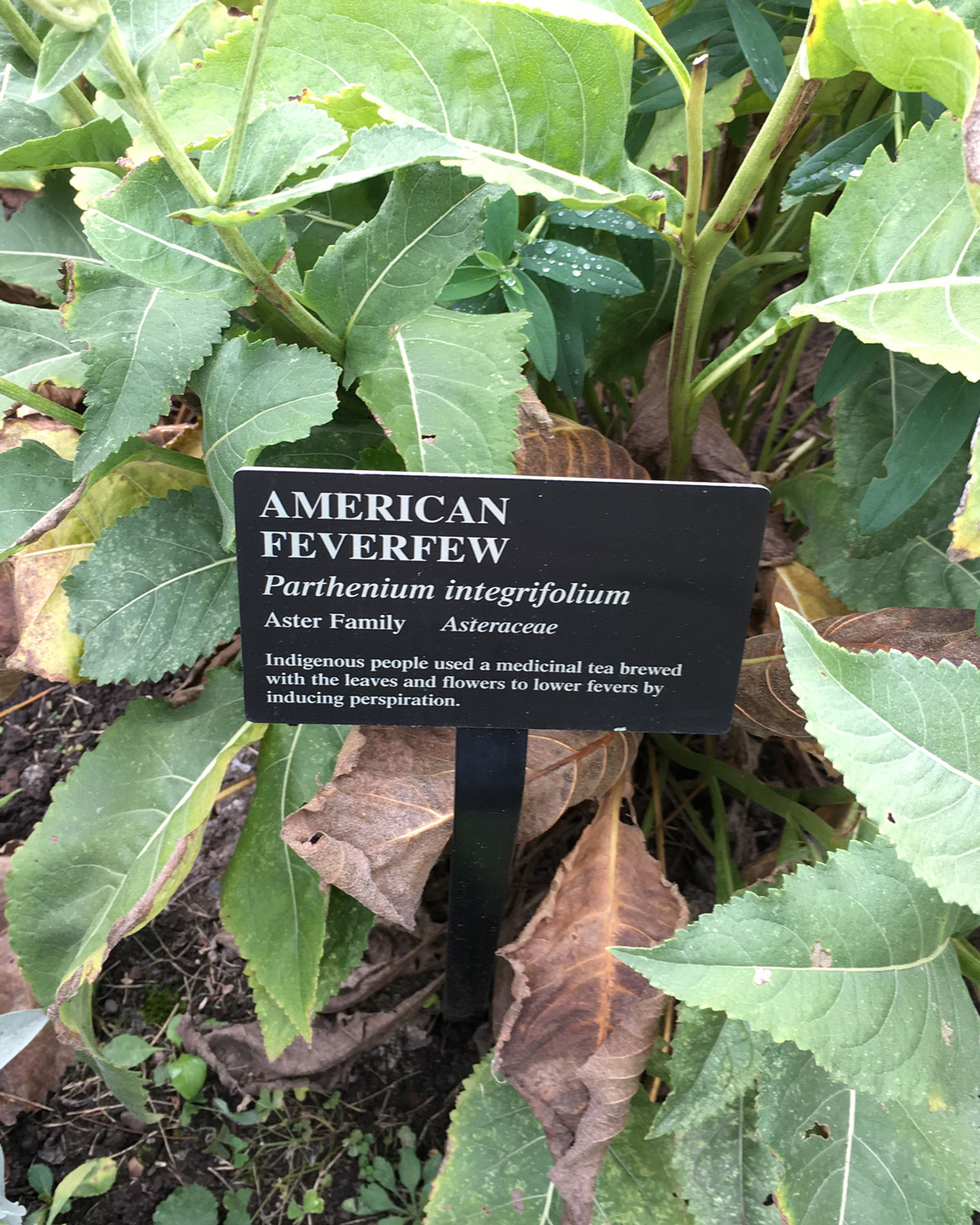
A bit of info on ‘American Feverfew’

Came across this at the Cornell Plantation botanical garden.

I like the name. “Feverfew.”

My dictionary gives the origin as “Old English feferfuge, from Latin febrifuga, from febris ‘fever’ + fugare ‘drive away.’

It’s also a fun word to type, mostly two fingers on the left hand, until that final “w.” It gives it — “feverfew” — a satisfying rhythm to my fingers on the keyboard.

Here’s some more info about it from the state of Missouri: The name “feverfew” indicates the plant was used medicinally. Some Native American tribes made a poultice of the leaves to use for treating burns. Apparently the plant was also used as a diuretic. Today people plant it as part of a prairie restoration or native wildflower garden.

fever-few-body

And here are some citations of “feverfew” from the Oxford English Dictionary:

c1000   in T. Wright & R. P. Wülcker Anglo-Saxon & Old Eng. Vocab. (1884) I. 134   Febrefugia..feferfuge.
c1000   Sax. Leechd. I. 134   Curmelle feferfuge.
c1425   in T. Wright & R. P. Wülcker Anglo-Saxon & Old Eng. Vocab. (1884) I. 645   Hec febrifuga, fevyrfew.
1562   W. Turner 2nd Pt. Herball f. 79v,   The new writers hold.. that feuerfew is better for weomen.
1597   W. Langham Garden of Health 234   Feuerfue comforteth the stomacke, and is good for the Feuer quotidian.
a1646   D. Wedderburn Vocabula (1685) 18   Matricaria, feverfoyly.

Earworm, courtesy Prince #RIP

2016-04-22 07.56.21

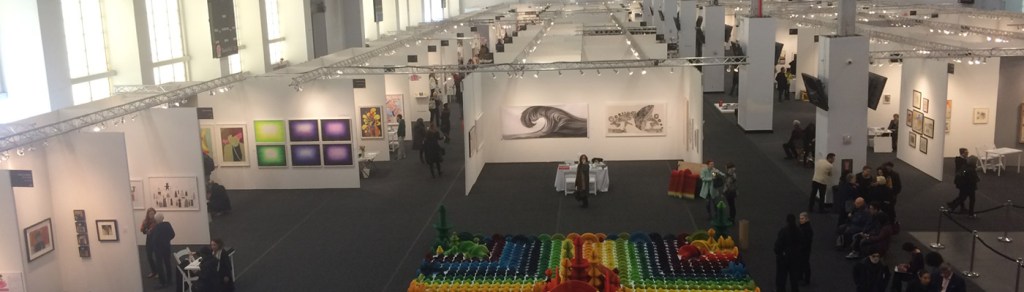
Highlights from Art on Paper, a NYC art fair

For the past few years, the New York City art fairs have become part of my day job. This year, for the first time, I visited Art on Paper.

Here are some highlights:

tillinghast1

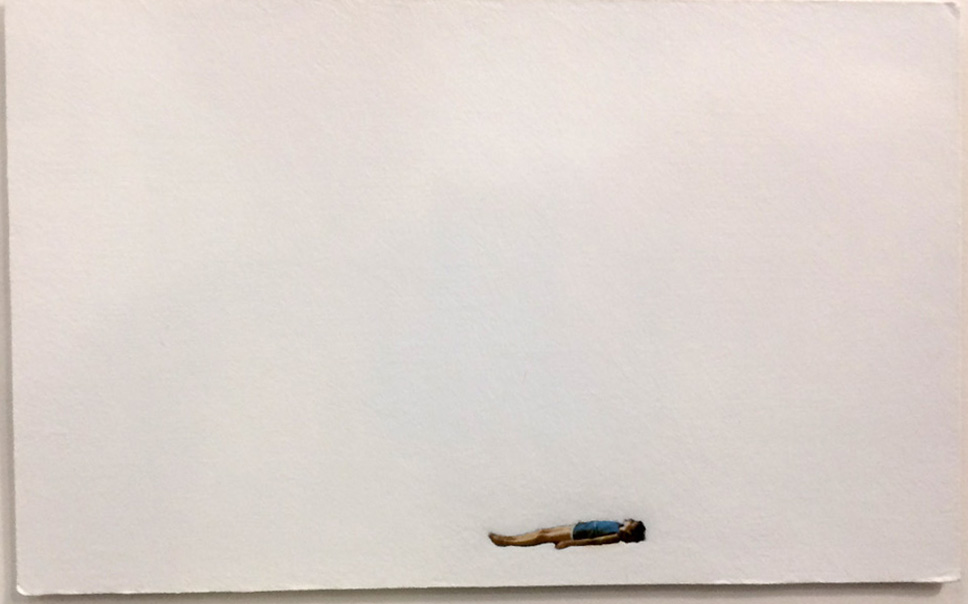
Eric Tillinghast, Aegle, 2014, was exhibited among other similar work at the Richard Levy Gallery’s booth. Tillinghast’s work features postcards of swimming pools and other bodies of water in which most of the context has been painted out. Here, for example, a figure that could’ve been reclining poolside now appears to float in a surreal white space, detached from anything familiar.


semmes1

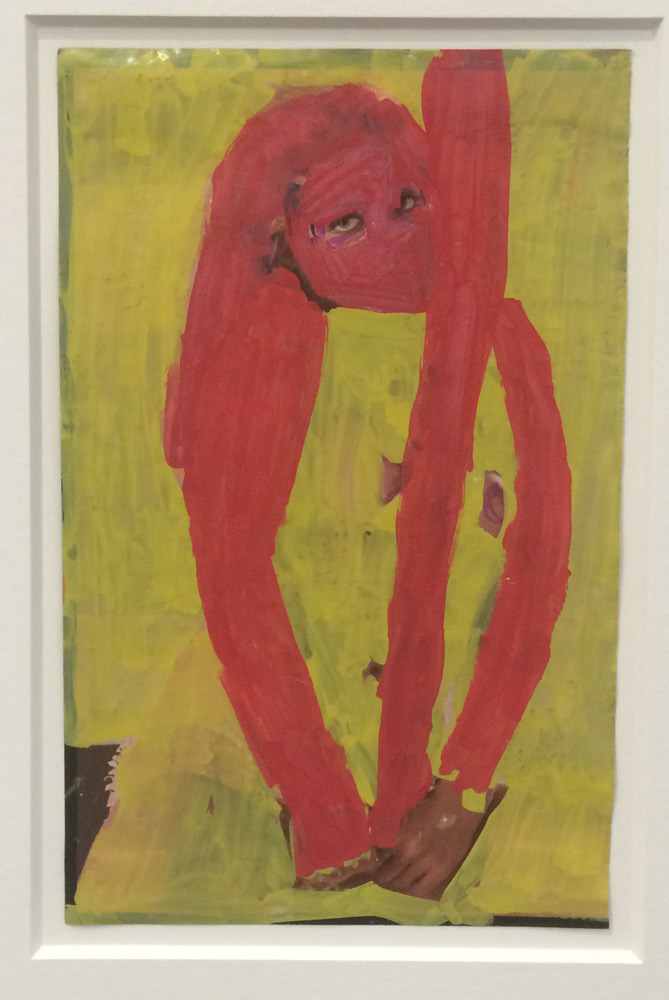
In a somewhat familiar vein is this piece by Beverly Semmes, shown at the Shoshana Wayne Gallery booth. Here, the decontextualization through paint over a found image is a covering up of a female body that had been in a pornographic magazine. I’m familiar with her work from the Tang Teaching Museum exhibition that included similar painted-over pornographic images. This work is part of a group of work Semmes calls the Feminist Responsibility Project, as if it is her responsibility to cover up these nude women. Though some younger women, Skidmore students, wondered how did Semmes know if these women weren’t being responsible and in control of how their images are being taken and how they are being compensated for them?

grillo1

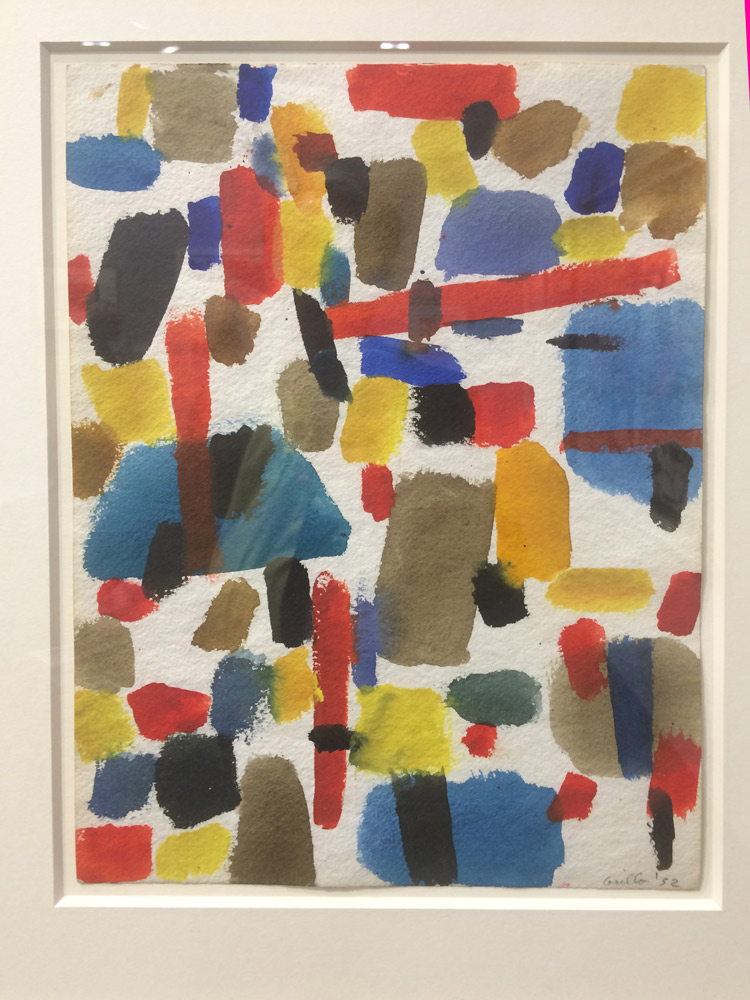
John Grillo’s Untitled Mosaic 5, from 1952, was on view at the David Findlay Jr Gallery booth. This work looked like something from the 1950s, but the mosaic pattern reminded me of the work of Alma Thomas (though her oils feel weightier and more satisfying). I enjoyed the exuberance of it, though that is offset by the watercolor’s delicacy.

freeman1

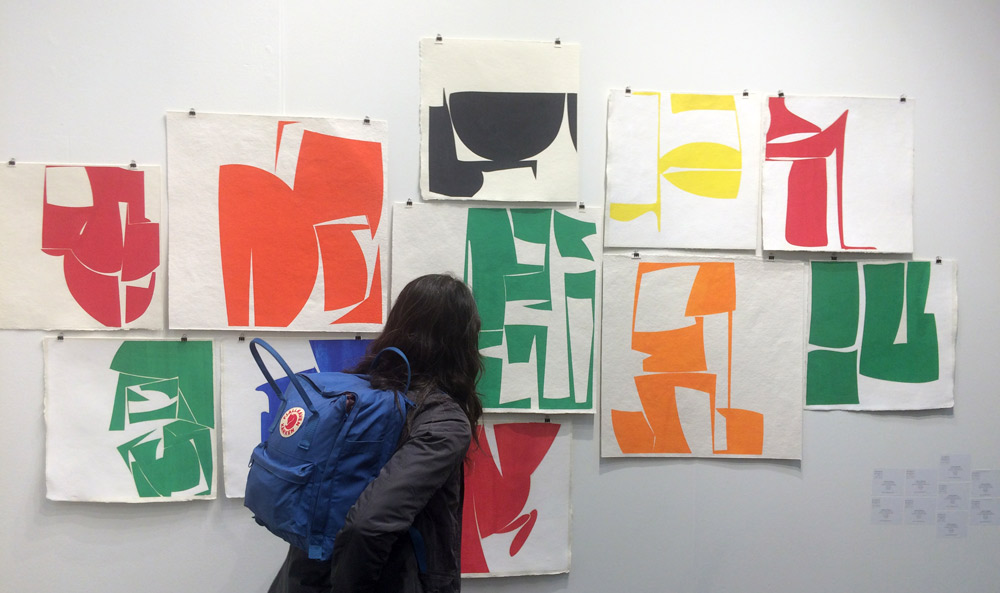
Speaking of exuberance, I really enjoyed this display of Joanne Freeman’s recent work, goache on handmade paper on view at the Kathryn Markel Fine Arts booth. There’s something playful in the geometric shapes, how some crowd the edges of the work, and others open to the paper behind it, as if defining a new kind of alphabet, or a new kind of geometric language.

DaveEggersAonP

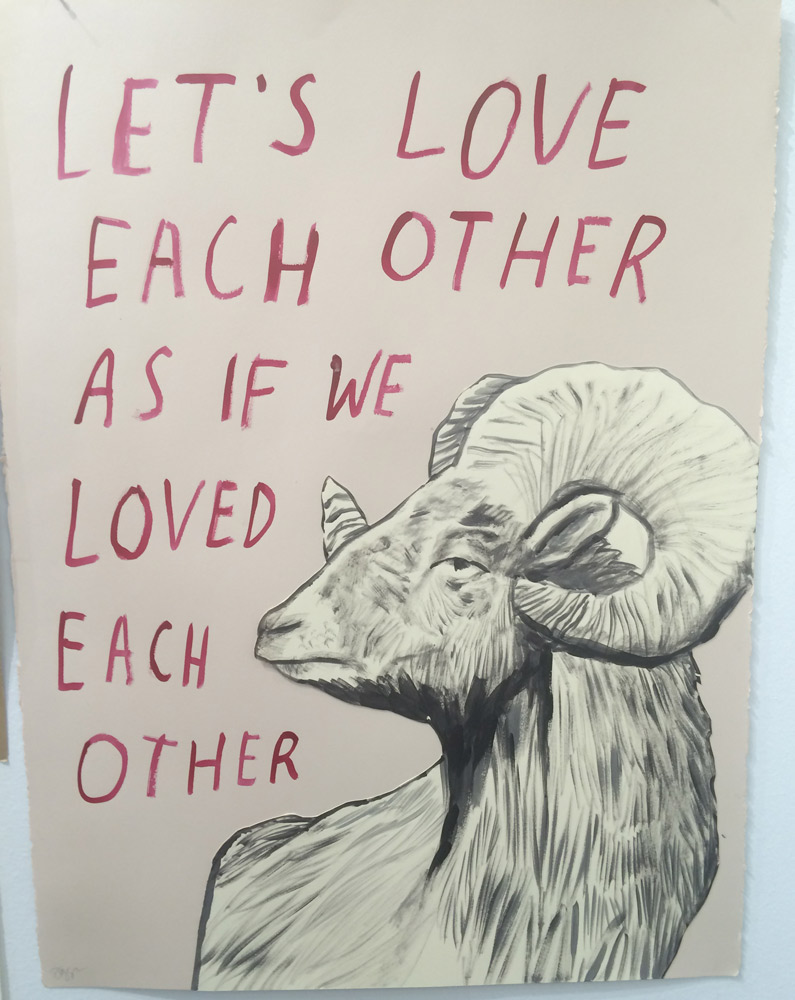
And then I came to this, by the multitalented author-artist-publisher Dave Eggers, at the Electric Works booth. This work — being exhibited for the first time — was fun and unexpected, playful, silly, and poignant. Plenty more examples of his work can be found here. Dave Eggers being Dave Eggers, the proceeds from the sale of his works were all to go to ScholarMatch, a nonprofit he founded that connects donors with students who need help paying for college.

Having attended other art fairs before, I really enjoyed Art on Paper — it was smaller than others, so it felt easier to get around and less crowded. Plus the work itself felt smaller, sometimes more intimate, and therefore more accessible.

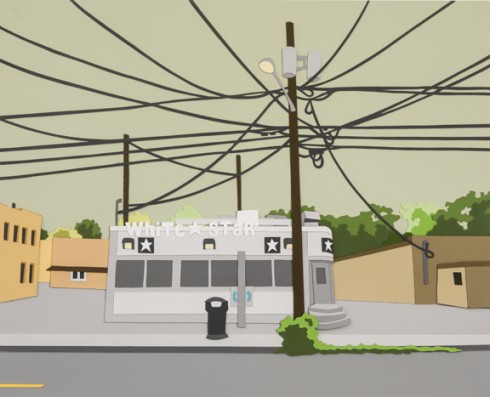
Though one of the most memorable shows of work on paper was something that I didn’t see at Art on Paper; rather, it was the work by Casey Ruble on view at the Foley Gallery in the Lower East Side. The work features cut paper that is layered to produce landscapes, cityscapes and interiors.

theysaidthey1

Here is “They said they’d rather die here than in Vietnam.”, 2015, which is only 6.5 x 8 inches. This reproduced image of the paper collage doesn’t do justice to the cuts and layering, which are visible upon close inspection of the real thing. That’s one of the things that makes seeing the object in real life so much  more rewarding, and the work so much more powerful.


Video: A humming bird at home in Guatemala

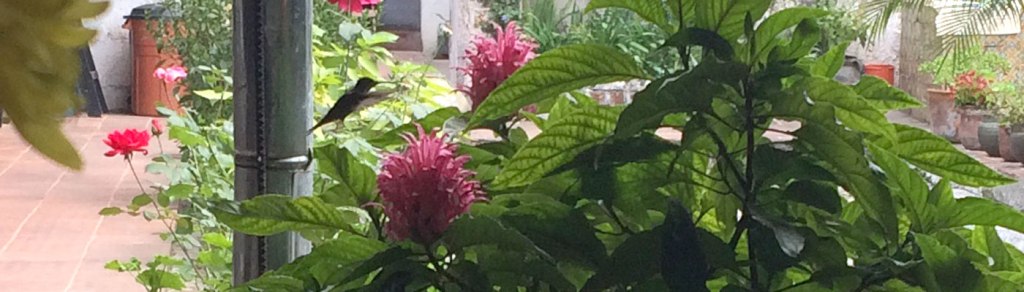
I was just sitting down to lunch at the home I’m staying at in Antigua, Guatemala, when a hummingbird stopped by.

That’s when I got my camera, in case the humming bird stopped by again. It did.

2015 in review

The WordPress.com stats helper monkeys prepared a 2015 annual report for my blog.

Here’s an excerpt:

A San Francisco cable car holds 60 people. This blog was viewed about 2,900 times in 2015. If it were a cable car, it would take about 48 trips to carry that many people.

Click here to see the complete report.

Throwback Thursday: Giving Thanks Edition

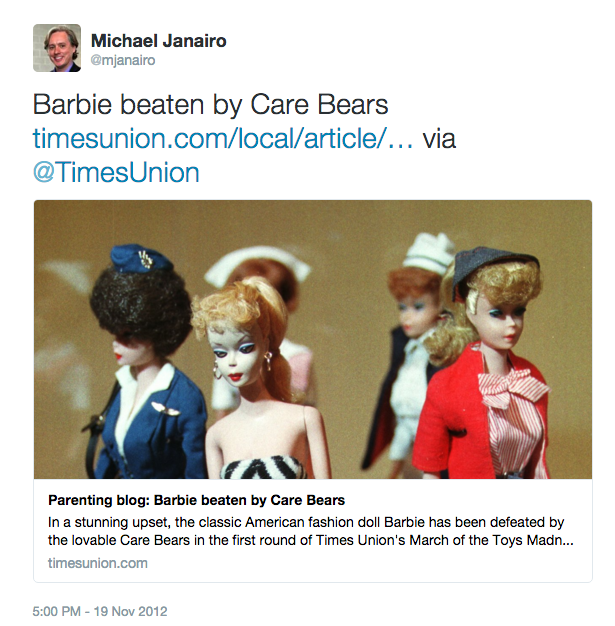
When I worked at a newspaper, I didn’t often get to write silly headlines. This is one I got to write as part of a bracket contest in which readers  voted for their favorite toys.

Happy Thanksgiving!

Screen Shot 2015-11-19 at 9.37.55 PM


Happy Thanksgiving!

2015-11-22-11.21

For my physics-loving friends: gravity in a vacuum

This is something I have always wanted to see. I understood the idea of it in physics class in high school, but I never saw this in action until now: that a bowling ball and a feather would fall at the same rate in a vacuum.

Enjoy!

‘No, where are you really from?’

This video is worth a couple minutes of your time, as it playfully upends the kinds of microagressions Asian-Americans often face.