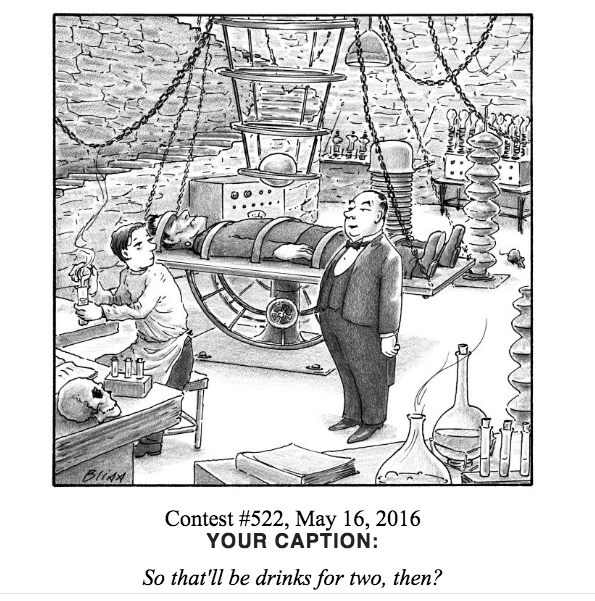
My entry: New Yorker Cartoon Caption Contest #523

Screen Shot 2016-05-22 at 7.50.52 PM

#518Day is already becoming a thing!

518-day2

The background is a photo I took during “S(around)ound” at the Gasholder Building in Troy in 2012, led my Michael Oatman’s Production, Installation, and Performance class at RPI.

It’s great to see that people are already touting #518Day on social media (here and here) — and other media!

#518Day is a way for arts groups, venues, makers, and their fans and friends to celebrate the vibrant arts communities of the 518 area code on May 18 (5/18). Most people will take to social media — Twitter, Facebook, Instagram, and more — to send messages of support and to promote their own art, activities, and events.

You can see the latest tweets here.

Check out the Facebook event page here.

Part of my thinking behind #518Day is my belief in the democratic possibilities of social media for positive change. Most social media is free to sign up, though using it does require time and the ability to answer this question: What do I post?

Screenshot 2016-05-16 12.06.45

The latest #518Day posts on Twitter (as of noon, Monday, May 16, 2016)

#518Day gives everyone an answer, and an excuse to post something, and the chance to have their message amplified as people “like” and “retweet” and “regram” their posts. For example, I plan on retweeting to my Twitter followers and liking on Facebook and Instagram as many of the #518Day posts I come across. With the Tang’s social media accounts, I plan on promoting our current exhibitions and upcoming events.

In many social media allows for an organic way for the 518 region to identify itself because it is decentralized and open to all. Who knows, maybe we’ll get at least 518 tweets and posts!

I’ve heard from people who are getting ready, planning their Tweet, Instagram and Facebook strategies.

I’ve put some links to how to schedule Facebook posts on a Facebook Page, and tweets using TweetDeck here. https://michaeljanairo.com/join-the-celebration-of-518day/

Another tool that can be useful to schedule social media is Hootsuite. I use a free Hootsuite account both personally and where I work at the Tang Teaching Museum and Art Gallery. Here’s a quick start guide: https://help.hootsuite.com/hc/en-us/articles/204598140-Quick-start-guide

What are you doing to prepare for #518Day?


MY ENTRY: NEW YORKER CARTOON CONTEST #521

Screen Shot 2016-05-08 at 9.27.31 PM

A new story published by We Love Books & Company

Thanks to Ray Ortali for publishing my latest short story, Auntie Lovely Says Goodbye, in his eMagazine, We Love Books & Company, which you can download here.

My entry: New Yorker cartoon contest #519

Screen Shot 2016-04-23 at 3.23.24 PM

My entry: New Yorker cartoon contest #513

Screen Shot 2016-03-13 at 4.30.07 PM

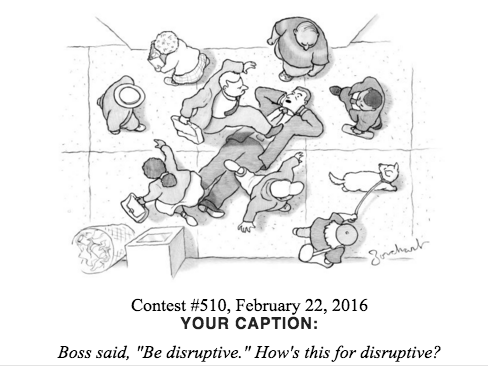
My entry: New Yorker cartoon contest #510

Screen Shot 2016-02-20 at 2.58.21 PM

Fun with numbers, primary-election style

As the primaries continue, I was wondering about turnout. Everyone says turnout is so important. Is there a connection between primary turnout and general election turnout? And how many people have the early voting states turned out?

I wanted numbers:

From the Des Moines Register on the Iowa caucuses:

Republicans counted more than 180,000 caucusgoers, topping their 2012 attendance record of 121,503 by an estimated 60,000 people.

But they didn’t have the Democratic Party numbers. I found those on Bustle.com:

Many precincts were delayed in reporting the Democratic results, but early Tuesday morning, the Iowa Democratic Party announced that171,109 Iowans participated in its caucuses. That’s a fall from 2008, which saw 239,000 vote in the Democratic caucuses throughout the state.

For New Hampshire, I found this from the Union Leader:

A record 542,459 ballots were cast Feb. 9, including a record number of Republican ballots: 287,683. Democrats cast 254,776 ballots, well below their record of 288,672 in 2008.

And for Nevada, Bustle.com reported the Republican turnout:

More than 75,000 Nevada Republicans caucused Tuesday night

AP had the figures on the Democratic side:

Officials say about 84,000 Nevada Democrats participated in Saturday’s caucuses, which is nearly 30 percent fewer than in 2008.

So it seemed like a thing – that the primaries were bringing out more Republicans than Democrats. And if turnout is so important, then maybe this isn’t a good thing for Democrats?

Then I read this in Vox:

The first is historical. Michael McDonald, a professor at the University of Florida and a voter turnout guru, notes that in 2000 the Republican primary turnout ran ahead of that for Democrats (by around 3 million votes), and yet Al Gore won the popular vote over George Bush.

And that was echoed on NPR.com:

McDonald pointed out that in 2000, Republican primary turnout was much heavier than it was for Democrats — and that election between George W. Bush and Al Gore ended up essentially deadlocked until the Supreme Court intervened.

So the stories were basically trying to say that there isn’t a strong relationship between primary and general election turnout. That the percentage of registered voters voting in primaries and caucuses is far lower than the number expected for the general election, and still far lower than number of registered voters. Then again, only 55 percent of the voting eligible population actually voted in 2012.

Being reminded of the 2000 vote, decided by the Supreme Court? Not very encouraging. If only more people voted.