Eight things I learned doing my first Pecha Kucha

Screen Shot 2016-02-27 at 2.08.07 PM

That’s me talking about my Lola. Thanks to @novelnessidiotish for the Instagram!


I was invited the other day to take part in an official Albany PechaKucha event at the Opalka Gallery at the Sage Colleges. (Thanks, Elizabeth and Amy!)

The idea is that you can give a presentation on anything, but it has be done with 20 slides and each slides must be shown for exactly 20 seconds. I decided to Pecha Kucha about what’s been on my mind as a writer — family, history, and mythology.

Here are eight things I learned:

  • 20 seconds is fast, but enough to get about 40 words, or four average-sized sentences said.
  • Practice. I didn’t practice enough — setting up powerpoint with timed images and going through what I wanted to say. I recommend doing that. I thought I’d be at a podium and could refer easily to my typed notes, but most people stood beside the projected image and just spoke. Some people had note cards, which seemed smart, as they could be flipped through smoothly. I had my text on 8-by-11 1/2 sheets of paper, and I didn’t want to be flipping through those.
  • Create expectations by setting up the transition. I had written out a text for each slide, and at a crucial moment — I spoke without notes — I forgot the transition sentence I had written and didn’t set up the next slide, which was an abrupt transition to a series of new slides.
  • The audience goes with the flow. You can make abrupt changes, and the audience will go with you. Maybe the Albany audience was super open and receptive, but perhaps everyone’s been in slog of presentations before and the format promises something quick and interesting.
  • One idea can be extended over multiple images. While some presenters had specific points to make with each image, others made one more complicated point over many images. Both approaches work.
  • Conclusions are satisfying. Some presenters (including me) wrapped up the presentation in a final slide with a variation of “and this is what it all means to me.” All of those kinds of endings are satisfying. One ending that was very satisfying was by the artist Michael Oatman, whose presentation was on his process of conceiving and creating a work of art and ended with an image of that work of art on exhibit in a museum.
  • Nothing beats enthusiasm. One of the best presentations of the night was also the first. Andrew Krystopolski reveled in being a fan of Polka music. He spoke with speed, clarity, enthusiasm and fun about how much he loved Polka, with photos of him at playing music, dancing, and meeting his Polka heroes — and even showing the audience his tattoos of the names of his Polka heroes. The presentation was fun, funny and from the heart. It showed Andrew to be not just a good presenter, but a wonderful performer and entertainer.
  • Earnest introspection also works really well. Stacy McIlduff’s presentation on the movies she grew up with and was influenced by — with each image being a still from a film — was interesting and earnest and also heartfelt. Her presentation felt brave because it was so personal and important to her.   

So would I do it again? Yes.

Do I recommend doing a PechaKucha? Yes.

Have you done a PechaKucha? What have you learned?

My entry: New Yorker cartoon contest #509

Screen Shot 2016-02-07 at 8.49.57 AM.png

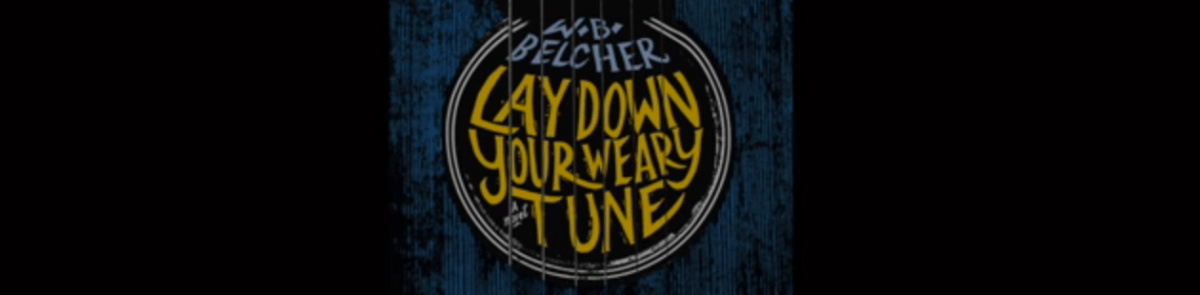
Coming in 2016: WB Belcher’s Lay Down Your Weary Tune

Where I’ve Been: Part 1 — Making a Website

Screen Shot 2015-11-14 at 12.28.28 PM
Hello (again) world.

For the past eleven months I’ve been working on creating a new website at my day job at the Tang Teaching Museum at Skidmore College. Not that I’ve created it. The design firm Linked By Air (which is awesome) did the design and development work. Everyone on staff at the museum pitched in with ideas, research, and content. I just helped to shepherd the thing through. The site launched last month. You can find it at: http://skidmore.edu/tang.

My goals going in were (1) bigger images, (2) responsive design, and (3) social sharing.

Linked by Air sought to emphasize the museum as (1) a contemporary art museum, (2) a museum with a growing collection, (3) an institution that is a model for college teaching museums.

The “teaching museum” aspect, I find, often requires explanation. The first question I got from a journalist just last week went something like: Do you find that your mission as a “teaching museum” limits what you can exhibit?

The short answer is no. The longer answer involves explaining that the museum’s mission is central to the college’s liberal arts mission. I often say that the museum itself is the realization of the college’s liberal arts ideals. That realization manifests itself in many practical ways, through various levels of museum use by staff and faculty in all departments, including visits to exhibition or to select objects in the collection; “study exhibitions,” in which a class helps develop and research work in an exhibition; and interdisciplinary exhibitions curated by the museum and members of the college faculty.

So, yes, my last post was more than two months ago, but in that time I’ve been hunkered down (mostly — more tomorrow in Part 2) on the new website. How well the new site meets its goals, I’ll leave for you to discover. Let me know what you think in the comments.

In memory of Medill professor Bob McClory

“So I’m thinking it’s either a Pulitzer in six years, or a mental hospital for you.”

That was Bob McClory, a journalism professor of mine who died last Friday at age 82. Or at least that’s what I remember him saying at the end-of-the-quarter meeting about my writing and final grade when I was a journalism undergrad student at Medill at Northwestern.

He thought my continual use of quotation ledes ventured onto the less sane side of decision-making. What I heard though in that sentence was: I see what you’re doing. I don’t always get it or agree with you, but I believe in you. He probably said the same thing to lots of other students.
Continue reading →

My top cultural experiences of 2014

In my former career as an arts editor at a daily newspaper, the year-end best-of lists were a standard. And now that I’ve change jobs this year, and I’m reading so many other journalists’ best-of lists, I am impressed by how many cultural things they (and my past me) have been able to experience in a year. Now I also know how people who aren’t paid to experience so many things can find such lists to be impossible recommendations, a bunch of things that most people will never have the time to get around to. Though arts journalists try to present as complete as possible summaries, I think readers of such lists may only be looking for one thing that might inspire them to go out and experience that cultural thing for themselves.

So here’s a lean look back at 2014.
Continue reading →

My 2014, by the numbers

Some random metrics about my life in 2014.

Blogging
Number of blog posts on michaeljanairo.com: 73
Most read blog post: Readercon wrap-up: ‘You don’t look Filipino’

Work
Number of jobs left: 1
Number of new jobs started: 1

Writing career
Number of short stories published: 3
Number of writing conferences attended: 1 (Readercon)

Music
Top Spotify artist: Bruce Springsteen

Travel
Number of countries outside the US visited: 1 (Guatemala)
Number of cities outside the US visited: 7 (Monterrico, Antigua Guatemala, Panajachel, Santa Catarina, San Antonio, Santiago Atitlan, Guatemala)
Number of US cities visited outside the Capital Region: 14 (NYC, Pittsburgh, Providence, New Haven, Boston, Cambridge, Williamstown, North Adams, Freeport, Prospect Harbor, Lincoln, Omaha)

Social media
Number of tweets: 512
Most impressions on one tweet: 40,461
The tweet: https://twitter.com/mjanairo/status/420222698036289536

Most looped Vine: Dance @yaleartgallery

Number of new FB friends: 89
Number of lost FB “friends”: About 200
FB year in review: Here

Most liked Instagram post: Found at work today.
Instagram year in review: Here

On Ursula Le Guin’s awesome speech

You can read the full text here, and here are some of my favorite nuggets.

Hard times are coming, when we’ll be wanting the voices of writers who can see alternatives to how we live now, can see through our fear-stricken society and its obsessive technologies to other ways of being, and even imagine some real grounds for hope. We’ll need writers who can remember freedom – poets, visionaries – realists of a larger reality.

Books aren’t just commodities; the profit motive is often in conflict with the aims of art. We live in capitalism, its power seems inescapable – but then, so did the divine right of kings. Any human power can be resisted and changed by human beings. Resistance and change often begin in art. Very often in our art, the art of words.

The challenge for writers (and readers) and humans (and thinkers) is to confront the questions about what is real and do we live in ways that make us fully human (as opposed to subjects or objects)? How can we work toward alternatives?

Election Day is today and I voted!