Slate Picks make a great pick

Screen Shot 2014-12-17 at 7.36.37 PM
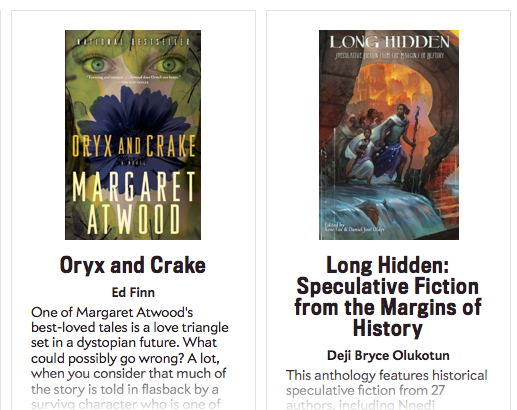
Slate has a new feature called Slate Picks, and under the heading “Science Fiction That Can Change Our Future” they asked contributors what books they would recommend for the 2016 presidential candidates.

The list of books includes such well-known and respected authors as Margaret Atwood, Kim Stanley Robinson, Cory Doctorow, Elizabeth Bear, and Samuel Delaney. The list also includes an anthology that has a story by yours truly in it, Long Hidden: Speculative Fiction from the Margins of History.

So if you’re looking for a gift for the presidential candidate in your life, check out Slate Picks.

#tbt review: Lisey’s Story by Stephen King

This review originally appeared in the Times Union on March 1, 2007.

liseysstory

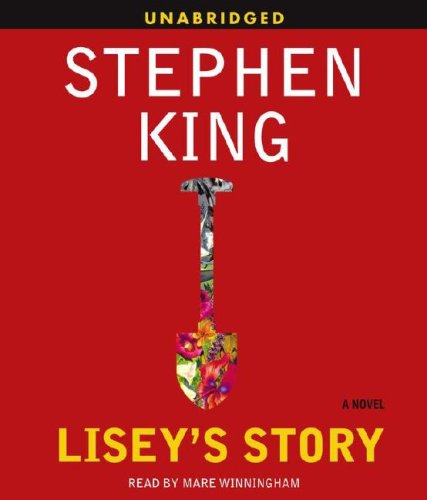
“Lisey’s Story” by Stephen King. Read by Mare Winningham. Unabridged, 19 hours, 16 CDs. Simon & Schuster. $49.95.

In ancient Greek drama, deus ex machina was used when the plot got so out of control that only divine intervention could resolve it. “Lisey’s Story” is the opposite.

Lisey is the widow of a famous author still dealing with grief two years after his death. Her loneliness is convincing, as is the magical place — Boo’ya Moon — where her husband found inspiration and confronted horrors.

What bedevils the plot, though, is an insane stalker who terrorizes Lisey for her husband’s papers. This one-dimensional, inexplicable character clearly arrives for some anti-divine intervention to create chaos. King, however, eventually keeps the plot tidy and unsurprising.

Winningham does a winning job of conveying Lisey’s melancholy as well as other characters’ madness.

sfm_banner_01b

#tbt review: Intergalactic Nemesis live-action graphic novel

This review originally appeared in the Times Union on Jan. 12, 2012.

nemesis_stage8

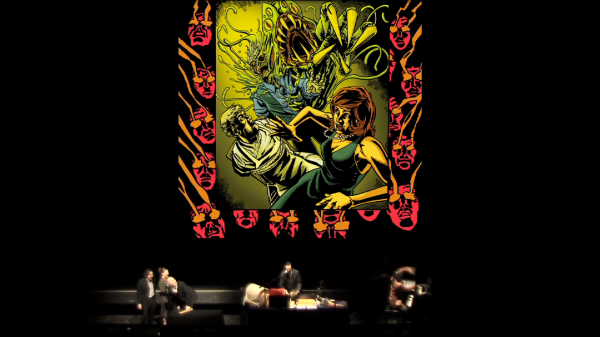
A scene from “Intergalactic Nemesis”

“The Intergalactic Nemesis” has landed at Proctors in Schenectady with an answer to the question, “What exactly is a ‘live-action graphic novel’?”

That’s how “Nemesis” bills itself, and though that term may bring to mind Christopher Nolan’s “Batman” series of movies, “Nemesis” is a stage-play hybrid: part radio show and part slide show.

Three actors at microphones voice multiple characters, while a Foley artist creates sound effects from objects on the tables before him — such as shoes, crinkled paper and even a box of macaroni and cheese — and a keyboardist maintains a dramatic score. Meanwhile, one comic book image after another is projected on a screen that towers above the people. The show uses more than 1,200 images.

The story is set in 1933 and reporter Molly Sloan, her assistant Timmy Mendez and a mysterious and heroic librarian named Ben Wilcott join forces to thwart the impending invasion of sludge monsters from the planet Zygon, who are aided by the evil hypnotist Mysterion.

The show has plenty of charm. A lot of that has to do with watching the quick work of Foley artist Buzz Moran and his delighted expression when he shakes a metallic sheet to create booming sounds of thunder.

Other fun moments come from the multiple voices the actors assume for different characters, especially when those characters are having a dialogue and one actor does both voices. The actor Chris Gibson stands out in this regard, as he hams up the maniacal laughter of the evil Mysterion, who is often in dialogue with Wilcott.

Silences are also effectively used, as when a revelation leaves the characters dumbfounded and the actors say nothing as the screen shows one surprised face after another. Also of note are the humorous ways the three actors create crowd conversation noise at a fancy party and on a street in Tunisia, and how they create the sound of applause by gently slapping their cheeks.

The show has enough of these moments to make up for some of its weaknesses, such as an overlong and static first act. A lot happens in that act, and I don’t want to give it away, but it does more to set up situations in which the characters react them to, instead of revealing to us who these characters are and what motivates them. In that regard, the second act is much better. I also wished that more of Tim Doyle’s images were better drawn, because too often the expressions and body positions seemed awkward and distorted.

One of the difficulties of this hybrid show is knowing what to watch: the images or the actors and Foley artist. In some ways, it seems as if it is playing against too much nostalgia for a clear focus. But if you’ve never seen a Foley artist at work, then this a must-see. Best of all, it is appropriate for audiences of all ages, from those who’ve never known a world without iPhones to those who once gathered around the wireless (radio, that is) for nightly news and entertainment.

sfm_banner_01b

#tbt review: World War Z by Max Brooks

2013-03-12-worldwarz_audiobookThis review originally appeared in the Times Union on Jan. 2, 2007, long before the Brad Pitt movie came out.

“World War Z,” by Max Brooks. Read by a full cast. Abridged, 6 hours. Random House Audio. $29.95.

The stellar cast includes Alan Alda, Carl Reiner, Mark Hamill, Henry Rollins, John Turturro, Rob Reiner and Brooks as the one compiling interviews with survivors of a worldwide war between zombies and humans.

While the variety of locales — China, Israel, South Africa, Canada, the United States, Cuba, Chile, Finland, Greenland, Barbados, Japan — puts to shame any James Bond story, the book lacks suspense.

Instead, it has realism to emphasize how the zombie wars upend how people live and what they hold sacred.

The best example occurs in South Africa, where a dreaded apartheid-era figure comes up with a plan to save the country by sacrificing parts of the population. Though most of the politicians are aghast, they accept it once the unnamed but recognizable Nelson Mandela figure approves.

The performances emphasize this human quality of physical and psychological struggle.

sfm_banner_01b

Why are war and science fiction so often connected?

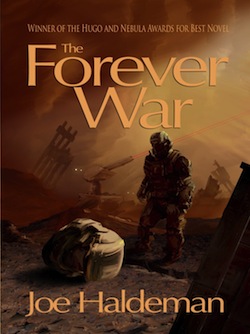
foreverwarcoverWhy is it that some of the greatest sci-fi out there has everything to do with war?

I’m thinking of “Star Wars,” “The Forever War,” “Old Man’s War,” “War of the Worlds,” for example (and those are just some of the ones with “war” in their titles). But also “Ender’s Game,” “Battlestar Galactica,” and so many video games, from “Space Invaders” to “Halo” and so many in between.

Continue reading →

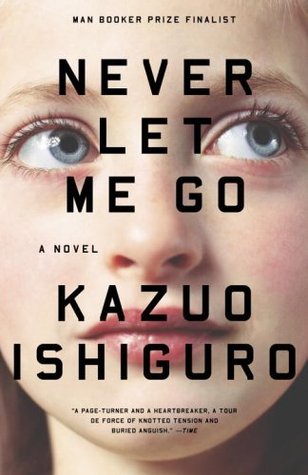
#tbt Book Review: Kazuo Ishiguro’s Never Let Me Go

This review was originally published May 8, 2005, in the Albany Times Union.

never let me go Kazuo Ishiguro is a master of the writing of memory. In fictions about an English butler, a Japanese artist and a world-renown pianist, he has found life-defining secrets, decisions and failures in the smallest moments, and uses them to create literary novels that read like thrillers.

His sixth novel, “Never Let Me Go” (Knopf; 282 pages; $24), includes emotionally engaging passages about friendship, love, duty, sex and betrayal in the lives of the three main characters; however, the effect is undermined by the world in which Ishiguro contains them.

The story centers on Kathy, Ruth and Tommy, whose friendship begins at Hailsham, a boarding school in the English countryside.

Kathy is reflective, passive and somewhat dreamy. She is the kind of girl who, while listening to a pop song, dances and holds a pillow, pretending it’s her baby. Ruth is bossy and likes to appear knowing; it gives her a power that attracts others to her. For example, she pretends to know more about chess than the older students, but when she shows Kathy how to play, she says all the pieces move in an L-shape. Tommy is athletic, warm-hearted and gullible, and he is mercilessly teased by his classmates. The boys enjoy setting off his uncontrollable rages, and the girls like to watch from the dorm windows.

Continue reading →

Readercon wrap-up: ‘You don’t look Filipino’

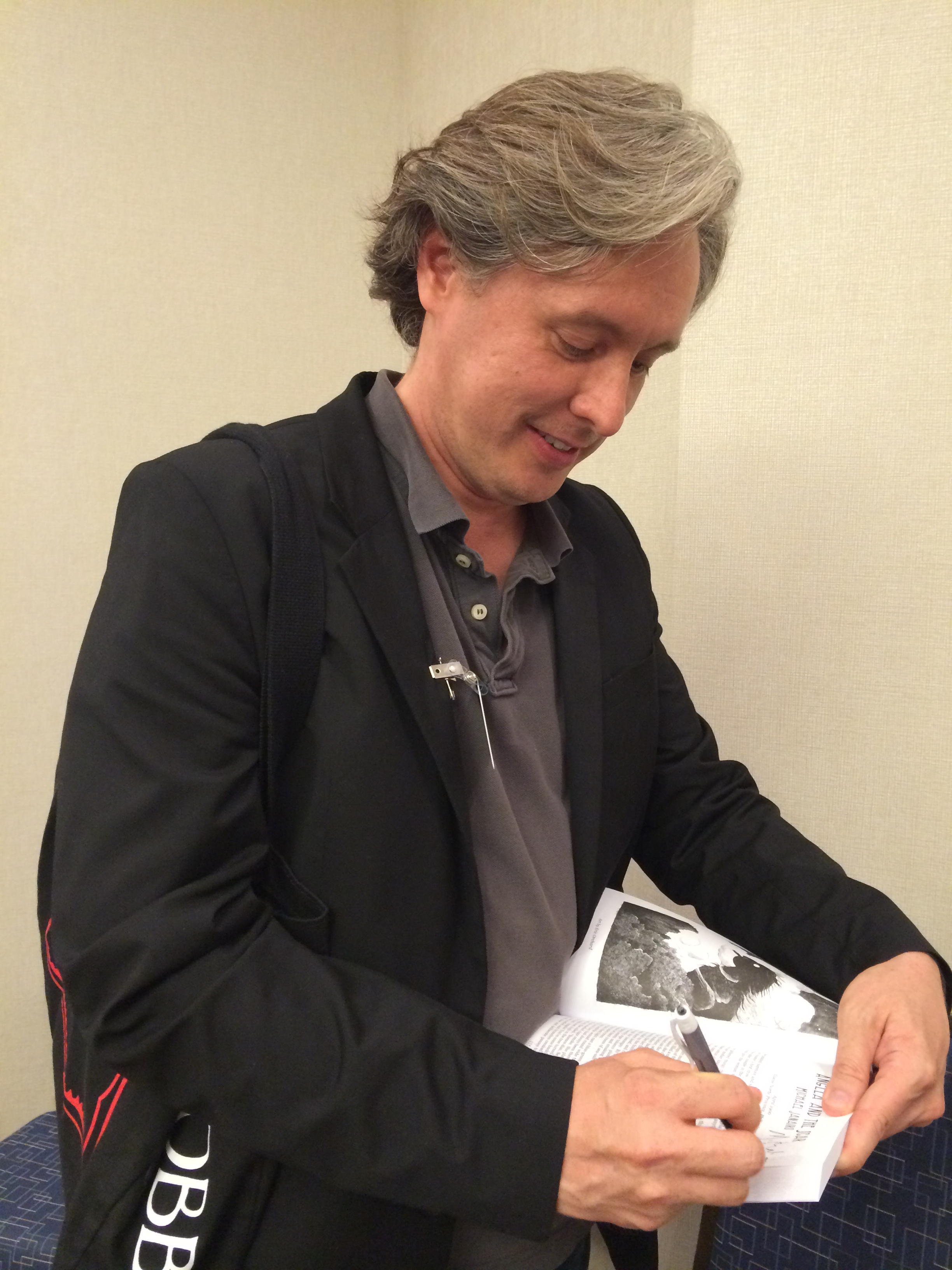
Me, the author, autographing my story in "Long Hidden: Speculative Fiction from the Margins of History"

Me, the author, autographing my story in “Long Hidden: Speculative Fiction from the Margins of History”

Readercon is awesome. The conference for speculative literature is always worthwhile, as it offers a deep dive into issues and concerns that are at the forefront of literature.

So I got to hear luminaries like Michael Dirda and Peter Straub talk about their development as readers and writers. (Dirda doesn’t have time to reread books; Straub is rereading Iris Murdoch right now.)

I got to hear Samuel Delaney read for a work in progress that is from the point of view from a young Herman Melvill(e), and includes scenes during his life and times in Albany.

I learned a lot about the difficulties of living in space (the weakening of the body in low gravity; the politics of funding); about how authors try to strike a balance between fulfilling and subverting readers’ expectations (though one panelist argued that very little writing is truly subversive); and that some Readercon attendees bring really killer bourbon and are very generous with it, late into the night.

Most of all, though, I met some great people — writer and readers — but people who share my values for the importance of story.

The highlight, though, was the group reading of seven writers whose works are included in the much-praised anthologyLong Hidden: Speculative Fiction from the Margins of History.”

Even better, was being asked to autograph my story. This is something that I have never done before. With the journals and anthologies in which I have been published before, I never had a chance to attend any of the events related to the release of those publications. Mostly because they were far away: in Japan or on the West Coast; or my day job and life made it too hard for me to be there. Continue reading →

Reading at Readercon

Screen Shot 2014-07-01 at 7.51.57 AM

I’ll be one of the readers reading a story from the anthology “Long Hidden” at Readercon next week’s Friday.

What’s Readercon? It’s a literary conference that focuses on “imaginative” literature. It is like a sci-fi / fantasy conference but without the costumes, games, movies and music. It’s all about writers and writing, and readers and reading.

Review: ‘The Year of the Flood’ of The MaddAddam Trilogy by Margaret Atwood

Everything and nothing changes in “The Year of the Flood,” the second book of Margaret Atwood’s “MaddAddam Trilogy.”

I have to admit, when I first read “Oryx and Crake,” I didn’t know it was going to be part of a trilogy. When I first read “The Year of the Flood,” I thought of it as a “sequel,” not knowing it was the second book in the trilogy.

Upon first reading “The Year of the Flood,” I was filled with a desire – often thwarted — to learn what happens next: Where was Atwood going with this post-apocalyptic world? I wanted to know what happened after the end of “Oryx and Crake,” when Snowman (aka Jimmy) sees other living humans for the first time since most of humanity got wiped out by a human-made biological pandemic. That pandemic, caused by the title characters of the first novel, is now referred to as a “flood” in the second book’s title. I wanted to know where Atwood’s world would go after the end of the world.

“The Year of the Flood” is told (for the most part) from the points of view of two women: Toby and Ren. And, like “Oryx and Crake,” much of their stories are told in flashback, covering the years before the “flood,” which thwarted my plot-based desires. However, what stories they had to tell! Toby and Ren’s lives are deep in the pleeblands (as opposed to the compounds), and that space allows for some of the richest flowering of Atwood’s imagined world.

The cult-like group of off-the-grid people who call themselves “God’s Gardeners” is a brilliant creation. The try to live pure vegetarian lives, growing food on a rooftop garden and staying away from the Internet. They have days named for various saints, some named for recognizable figures such as Dian Fossey, Rachel Carson, Karen Silkwood and Sojourner Truth. (A blog lists these saints names here: http://theyearoftheflood.weebly.com/4/post/2010/11/saints.html.)

And they have songs – they are fully recorded with vocals and instruments in the audiobook version – to reflect a belief system in which they predict “a waterless flood.” And that prediction turns out to be true, via the pandemic that wipes out most of humanity, except for many of the members of God’s Gardeners and even some truly evil men known as “Painballers.” That is convicts who have turned into something like soulless gladiators and who survived not only the life-or-death arenas but also the “waterless flood.”

They roam the post-apocalyptic earth ready to wreak havoc on not just other people, but also any docile liobams (a genetic cross between a lion and a lamb – how’s that for a brilliant post-modern biblical allusion) or the more violent (and smarter) pigoons.

In fact, one of the painballers used to work as a manager at a Secret Burger (the secret was that you never knew the source of the meat; cow, or something else?), where he was known to “date” (aka rape) the women who worked there until he got tired of them and they mysteriously disappeared.

Toby worked at that Secret Burger. And soon after Toby caught the manager’s eye, and before she is raped and killed, the God’s Gardeners swoop in and rescue her, led by a man called Adam One, who speaks like a priest.

Toby is my favorite character in the novel. She joins the Gardeners, and even though she never truly believes the quasi-religion and always feels like an outsider, she absorbs many of their lessons and learns how to take care of herself, how to tend to bees (and talk to them), and how to survive as a God’s Gardener. She is a fully realized character whose predicament – before and after the Flood she is hounded by a murderous rapist – only deepens the precariousness of her situation.

Even more heartbreaking for her is that she has real feelings for one of the more mysterious figures of God’s Gardeners, a man named Zeb, who is often gone for long stretches of time on mysterious errands.

Ren, the other point of view character in the novel, is also a fully realized character, but she is much younger (she is actually the daughter of Zeb’s girlfriend) and, like a young person, often comes across as naïve and petulant. Nonetheless, her character allows for a child’s point of view of the God’s Gardeners, such as the mean nicknames they have for their teachers (they called Toby “Dry Witch” because she seemed strict and asexual), and for a young woman’s view of life in the pleeblands, because Ren becomes an exotic trapeze dancer at a sex club called Scales and Tails.

Through Ren and Toby, we get to see the rich diversity of the harsh dystopian pre-flood world that is Atwood’s creation. It is definitely a darkly humorous place to read about, though you would never want to go there.

Well, I take that back. When I reread the first book of the trilogy, “Oryx and Crake,” I found it rather claustrophobic (with its focus on Snowman’s point of view and his limited worldview that was shaped by growing up and working in various Compounds). What I was truly missing, though, were Toby and even Ren and their hard lives in the pleeblands.

Their characters give “The Year of the Flood” an emotional connection, and thus make the reading of it very rewarding – even if its connection to “Oryx and Crake” (the answer to who those other people are that Snowman sees) comes deep into the novel. It’s worth the wait.