Haiku movie reviews, March 2015

Song of the Sea (2014)
Selkie seeks her voice
Her brother’s kind of a jerk
The spirits are saints?

Vanity Fair (2004)
Novel: No hero
On Film: Reese Witherspoon stars
Story? Doesn’t work

2 Guns (2013)
Rat-a-tat-tat — bang!
Two big stars come out shooting
The bodies pile up

Fury (2014)
I watched this tank flick
Riding on an Amtrak train
— steel machines roll on

Book review: After Birth by Elisa Albert

I love this book. Get it. Read it. Now.

“After Birth” by Elisa Albert tells the story of three months in one woman’s life around a year after giving birth who befriends a former “almost” rock star/poet who is about to give birth. The narrator says of the poet: “I’m a little obsessed with her, by which I mean a lot, which I guess is what obsessed means.”

In that sentence, Albert achieves the creation of a distinctive character in her narrator: a sharp sense of humor, somewhat confessional, somewhat striving for clarity, while also somewhat muddled. Ari, the narrator, may not always be a sympathetic character (one of the first things she does is call the upstate city she lives – a fictional town called Utrecht, but an easily readable blend of Albany, Troy, Schenectady — a “shitbox”), but her language is so seductive that it can charm the reader, even in her most negative moments.

After all, Ari seems to be suffering from a kind of post-partum depression, a severe disorientation in which she feels betrayed by a world that didn’t prepare her for life after having a child, she’s lost interest in completing her doctorate in women’s studies, she feels isolated in the aforementioned “shitbox” town, and all of it has been exacerbated by having undergone a c-section operation.

If that weren’t enough, there is also that special kind of existential dread a parent faces by bringing a new life into the world: “I’m not going to pretend my kid is special, like other kids who starve and freeze and get raped and beaten and have to work in factories and get cancer from the fumes, too bad, so sad, but my kid is going to be warm and organic and toxin-free and safe and have everything he wants when he wants it and go to a good college and all is right with the world! Fuck that myopic bullshit. He’s going to suffer. He’s going to get mauled by some force I can’t pretend I can predict. We all live in the same fucked-up world.”
Continue reading →

Haiku movie reviews, February 2015

Frances Ha

Frances Ha

I didn’t see as many movies as I’d like this past month. Just two:

The Interview (2014)
Randall Park steals it,
Though it isn’t that funny.
— Too much James Franco


Frances Ha (2012)

A Gen-Y woman
In New York and then Paris
Grows up — a little

Read January’s haiku movie reviews here.

Audio book review: ‘Prophecies, Libels and Dreams’ by Ysabeau S. Wilce


This was a fun listen: “Prophecies, Libels and Dreams” by Ysabeau S. Wilce, which I got in a giveaway from Small Beer Press (Thank you, Small Beer Press!).

I didn’t know what to expect, and so this was my introduction to the fictional world of Califa that Wilce has written about in previous books, where there’s magic, magic boots, thieves, soldiers, deceptions, betrayals, and arranged marriages.

The best part of these interconnected stories is Wilce’s exuberant facility with language. Here’s a long example from the story “Quartermaster Returns”:

He died a hero’s death, Lieutenant Rucker did, trying to save, not another comrade, but rather the hog ranch’s entire supply of beer. The story is short and tragic: the freight train dropped fifteen cases of beer at the hog ranch, before proceeding on to Rancho Kuchamonga; an inexperienced drover off-loaded the beer in the arroyo below the hog ranch; when the storm came up, Pow organized his fellow whist players into a bottle brigade and supervised the shifting of fourteen cases to higher ground; the water was already foaming when Pow went back for the last case—refusing to allow the others to join him in harm’s way; Pow heroically managed to shove that case up the bank, just as a wall of water twenty feet high came roaring down the ravine.

This minitale is a great example of the kind of tall tales that dominate the seven stories in this collection. And these stories are offset by short “corrections” in the guise of an academic critique, often decrying the inexactitude of the previous tale. It’s a nice movement to add this layer to deepen a sense of place and time.

An unfortunate aspect of this audiobook is that the first story, which may be the whimsical, elicits from the reader some of the most forced interpreations that make him sound actorly in a too-forced storybook way. The audiobook does get better though.

Haiku movie reviews, January 2015

Boyhood


Internal Affairs (1990)

Cop flick from long ago

It probably felt dated

When it was released


3 Days to Kill (2014)

A dad and killer

Bossed around by a hot chick

Dumb but fun action


Alex Cross (2012)

Guy from “Lost”? Creepy

Tyler Perry – he can act!

So where’s the sequel?


Strange Days (1995)

Before Y2K

Cops, murder, rape, data discs

A fine mess for Fiennes


Pride (2014)

Gays support miners

In Thatcher’s beastly Britain

Wonderful friendships


Selma (2014)

Protests need clear goals,

Strategies, tactics, leaders

— True courage routs hate


Kon-tiki (2012)

Thor sets out to prove

Islanders came from Peru

— all on one big raft


Saving Mr. Banks (2013)

Disney wants Poppins

The author has a conflict

With her long dead dad


Boyhood (2014)

Here’s a crushing truth

“I just thought there would be more”

as time marches on

Book review: Yasushi Inoue’s ‘Life of a Counterfeiter and Other Stories’

counterfeiterOne of the dominant characteristics of Yasushi Inoue’s rhetorical style in “Life of a Counterfeiter and Other Stories” (Pushkin Press; 144 pages; $18) in is his use of “hedging” phrases, such as “for some reason,” “I’ll never know” and “I may simply be reading too much into things.”

These phrases could be interpreted as creating a narrator who is so fraught with uncertainty that he can only suggest things with modesty rather than declare them with authority.

These stories — written after World War 2 in the early 1950s, but often looking back through the haze of memory at events that took place long before and during the war — can then be seen as a reaction against the kind of narrative certainty about Japan’s prominence in the world that led the nation into its disastrous overreach in China, Korea, and South East Asia. In that sense, his narrative hedging can be seen as an attempt to be precise about the meaning of things that can’t be known.
Continue reading →

#tbt book review: Elisa Albert’s ‘How This Night is Different’

In anticipation of Elisa Albert’s new novel “After Birth” (slated to be published next month), here’s a review of her first collection of short stories. The review was published April 1, 2007.
In the title story of Elisa Albert’s comic and irreverent debut collection, “How This Night is Different” (Free Press; 208 pages; $18), a young woman brings her boyfriend home to meet the family during Passover and to introduce him to his first seder.

She describes him to her mother as “Kind of like a Jew for Jesus, but minus the Jew part.” And to him, she summarizes the meal as “You get constipated, you get sick on bad wine, you talk biblical mythology until everyone nods off in their bone-dry matzo cake.”

The holiday doesn’t hold much meaning for her. Her parents treat her like a little kid. Worse yet, and this is a brilliant touch, during the holiday in which leavened bread is forbidden so Jews can remember the hardships of the Exodus, she is suffering from a yeast infection, “with yeast multiplying exponentially in her crotch, maybe enough by now to bake a loaf or two of forbidden bread.”
Continue reading →

Book review: The Fear Index by Robert Harris

The Fear Index
The Fear Index by Robert Harris
My rating: 4 of 5 stars

A fun, though at times, implausible read about how a computer genius works for a hedge fund and creates a powerful algorithm that learns not only how to work the stock market, but how to leverage information it can glean from all sorts of digital sources, such as the news.

I felt like I learned a lot about algorithmic trading, in which computers buy and sell stocks in milliseconds.

The main character, though, was hard to like. He was a cranky genius, more concerned about his artificial intelligence than anything else. So when it seems like his identity is stolen and things happen to him that he seems to be the cause of (through orders made from his email and payments made from his accounts), and it is clear that his clever AI is behind it though no one believes him, it seems Harris is trying to make him sympathetic. But his cranky reactions (and over actions) and inability to communicate make him annoying.

Luckily, the super clever AI is still there, churning away dastardly plot points to keep the novel moving. It’s pure escapist fun, and enough of a framework with which to explore all the good research that went into making the speculative fiction seem somewhat plausible.

View all my reviews

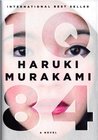
Book review: ‘1Q84’ by Haruki Murakami

1Q84
1Q84 by Haruki Murakami
My rating: 4 of 5 stars

The Little People are Watching You

“If something really existed, you had to accept it as a reality, whether or not it made sense or was logical. That was his basic way of thinking. Principles and logic didn’t give birth to reality. Reality came first, and the principles and logic followed.”

Murakami’s imaginative worlds — with preternaturally gifted girls, bewildered young men, misshapen men, magical creatures, violence, and passageways between various forms of reality — all set in a recognizable every-day mundaneness of contemporary Japan are the main element that attracts me to his work.

“1Q84” doesn’t disappoint. And the quote above does a great job of summing up the novelist’s approach to this novel and to writing in general — you have to go with wherever “reality” takes you. In “1Q84” that reality is a strange Japan in 1984, in which some characters can see two moons, and in which strange beings, called Little People, have such extraordinary powers that they help to power a religious cult, which rests at the heart of this really long novel.
Continue reading →