Blog

  • Essay: The Complexity of Asian Identities in America

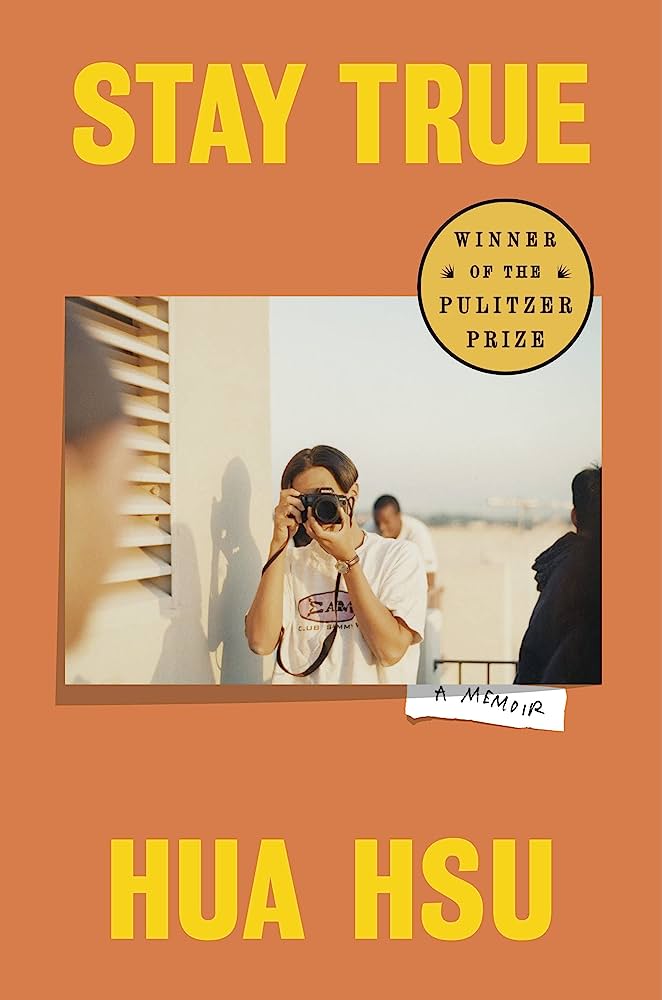
    Last summer, I was asked to write a response to Hua Hsu’s memoir Stay True as part of Skidmore College’s First-Year Experience summer reading program. I’ve been thinking about it since, especially how the questions it raises about Asian American identity remain unresolved. This is what I wrote.


    Hua Hsu’s moving memoir “Stay True” raises important questions about identity formation: Who shapes us? Our parents? Our friends? Ourselves? Strangers?

    “I defined who I was by what I rejected” (p. 27), Hsu writes, speaking of music, films, books, and people—including Ken, at first. Rejection is often one of the first acts of identity assertion: think of a toddler yelling, “No!” Hsu’s unexpected friendship with Ken can be read, in part, as Hsu recognizing that, perhaps, taste is superficial.

    What brings Hsu and Ken closer? Perhaps it’s their shared Asian-ness. They both feel distance from their parents. Hsu, whose parents are from Taiwan, even recognizes that Ken, whose Japanese American family has been in the U.S. for generations, has a stronger claim on America. But he also suggests that the white-dominant culture of the U.S. doesn’t offer them clear futures when he writes of their friendship: “Who needed role models when we had one another?”  (p 191).

    I think you can read their creation of Barry Gordy’s “IMBROGLIO” as their attempt to write themselves into being. Such an assertion of identity, though, creates tension with the dominant culture. Perhaps negotiating that tension is what it means to be Asian in the U.S.?

    That rings true to me. I was always filled with anxiety on the first day of class in school and college. A teacher or professor would stumble over my family name, Janairo, pronounced ha-NIGH-row, and put an unwanted spotlight on me.

    As the son of a Filipino immigrant father and an Irish American mother, I can pass as white. I could accept the mispronunciation and say, “Here!” But I like being Irish Filipino American. I want to respect my family name, my history. So I always give the correct pronunciation and, anticipating a question, say where my father is from and, then, anticipating another question, mention my mother’s heritage. This often makes me an object of fascination (“That’s so interesting!”) or suspicion (“Are you kidding?”).

    A moment in “Stay True” hit me as especially poignant. In a rhetoric seminar discussion on race, Ken finds students dividing themselves between Black and white, while he “was hardly seen at all” (p. 78). That moment epitomizes how superficial—how skin deep—the concept of race is. Ken doesn’t fit the Black-white binary, so he isn’t seen; I, with white skin, claim a Filipino-ness, so I become a curiosity.

    So how do we assert our identities?

    There’s a nihilistic answer in Ken’s horrific murder. It suggests that, despite all of his brilliance and fun—his recognition of Hsu!—powerful forms of cruelty exist that don’t care and can take it all away.

    A much more positive answer is the fact the memoir itself now exists. All its remembrances and illuminations of the Asian American experience, especially the complexities within those experiences, show the real power of sharing our stories to open up new understandings of our world, even long after a key player is gone.

  • New Music by Maximiano: Puppers

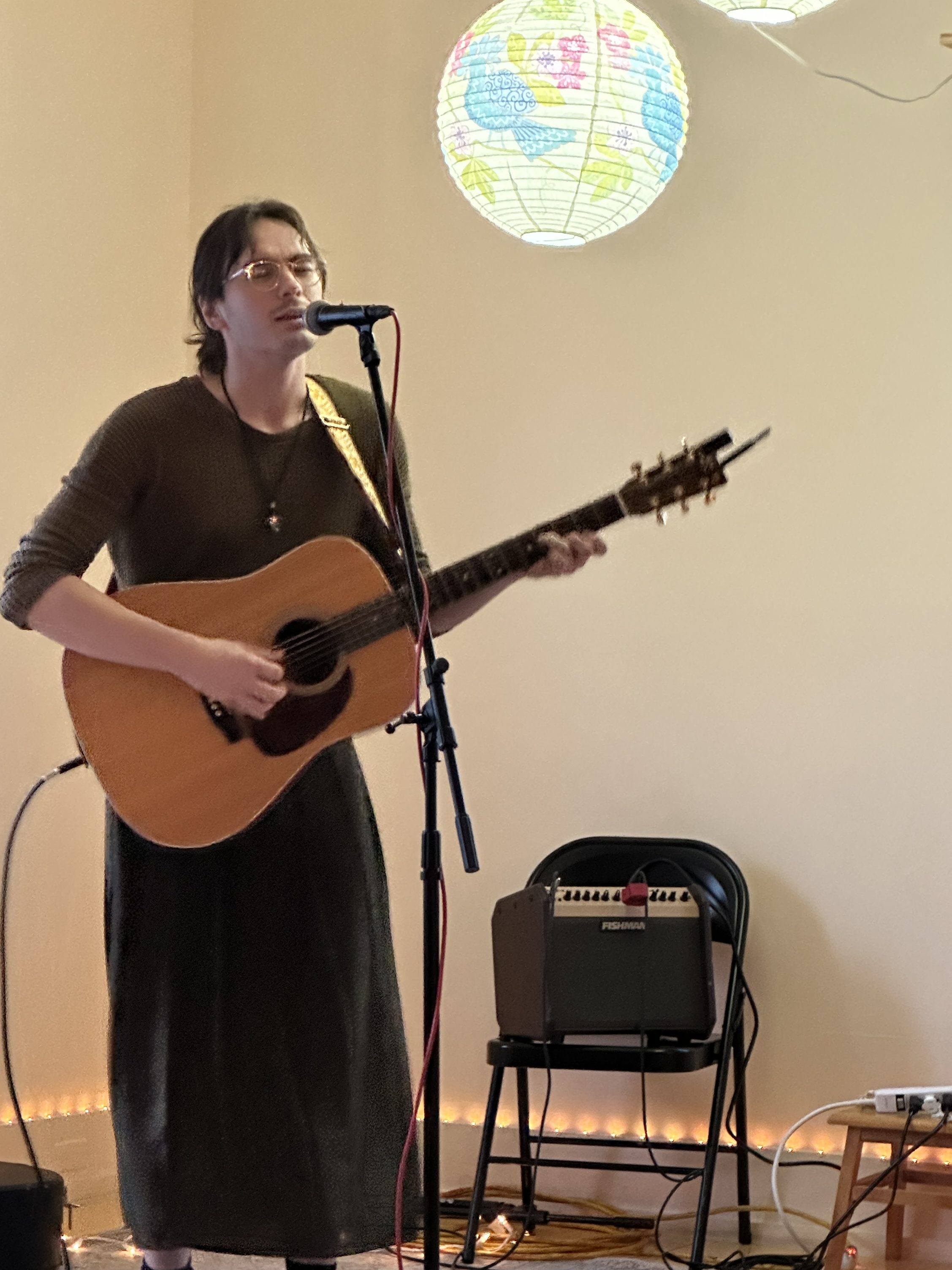
    I’m so happy to share Maximiano’s latest single, Puppers!

    I first heard this song live at Stella Yoga in New Paltz, as the closing son of Maximiano’s opening set for Ella Goodwin. Maximiano was in town to make a new recording of Ella’s music—something to look out for.

    In the meantime, check out his new single and let me know what you think.

    If you’ve been a reader of my blog, Maximiano’s name might look familiar—they share the name with my brother, father, and lolo!

    A musician performing live, playing an acoustic guitar and singing into a microphone, with stylish ambient lighting and decorative globes in the background.

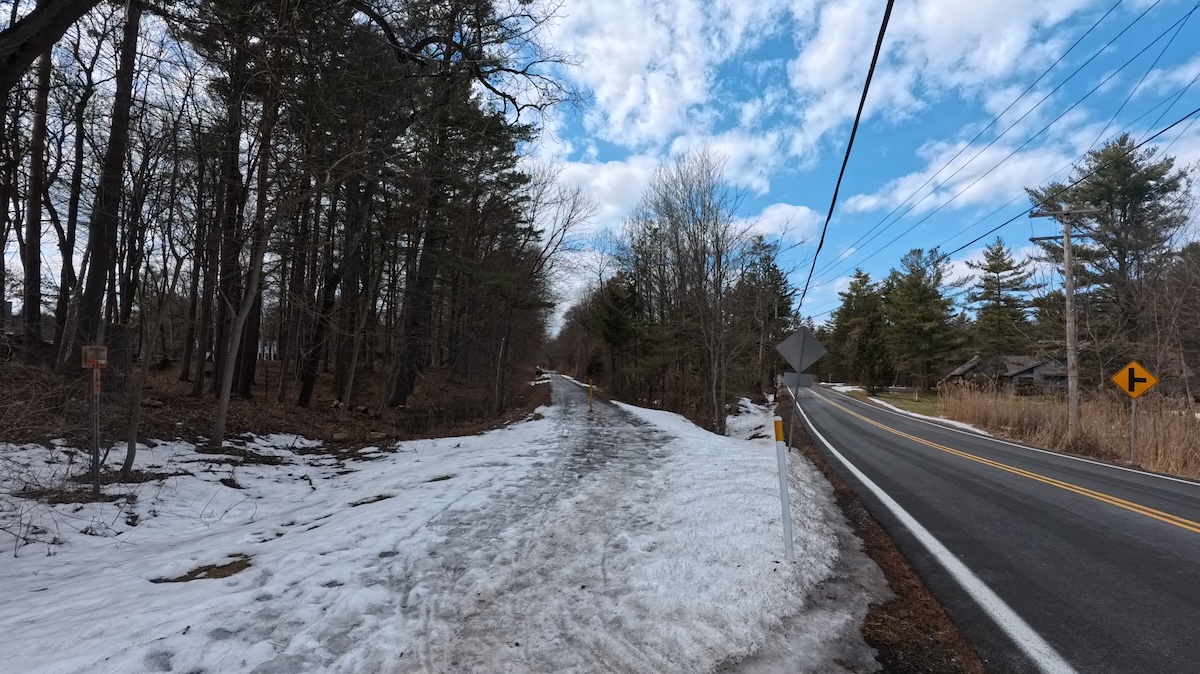
  • The cyclists dilemma …

    Actually, taking the road was a pretty easy choice.

  • A family reunion

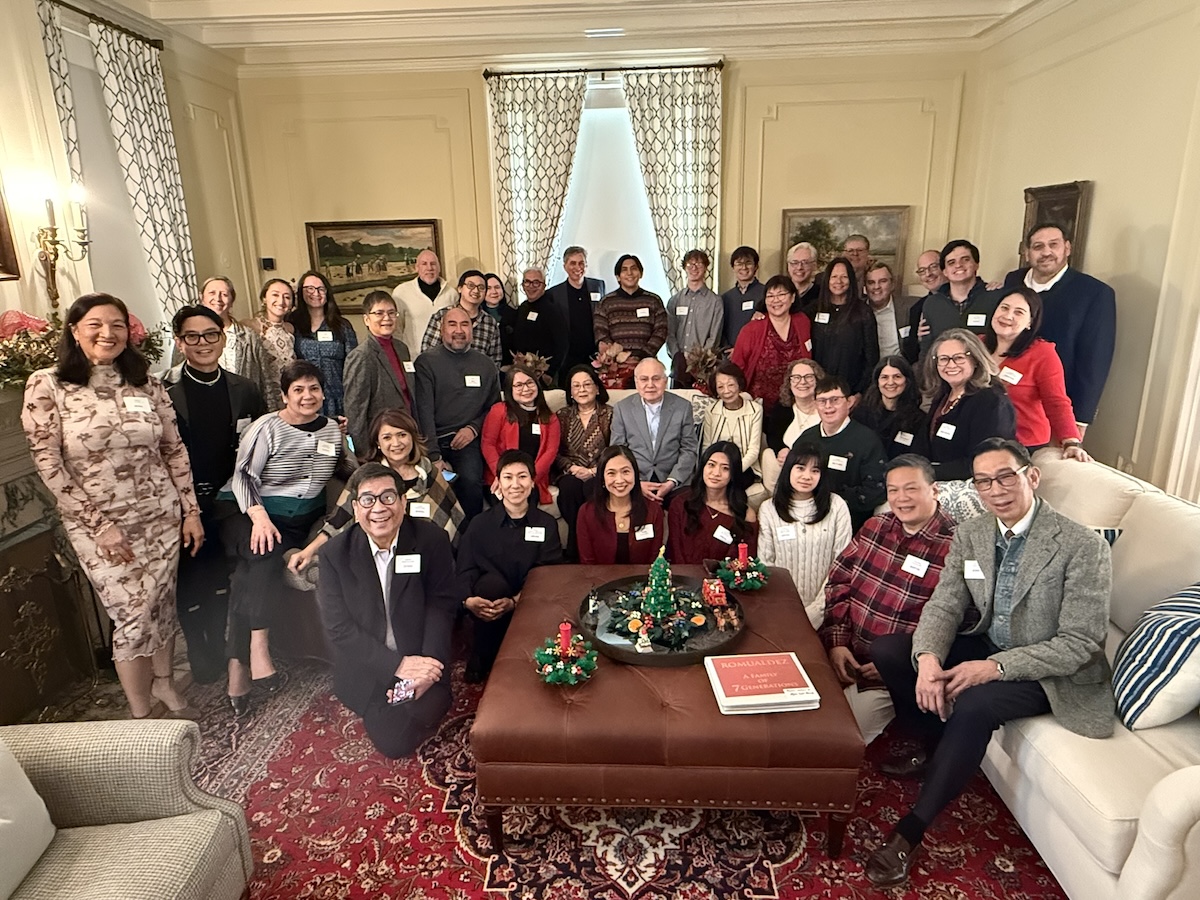
    A large gathering of people in a living room

    What a great family reunion at the residence of the Philippine Ambassador in Washington DC—what some of my cousins referred to as the “ancestral home.” My lola’s brother was once the ambassador, and now my cousin (my lola’s nephew) is the ambassador.

    Everyone here is a descendent of Miguel Froilán López Romuáldez and  Brigida (Binday) Zialcita Romuáldez (or is a spouse of a descendent), who had seven children. Representatives from each of those seven families were present. A great get-together!

  • Poem: Benevolent Assimilation

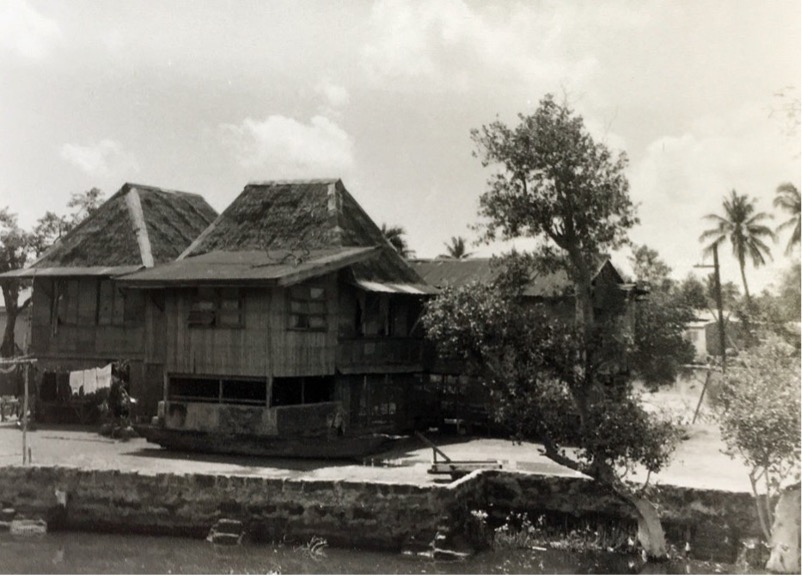
    This poem was originally published in the inaugural issue of the now-defunct Canadian publication re:asian magazine on May 30, 2017. The publication included the photo above of the home where my lolo — grandfather — grew up.


    The mission of the United States is one of benevolent assimilation 
    President William McKinley, December 21, 1898

    My first flight to Manila slammed turbulence and dropped,
    wire tangles and oxygen masks falling from consoles
    as fellow passengers shrieked in horror and murmured
    prayers and worried rosary beads as still we fell

    Beside me, a mop-haired student white-knuckled his armrest
    and refused one of the bottles of water left in my lap
    by a harried flight attendant rushing to his jump seat
    as still we fell and he asked: Aren’t you afraid?

    Something like fear structured my feelings around the word Philippines and whatever it was that connected me to it
    and inspired a grade-school history project and devouring Philippine history from the American, the victor’s, point of view,

    a view I knew also to be mine and not mine at the same time,
    an auburn-haired traveler with freckles and food- and music-loving tendencies that others had said defined a kind of Filipino,
    not that I could share all this with my seat mate.

    What daunting shame enveloped me in U.S. history,
    from the Declaration’s heights of human liberty,
    and the Constitution’s rights of the citizenry to stumble
    upon McKinley’s twisted view that shaped my destiny.

    My report lacked room for history’s trajectory
    that led me to be a First American Born mestizo
    but I could report on the facts of U.S. diplomatic duplicity of a deal to thwart Aguinaldo’s rebellious tendencies.

    So structures, not fate, crafted in the benevolent guise
    of American supremacy, a Democratic-loving vassal
    of the Empire of hypocrisy that defines all American histories, traced in twisted terms in eminent proclamations.

    The flight steadied, course corrected, and my seat mate,
    prayers answered, cheered when wheels touched ground,
    while I, pale and exhausted, shuffled onto ancestral ground,
    feeling familiarly unsettled, a homecoming, not home.

    Michael Janairo’s family name, pronounced ha-NIGH-row, is listed in the Catálogo alfabético de apellidos, which was created in 1849 by the Spanish colonial government to give surnames to Filipino subjects who lacked them. His Filipino father and American mother met in Germany; he was born in Iowa. His writing has been published in or is forthcoming from Lontar #8, Mithila Review, World Haiku Review, The Ekphrastic Review, Long Hidden anthology, Eye to the Telescope, Kartika Review,Walang Hiya anthology, and Maganda Magazine, among others. He lives and works in upstate New York and blogs at http://michaeljanairo.com.

  • Short Story: Auntie Lovely Says Goodbye

    This story was originally published in the Ray Ortali’s magazine We Love Books and Company, April 2016.


    Auntie Lovely turned around in the passenger seat. She aimed her large, brown-tinted sunglasses at me, her serious face adorned by a floral-patterned scarf worn over her head and tied around her neck. She radiated old-Hollywood style. Especially compared to her driver, Bong Bong, a young man about my age who sported a red baseball cap with a curved visor low over his eyes as he rolled her Toyota Camry down the driveway, through the gate and onto the road.

    A serious frown cut through Auntie Lovely’s heavy jowls, giving her a sad-froggy face that recalled the grainy black-and-white portraits in her living room of her father (my lola’s older brother) and her lolo (my great-grandfather), two serious-looking men frozen with amphibian frowns that , unfortunately, I had also seen in my own father (who was Auntie Lovely’s first cousin) when he was locked in deep concentration, and which, at that very moment, I knew would one day be my own.

    “I must warn you about the airport,” Auntie Lovely said, with gently rolling Rs undermining the sternness in her voice. “It is not like the States. People jumping, shouting. Vehicles parked any which way. Two truckloads just to say goodbye to one person. Typical Third World.” She let out a weak, embarrassed laugh, and then re-adjusted the bulk of her body to face the street, still frowning. Bong Bong drove past the armed guards in the gatehouse of her subdivision and into the bustle of Manila.

    The morning streets were filled with jockeying jeepneys and revving motorbikes careening from one narrow opening to the next. Exhaust fumes and street dust billowed up to the second and third stories of buildings. Figures bent before shuttered storefronts to unlock and lift metal gates. Others in loose clothes hurried down dark streets. One slow-moving jeepney with peeling white paint caked in dust, the number “42” just below its roof, was so crowded that some people stood on a rear bumper, grasping metal poles for a ride.

    Auntie Lovely tapped the window with a manicured fingernail and said, “See? Where else but the Philippines?”

    I thought of the crowded buses I had seen in India and Indonesia, but said, “People do what they have to do.”

    She tsk-tsked, sounding both dismissive and embarrassed. She didn’t say anything more. The Toyota’s air conditioner hummed. We passed the jeepney, and it pulled into traffic behind us, passengers seated beside open windows covered their mouths with handkerchiefs. Bong Bong remained unspeaking as he drove.

    A creeping heat of embarrassment washed over me, telling me I had said something not just trite, but stupid and wrong. I often felt that way among my relatives, including my lola and lolo. Especially my lolo, or grandfather. Growing up, I was subject to his examining eyes, as he looked at my red hair and freckles, which I shared with my Irish American mother as if he didn’t quite understand how I — who didn’t look Filipino at all — could be his grandchild, an outcome of his and his wife’s decision to emigrate to America.

    Auntie Lovely must’ve felt something similar. At least that what I thought each time she looked at me with her frog-like frown, as unsure how to size me up, or what to do with me. What she did do, for the most part, was let Bong Bong drive me around Manila, leaving me, who lacked Tagalog, with a man who lacked English and acted so self-contained that he exuded an impenetrable seriousness that left us sharing long silences between the city’s tourist sites.

    I did spend time with Auntie Lovely during leisurely breakfasts in her dining room. The décor — fine-lace tablecloth, high-backed Narra-wood chairs, and wood-cut bas relief Last Supper on the wall — was exactly the same at my lolo and lola’s house back in the States, making it at once strange and familiar. At the first breakfast, I praised the sweet and succulent mango and papaya cut and served by Auntie Lovely’s uniformed cook, Rose. Auntie Lovely replied with a touch of pride in her voice, “Of course! This is top quality!” Then, with her next words, the pride faded to something less positive. She said, “In the Philippines, we call it ‘Export Quality’ — the best things in the Philippines, we export.”

    Now, in the car, she clicked her fingernail on the window again. She pointed to a motorized tricycle that carried bunches of what looked like green bananas tied to long, wooden poles. “Look!” she said. “Those are not bananas. Those are plantains. They must be boiled or fried. It is the only way to eat them.”

    As we passed, I saw the trike driver’s determined, pressed-together lips beneath mirrored-lens sunglasses, trying to ignore all the cars and motorbikes speeding past him.

    Soon after, Auntie Lovely said: “Look at that!”

    This time, she pointed to an ox-drawn cart stacked so high with baskets — at least three-stories tall — that the driver and oxen seemed to be transporting an intricate, woodcarved home in slow motion.

    “We call that a walking basket shop!” Auntie Lovely said, her excitement making her sound girlish and hinting at the liveliness she must’ve exuded in her teens and twenties, some sixty years before. That made me think it would’ve been fun to have toured Manila with her, to have known more about what her life had been like when she was a girl in Manila.

    The only story from her youth that she had shared with me centered around her husband. I met him the day I arrived at his and Auntie Lovely’s home, dropped off by my lolo’s youngest brother, Uncle Peping, after having visited other relatives in other parts of the Philippines. Auntie Lovely’s husband wore his thick black hair slicked back, and his shirts and slacks well-pressed on his thin frame. He looked dapper and precise, but frail, especially next to her well-fed girth. She hugged me; he shook my hand, and then excused himself. I didn’t see him again during my three-day stay — he was usually resting — until right before I left, when he came out of his room to shake my hand again.

    Auntie Lovely’s story, told over another breakfast, was about meeting him. When she was twenty, she attended a fancy dress ball every single night during the holiday break between Christmas and New Year’s, when the weather was the coolest and driest, and the whole county seemed to be in a celebratory mood. Each night, she met and danced with countless young men, some serious suitors and some not serious at all. It wasn’t until the final ball of that season, on New Year’s Eve, that she encountered the most worldly and dashing man, trim in a tuxedo and fluid on the ballroom floor. Then she said, “I was so taken with him, because he was older — ten years my senior — but now he’s just old.”

    I thought it funny — a bitter punch line — but the weary resignation in her voice stopped me from laughing. Now, after hearing youthful excitement in her voice, I wondered if I should’ve laughed. Maybe that would’ve signaled to her I was simpatico, even though I came from the States, was so much younger, and had never had driver or a cook, and had never been invited to a formal ball.

    Auntie Lovely said, “Here is the airport.” Bong Bong maneuvered onto the airport road. Cars, trucks, motorcycles, and vans parked and double-parked and triple-parked in a jumble along the curb leading to the terminal, just as Auntie Lovely had said. On a sun-drenched sidewalk, scores of people in various groups hugged and snapped pictures as they said farewell.

    Auntie Lovely gave out a heavy sigh and said, “Well,” disappointed at being right.

    Bong Bong slid the Toyota into a free spot along the curb. He hopped out and hurried to the other side to open Auntie Lovely’s door. I grabbed my backpack from beside me and stepped into clouds of exhaust and blazing morning heat. I strapped my pack to my back and stepped closer to Auntie Lovely to say goodbye. Even with her sunglasses on, she was squinting. But not at me; past me.

    I turned around. People approached from two cars, doors still open. My Uncle Peping led the way, arm in arm with his wife, Auntie Concepcion, followed by their son, Arcadio, and his wife, Isabel, and their young children Miles and Sophie, as well as another one of my lolo’s brothers, Uncle Sonny and his wife, Auntie Bebe, and their daughter-in-law Maricar and her young daughter, Pauline, who was shouting, “Tio! Tio!” and running past everyone to give me a hug goodbye. Soon, I was surrounded by smiling faces and hugs and kisses and “Safe travels” from relatives I had just met during my first visit to the Philippines. The force of all their well-wishes mixed with the weight of my backpack had me teetering off balance.

    Bong Bong grabbed my arm to keep me from falling. I said, “Salamat!” and saw my Auntie Lovely supporting herself on Bong Bong’s other arm.

    She released his arm and stepped toward me. My other relatives moved aside. She strode with lifted head, so poised —regal even — that others turned to look at her.

    She said in a voice that only I could hear: “A perfect Philippine send-off; you’ll always remember us.” She wrapped me in one final hug, the last to say goodbye.


    Michael Janairo is a former newspaper columnist and arts editor who now works as the Assistant Director for Engagement at the Frances Young Tang Teaching Museum and Art Gallery at Skidmore College. He has a short story forthcoming in Lontar: The Journal of Southeast Asian Speculative Fiction, and his writing has been published in various journals and anthologies, including Long Hidden: Speculative Fiction from the Margins of History, Star*Line Magazine, Eye to the Telescope, Kartika Review, Maganda Magazine, Walang Hiya: Literature Taking Risks Toward Liberatory Practice, and the Abiko Quarterly. He lives in upstate New York with his wife, son, and dog. His family name is pronounced “ha NIGH row.” He blogs at michaeljanairo.com.
  • 2024 in Review: A Visual Journey in 12 Photos

    In looking back at 2024, I scrolled through the hundreds of iPhone photos I’ve taken. There are so many images of people, dogs, art, landscapes, cycling outings, hikes, vacations, and other trips. There were also tons of work-related images of art, talks, people, performances, and more. It was hard to choose. On a different day, I could have selected other images, told a different story. So this is one story of my year.

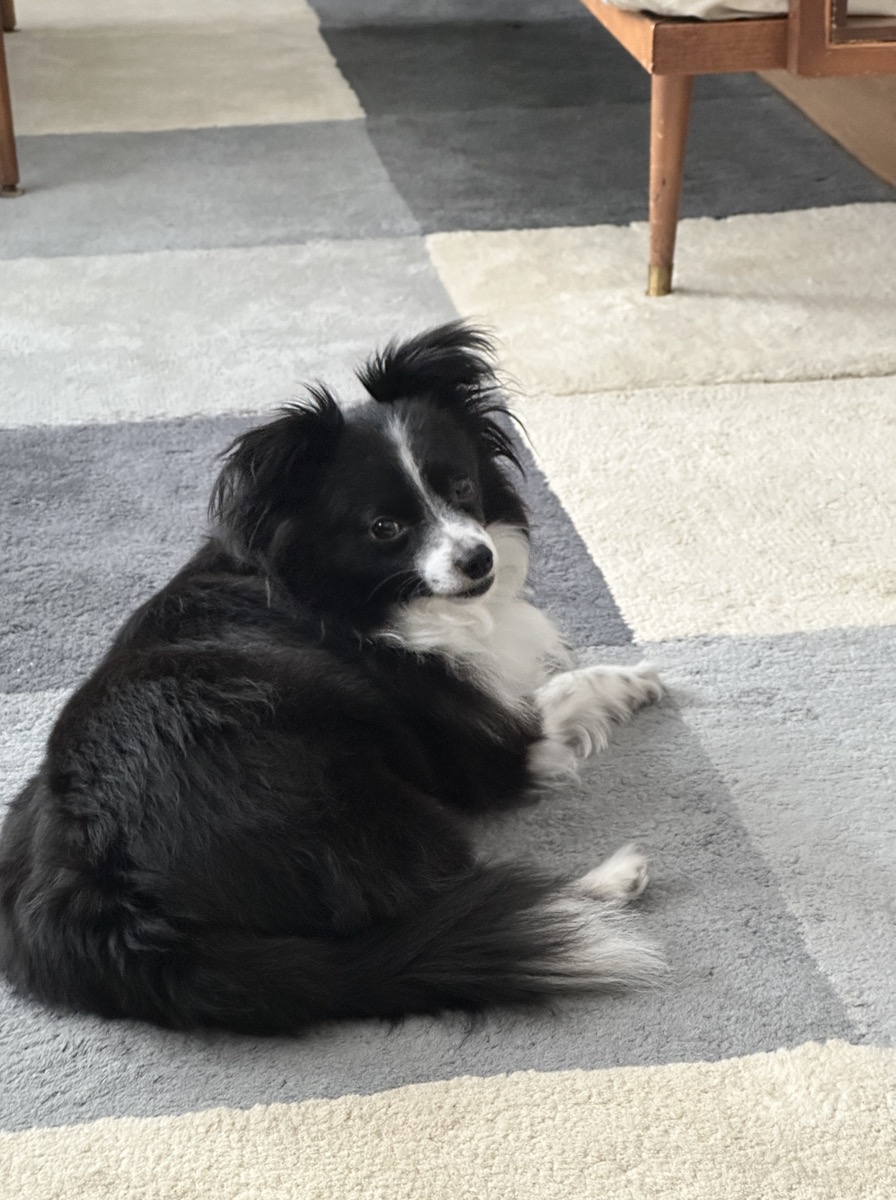
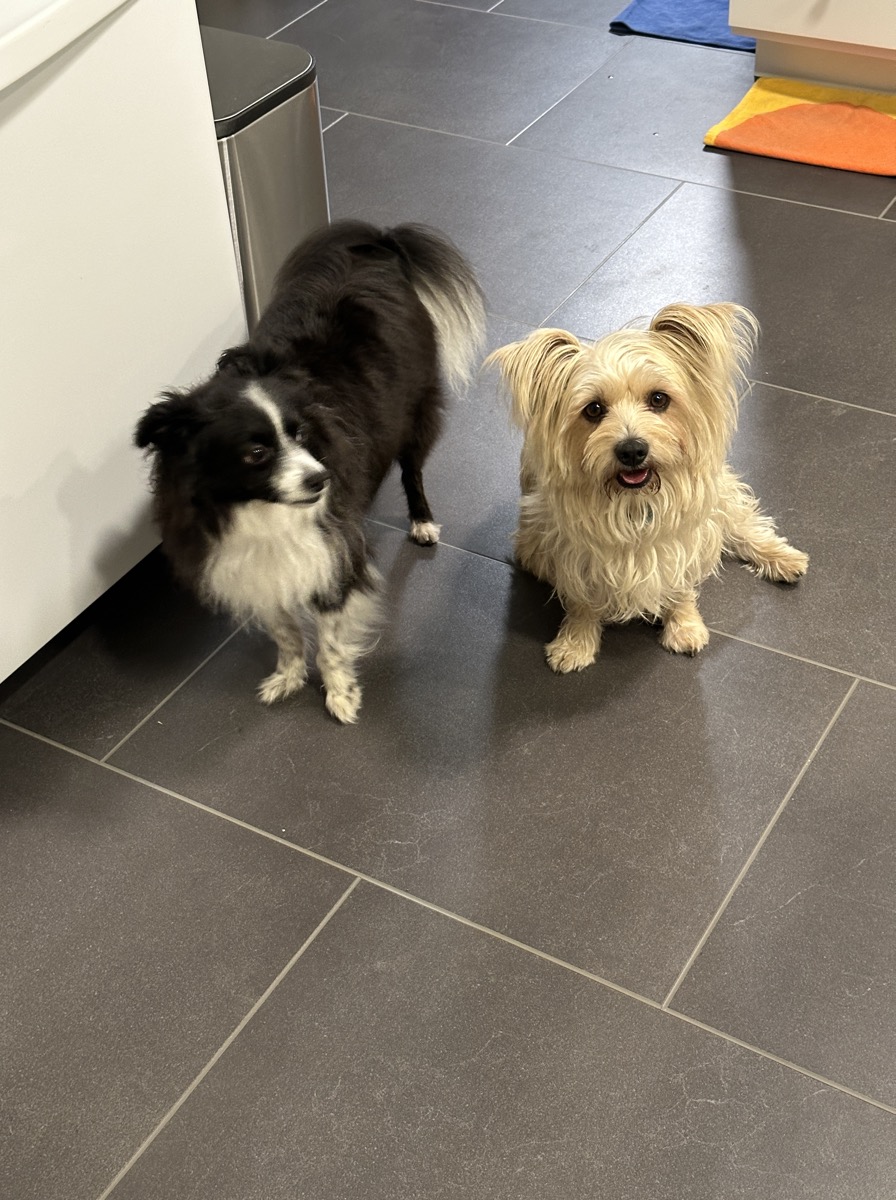
    January: Figgis at home, raises his head, as if a little startled to have his photo taken. Does he look lonely? Bored? Figgis came into our lives as a seven-month-old in May 2020. He was a pandemic puppy, and we were home all the time.

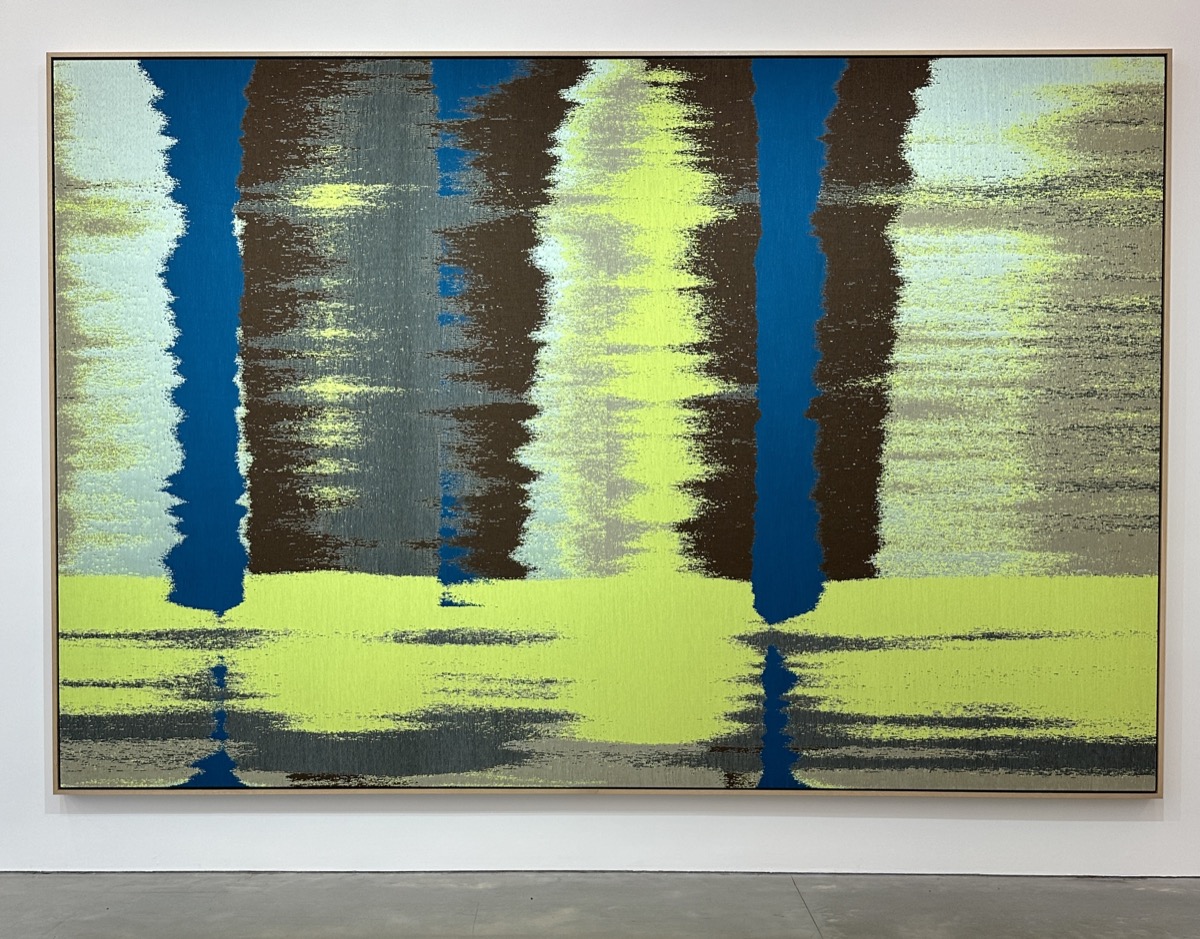
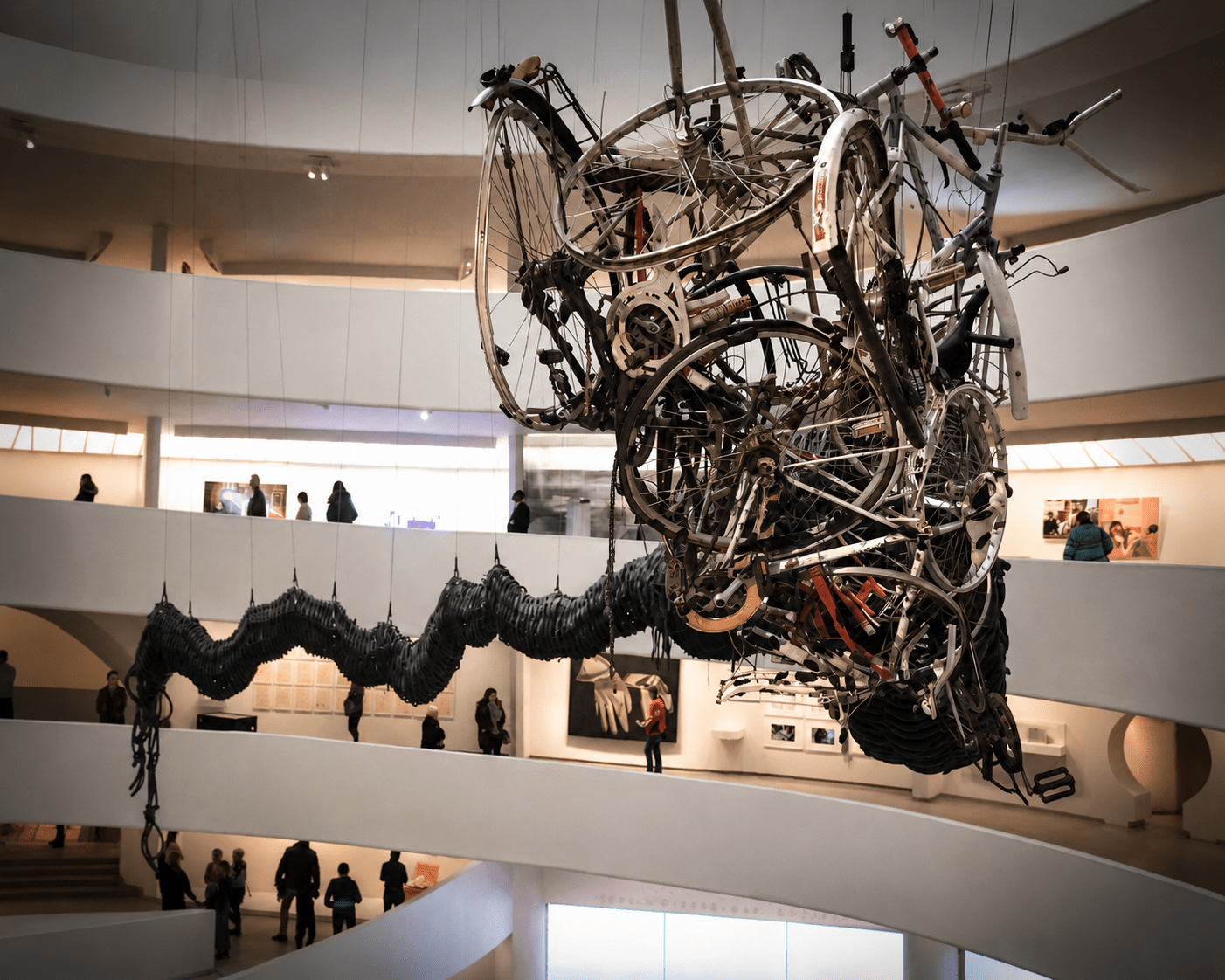
    February: Mika Tajima’s Negative Entropy (Deep Brain Stimulation, Yellow, Full Width, Exa), 2024, at Pace Gallery in NYC. A highlight of a day of gallery hopping. The work is made of cotton, polyester, nylon, aluminum, and wood. In the exhibition catalogue, the writer/curator Matilde Guidelli-Guidi describes Tajima’s work: “Her most recent series probes more concealed sonic vibrations, portraying the electric pulses emitted by the brain during surgical stimulation intended to repair damage. Working closely with a neuroscientist, Tajima obtained scans of brain frequencies that she then translated into a woven pattern and rendered at a monumental scale.”

    March: FaceTime, Brothers, Glasses and partial faces. This started as a call to me from my younger brother, Matt. We slowly added our older brothers one by one. Who knows what we talked about over the next hour or so? It was a fun conversation, though.

    April: Eclipse, 97 percent totality, still pretty bright. Thanks to Skidmore for the nifty eclipse glasses! This is the first of three celestial-related images in this annual round up. I suppose I do spend a lot of time looking up at the sky, stars, clouds, and, in this case, the sun. I also spend time looking down at the ground, at what images such events create here on earth.

    May: Aurora borealis visible from home. I never thought this would ever happen. I always thought I’d have to go much farther north, like Scotland or Finland, to see the northern lights. Of course, this isn’t as dramatic or as green as I was expecting. But still this was something I’ve always wanted to see since that scene in the movie Local Hero.

    June: Figgis welcomes Ooma to her new home. Both Figgis and Ooma came to us via Hay Dude Critter Rescue in Texas. Ooma was found on the streets of Las Cruces, New Mexico. She had recently been attacked by other dogs. She had deep bite marks on her that were still healing when she reached us. We remembered the 3-3-3 rule: it takes 3 days for a dog to recover from the stress of moving; 3 weeks to figure out the routine of her new surroundings; and 3 months before she truly feels at home.

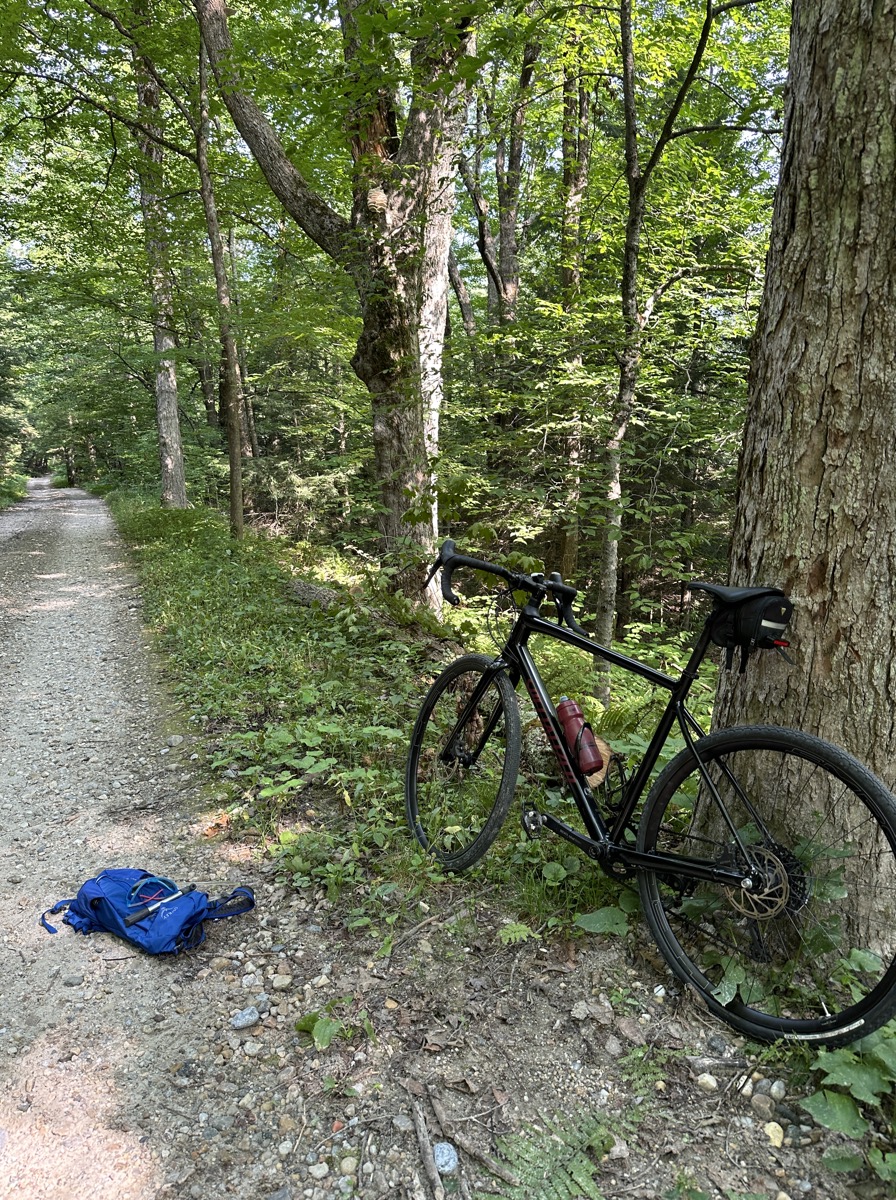
    July: Flat tire, Beartown State Forest, Berkshires. I saw a bear the day before on a road that runs alongside the state forest. My rear tire flatted out when I was on the gravel rounds deepest—and chunkiest—point in the forest. No cell service. No other people. Barely any birds. Thankfully, no bears.

    August: Hotel art in Atlanta, quoting “Gone with the Wind” (it says “After all tomorrow is another day”). The novel and movie have long associations with Atlanta. And this was in a new-ish hotel (it opened in 2018). Didn’t they also know the novel and movie have long associations with racism and white supremacy? Were we suppose to not think of the connection? Would having those words above your hotel bed read like a hopeful message? Anyway, we were in Atlanta for Deborah’s first exhibition at Sandler Hudson Gallery. We had great times visiting the High Museum, the SCAD Museum, Debbie Hudson and Robin Sandler (the gallerists), and the designers Bradley Odom and Peter Huesemann-Odom (of Dixon Rye).

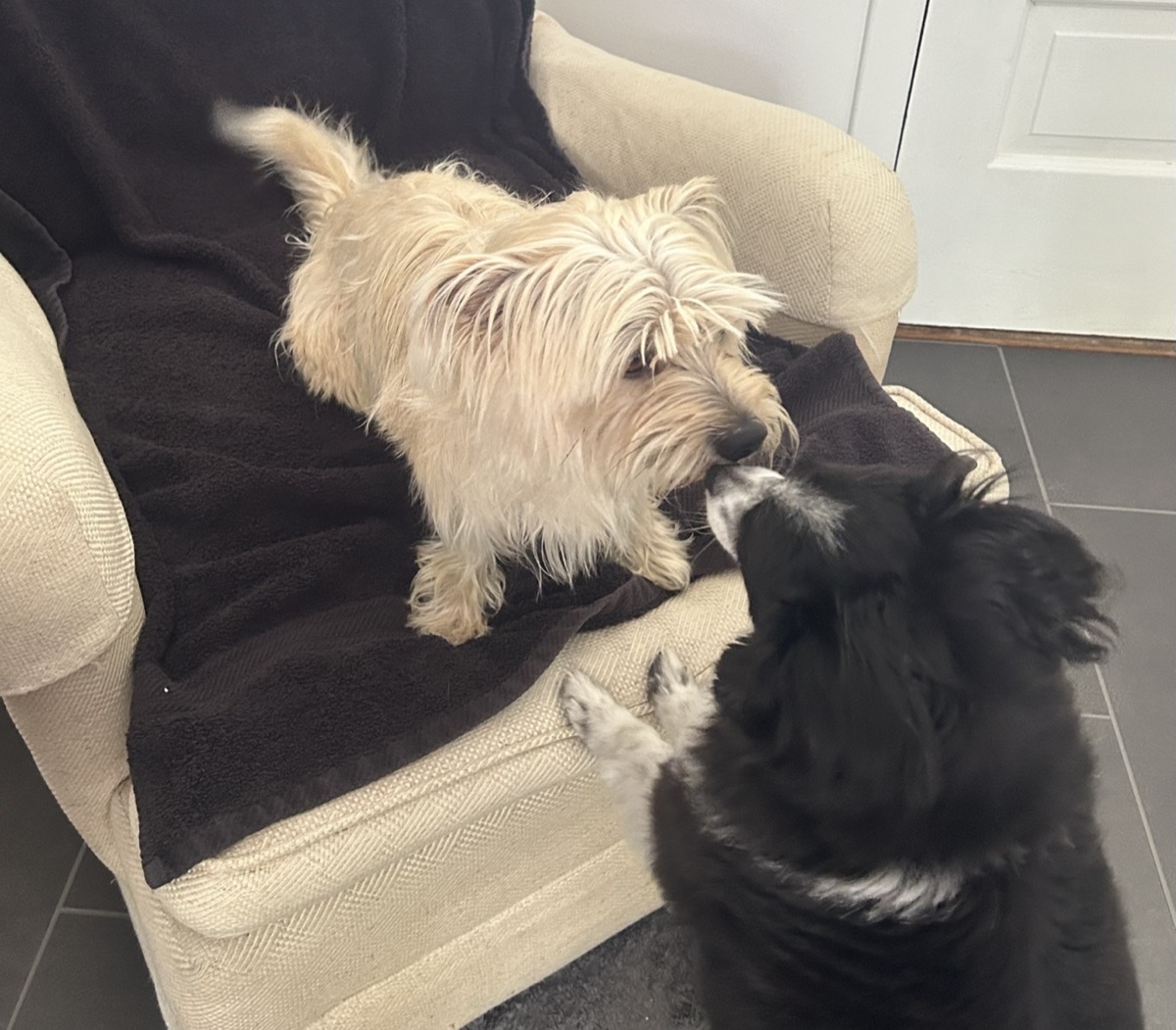
    September: Figgis and Ooma at home. This is exactly three months later. Ooma had put on some weight (she was too skinny when we got her). She and Figgis have gotten along great right from the beginning. Here, she looks perfectly comfortable and happy in her new home.

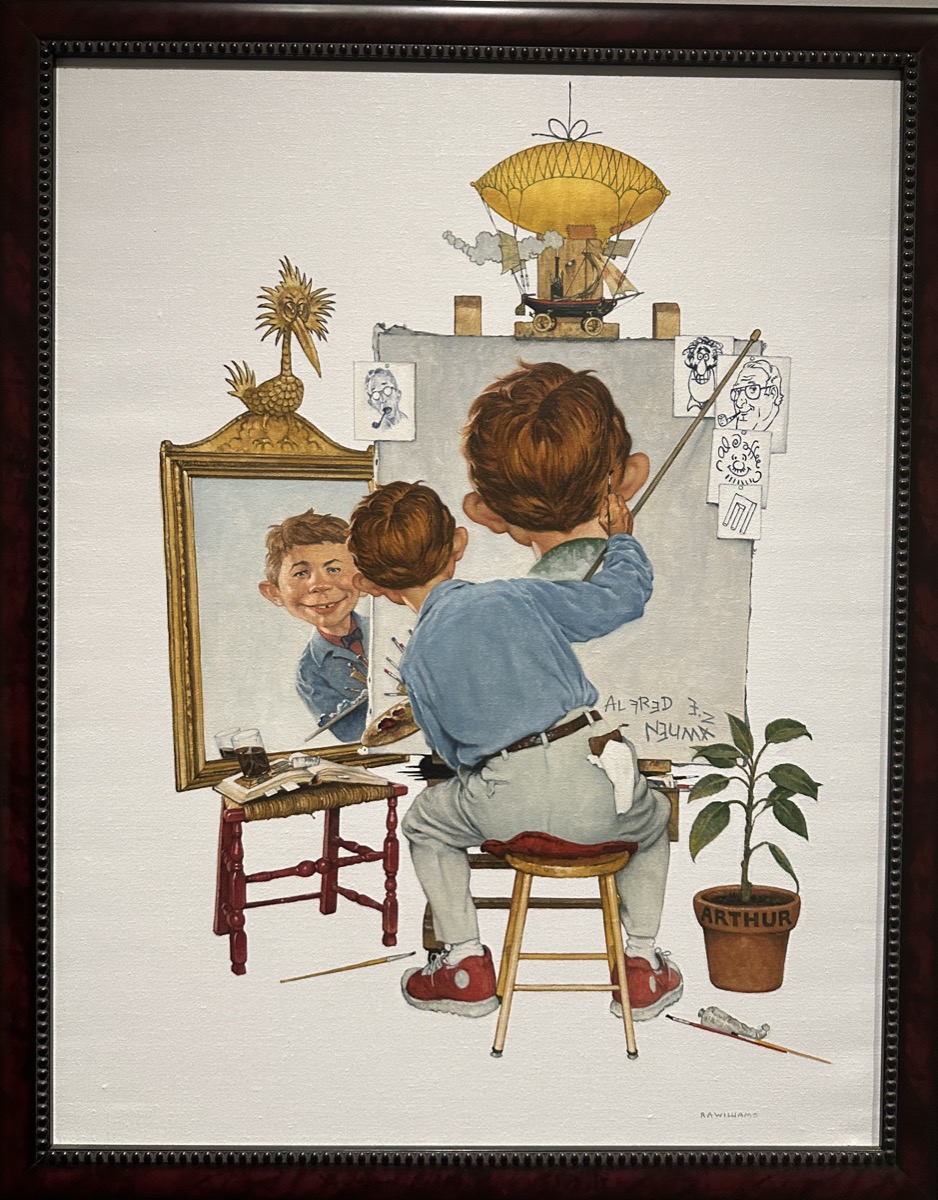
    October: Richard Williams’ parody of Norman Rockwell’s self-portrait featuring Alfred E. Newman, on view at the Norman Rockwell Museum. What a trip down memory lane, with more than 150 works on view. My one quibble with the exhibition is related to my favorite part of the magazine, the fold-ins. These were trippy illustrations that, when folded in, brought two sides of the illustration together to form a new illustration. The new illustration was often a comment on the first illustration. In the exhibition, one wall was dedicated to the fold-ins (😊). However, the wall only showed the full open illustration; it didn’t show what the folded-in illustration would look like (😢).

    November: Schroon Lake in the Adirondacks, on a break during a writing retreat. The writing retreat was made possible by an individual artist grant via a program called Arts Thrive and Grow. I’m happy to share the required language for all marketing related to the grant: “Arts Thrive and Grow has been funded by New York State, Kathy Hochul, Governor. We thank Senate Majority Leader Andrea Stewart Cousins for her extraordinary commitment and leadership, and our elected officials who represent our grantmaking region: Senators Jake Ashby and Neil D. Breslin; Assemblymembers Scott H. Bendett, Patricia Fahy, John T. McDonald III, Angelo Santabarbara, Phil Steck, and Mary Beth Walsh.”

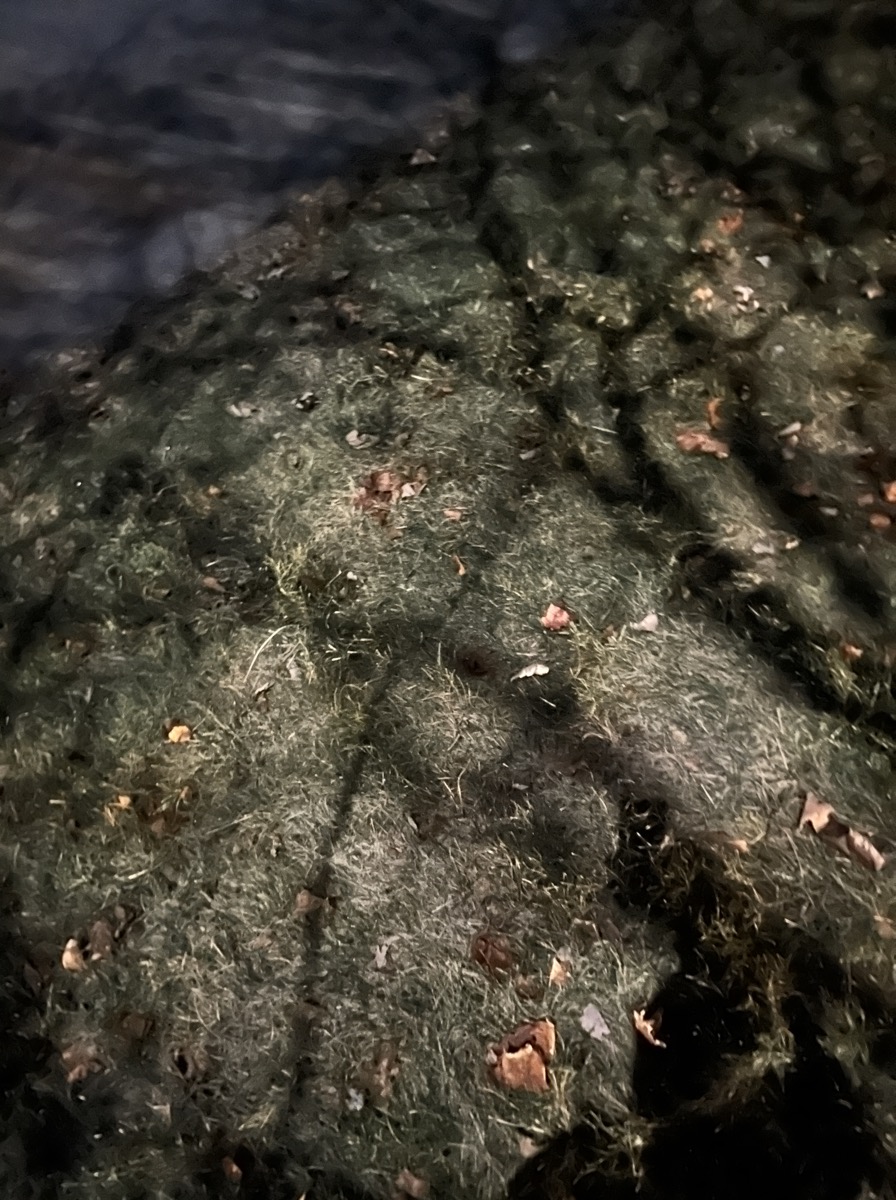
    December: Moon shadows through branches on the front yard. I was taking out the trash bins when I notice the dark lines cutting across the front lawn. They looked deep, like tire tracks pressed into the hard earth. Then I noticed the bright moon and took this photo.

    If you were to pick one image a month to tell the story of your 2024, what would you pick?

  • Discover Filipino Material Culture Online

    You never know what you might find online. This was from a Blogger site called Pinoy Kollector, which came up during some research.

    I wondered if it would be possible for a character in the novel I am working on, a teenage girl from a wealthy family, would wear a watch or carry a pocket watch.

    When I came across the Pinoy Kollector site, I was intrigued for a few reasons.

    • It’s an active Blogger site! It felt like a throwback (maybe all blogs are a throwback!)
    • What great closeup photos of these antique watches!
    • The post on pocket watches is numbered 120, and the most recent one from June 2024, is numbered 175—that’s a lot of collections and a lot of history!
    • The first post is from 2010—so that’s 175 posts in 14+ years (good job!)

    I came away from the blog thinking that this is both a great way to see some of the material culture of the Philippines, but also to learn about Philippine history.

    Highly recommend taking a look. Enjoy! Check it out.

  • Today’s Google doodle: Adobo!

    Today’s Google doodle: Adobo!

    Hard to believe but my favorite comfort food is today’s google doodle, with a handy link to all things adobo.