From the Chronicle of Higher Education, Lindsay Waters, the executive editor for the humanities at Harvard University Press, is calling for a “revolution in reading” by asking people at all levels to read slowly for the pleasure of the words, as opposed to reading quickly to synthesize the information.
This seems like a brilliant idea. In my teaching of university students (mostly writing courses), I find that they are able to synthesize material and engage readings in abstract ways, but they are ill-equipped to deal with the materiality of language — seeing how the words on the page work, or using words to make a logical argument or describe a vivid scene.
Here’s an excerpt from Waters’ essay:
There is something similar between a reading method that focuses primarily on the bottom-line meaning of a story in a novel and the economic emphasis on the bottom line that makes automobile manufacturers speed up assembly lines. If there is any truth to the analogy, it provides grounds for concern.
I want to ask what reading would look like if we were to reintroduce, forcefully, the matter of time. Let’s leave Evelyn Wood behind, and let’s leave Franco Moretti behind, too. The mighty imperative is to speed everything up, but there might be some advantage in slowing things down. People are trying slow eating. Why not slow reading?
Nietzsche defined philology as the art of teaching people “to go aside, to take time, to become still, to become slow.” If we look at the dynamics of what I call “slow reading,” we might be able to explore the values of a methodology that has links to what was once called “close reading” — but that goes beyond close reading in a number of ways that might prove particularly valuable today. The one thing necessary is that we put aside our normal adherence to punch-clock time, a universal measure that has us all in its grip.
The most skillful writers are always playing with our timing as readers, for example by retarding our progress through their works, causing us to linger and pay closer attention than we might have wanted. The late literary critic William Empson said that the poet uses the physical properties of words not to stop us, but to make us dally through the great amount of thought crushed into a few lines.
The full essay is behind a paywall.
Some other interesting links:
 The National Book Critics Circle has announced today winners of three prestigious prizes and nominees in nonfiction, biography, autobiography, poetry, criticism and fiction. The awards will be announced on March 15.
 We had a Zenith television when I was a kid. It was big, bigger than me. When we wanted to change the channel, we had to get up and turn the dial. When the plastic dial broke, or at least the part that connected it to the channel mechanism on the TV, then we superglued the broken bit of plastic back together. We used the dial until it broke, again. We superglued it again. This kept going on until the plastic dial couldn’t be repaired anymore. Then we just risked cutting our fingers against the sharp-edged plastic of the now-exposed channel changing mechanism. We pressed our fingers against it, twisted our wrists and changed the channel. There were only 13 stops on the dial, and only four stations: ABC, CBS, NBC, and PBS, so it wasn’t that big of a deal. We made do and we kept that TV long after friends started to buy Sony Trinitrons. Eventually, we got something from Panasonic.
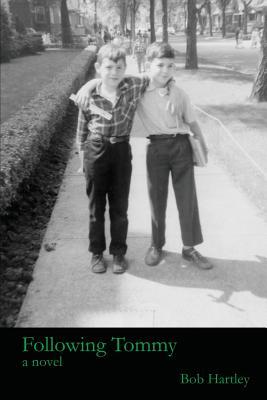 Following Tommy by Bob Hartley is a gem of a book: hard, brilliant and valuable.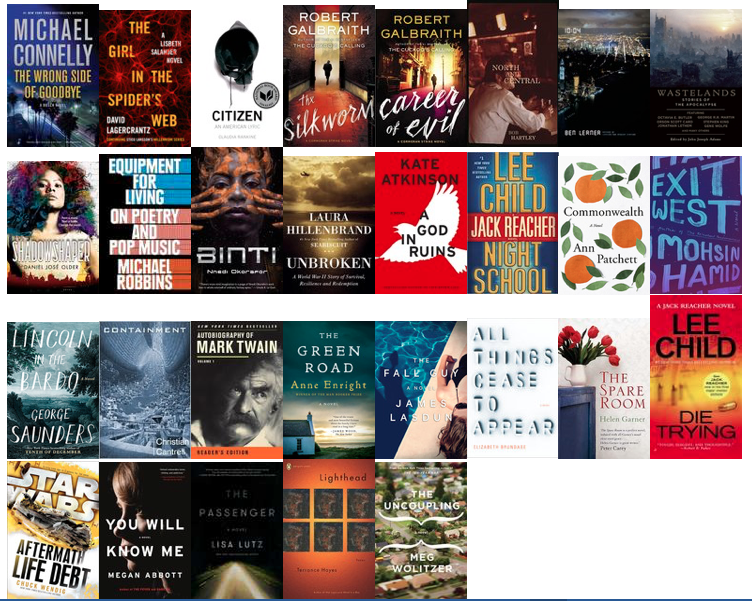
 I guess it could seem silly, how fascism works—from the micro to the macro—that seven reasonable terms would become forbidden for the CDC to use. That’s the Center for Disease Control and Prevention. The Atlanta-based federal agency that the U.S. turns to when during vulnerable times, when there’s a need for evidence-based and science-based research so that the diversity of the whole population can stay safe from things like
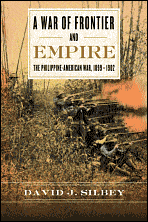 As President Bush tries to shape his legacy in regards to the Iraq war, he should pick up David Silbey’s engaging history “A War of Frontier and Empire: The Philippine-American War, 1899-1902” (Hill and Wang; 272 pages; $26).