Author: Michael Janairo

  • Book review: ‘The Amazing Adventures of Kavalier & Clay’

    Book review: ‘The Amazing Adventures of Kavalier & Clay’

    This review was originally published in May 2001 in the Albany Times Union.

    Wonder boys in Gotham City:

    Vivid characters inhabit Michael Chabon’s ‘Kavalier & Clay’

    12470844666Michael Chabon’s Pulitzer Prize-winning novel, “The Amazing Adventures of Kavalier & Clay,” is a generous journey through the rise and fall of the Golden Age of comic books. It is a history lesson of the highest order: it’s informative but it’s also a humorous and richly entertaining read.

    More than the world of comic books, the novel stretches from Prague to Antarctica to the top of the Empire State Building. It includes Jewish mysticism, secrets of escape artists, vaudevillian characters such as the Mighty Molecule and historical figures like Salvador Dali and Gov. Al Smith.

    Chabon excels at this kind of literary juggling of vivid, off-the-wall characters and outrageous events, but his true talents lie with depictions of youthful, manic energy.

    The title characters are but teenagers when they come up with the Escapist, a comic book hero who frees people from the shackles of oppression. They both desire to make money, but for different ends. Sammy Clay (nee Klayman) is more of a schemer than an artist, his mind full of plots, a deep knowledge of comic books and wild dreams that comics are his ticket to freedom from Brooklyn. His cousin Josef Kavalier, a recent escapee from German-occupied Prague, buys into Sammy’s dreams, wanting money to buy his family’s passage to America.

    The cousins experience so many wonderful adventures that Chabon’s sentences overflow with energy. In this example, Chabon captures a feel for New York City and the immigrant’s sense of hope:

    “The whole morning, the rattling ride through the flickering darkness under the East River, the updraft of Klaxons and rising office blocks that had carried them out of the subway station, the ten thousand men and woman who immediately surrounded them, the ringing telephones and gum-snapping chitchat of the clerks and secretaries in Sheldon Anapol’s office, the sly and harried build of Anapol himself, the talk of sales figures and competition and cashing in big, all this had conformed so closely to Joe’s movie-derived notions of life in America that if an airplane were now to land on Twenty-fifth Street and disgorge a dozen bathing-suit-clad Fairies of Democracy come to award him the presidency of General Motors, a contract with Warner Bros., and a penthouse on Fifth Avenue with a swimming pool in the living room, he would have greeted this, too, with the same dreamlike unsurprise.”

    Chabon’s writing is lyrical and evocative, such as “gum-snapping chitchat,” but his words sometimes betray his slight of hand and draw attention away from the story. For example, in one scene Josef doesn’t roll a cigarette, he “prestidigitated a perfect cylinder.”

    Nonetheless, bringing together Kavalier and Clay allows Chabon to examine greater themes such as the immigrant experience, the promise of the American dream, and the modernist diffusion of high and low culture. Josef, for example, was educated at The Academy of Fine Art in Prague, whereas Sammy sold things such as shoelaces, seeds and candy bars door-to-door since the age of 6. Together they create comic books that are often, especially by Anapol, referred to as trash, though the Escapist and their other titles are recognized as standing out from the rest.

    Set against the backdrop of World War II, the cousins’ adventures take on greater importance – showing the vital creativity of Jews in America at a time when Hitler was intent upon killing all Jews.

    This importance points to one of the weaknesses of the novel, the uneven treatment of Josef and Sammy in the latter parts of the book. Though the title suggests the novel will be about both Josef and Sammy, it may be the nature of story telling to allow only one main character.

    As suggested by the name Kavalier, Josef’s story is more of a hero’s tale, filled with urgency and romantic drama. After all, he wants money to save his family from Hitler. His story is even mystical in his connection to the ancient Golem of Prague. And unlike Sammy, he confronts the futility of his creativity, recognizing that defeating Hitler in the plots and pictures of comic books does nothing to stop the Nazis. He signs up to fight in the war.

    Sammy’s story lacks that kind of narrative sweep, but he still has moments of heartbreaking drama, especially in Chabon’s sensitive portrayal of him as a young man filled with wonder and fear at his own homosexuality. However, Sammy’s issue with his sexuality doesn’t seem to be resolved even though it seems to be one of the most important aspects of his life. He never comes to terms with his sexuality as an adult. Rather, it seems Chabon is using his sexuality as a pre-text to include information about a 1954 Senate committee on the role of comic books in juvenile delinquency. Though this information is interesting in terms of art and government censorship, it lacks the same dramatic energy as Kavalier’s story.

    Nonetheless, Chabon shows himself moving in a wonderful direction with his fiction, with broader landscapes, long time periods and an adherence to historical realities.

    Through the rise and fall of the Golden Age of comic books, Chabon shows us the joys and limits of creativity, the difference between art and real life, and the enduring human dilemma between duty and the desire to escape.

     

  • ICYMI: #TrumpBookReports meet Middle-earth

    ICYMI: #TrumpBookReports meet Middle-earth

    Tr-mp in the final debate was bigly horrifying, should’ve been important, and yuge, but he was weak. Sad!

    So if he loses, maybe he’ll disappear, but I truly fear that his biggest contribution will be to alter the English language. More and more people are adapting his braggadocious terminology in sarcastic ways — I’m sure you’ve heard it among friends, classmates, and colleagues, who are suddenly saying and/or writing “yuge” about the mundane things.  A high school reunion was touted on FB as “it’s gonna be huge. It’s gonna be phenomenal. The other classes all wish they could have a reunion this great, actually.” This mock braggadocio *is* fun, but will it go away when Tr-mp is no longer on TV everyday? Or will it linger, and the sarcasm end, and it will become an embedded and accepted part of language, with its users in a few years forgetting its origins?

    For book-lovers, one of the best things to come out of this endless campaign are the #TrumpBookReports on Twitter. Lots of people have written about To Kill a Mockingbird (“I could stand in the middle of 5th Ave & kill a mockingbird and not lose votes” from @LemonsandLaughs), Death of a Salesman (“I prefer the salesmen who DON’T die” by @dreamweasel), and Shakespeare plays (“Hamlet? Such a disaster. Can’t decide to be or not. Bigly indecisive. And Ophelia? Not my first choice.” by @KDanielGleason).

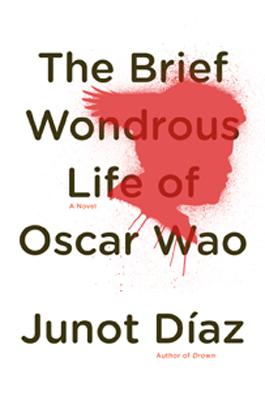
    My favorites, though, deal with “Lord of the Rings,” because I could never see Tr-mp reading the books, many of the jokes are very insidery, and it proves Junot Diaz’s theory in his brilliant novel “The Brief Wondrous Life of Oscar Wao” that one of the best lenses upon which to make sense of a dictator’s evil is “Lord of the Rings.”  Considering how much has been written and said about Tr-mp as being not only a bully and a strongman wannabe, but also authoritarian, the connection seems apt for this period of the political campaign.

    With that in mind, here is a curated selection of #TrumpBookReports featuring “Lord of the Rings.”

    https://twitter.com/chelsealindsay/status/789238355653332992

    https://twitter.com/CharlieAndyFitz/status/789114469351698432

    https://twitter.com/JustinDVaughn/status/789254705931177984

    https://twitter.com/BigBluC/status/789254310500700160

    https://twitter.com/Studynot/status/789253338378473473

    https://twitter.com/mind_butter/status/789252426842906624

    https://twitter.com/TMikeMartin/status/789245822693101568

    https://twitter.com/mrglenn/status/789242913397932032

    https://twitter.com/IdrisAdamjee/status/789228735547346945

    https://twitter.com/MagGnome/status/789203238654513152

    https://twitter.com/Gonzo_Ed/status/789179335777267717

  • Book review: ‘The Brief Wondrous Life of Oscar Wao’

    This review originally ran in the Times Union in September 2007.

    oscarwaoWow! Or should I say “Wao”?

    Junot Diaz‘s long-awaited debut novel “The Brief Wondrous Life of Oscar Wao” (Riverhead Books; 335 pages; $24.95) is the best book I’ve read this year.

    The story traces a fuku, or the “Curse and the Doom of the New World.” Oscar, an overweight first-generation New Jersey kid, is way into J.R.R. Tolkien,Japanese anime and science fiction (he’s writing aspace opera). But he and his family are cursed.

    His grandfather, a respected doctor in the Dominican Republic in the 1950s, feared his beautiful teenage daughter would catch the eye of dictator-for-lifeRafael Leonidas Trujillo Molina. Trujillo ruled from 1930 to 1961 and was known to rape the daughters of prominent citizens.

    (more…)

  • A vision of America: Witnessing divisiveness together

    Debate Watch Party
    Debate Watch Party (Photo by Andrzej Pilaczyk)

    How are college kids approaching this election? Where I work, we’ve had debate watching parties open to the public. The communal experience of watching the debates have been eye-opening for students, who say that they value the ability to share the moment with hundreds of others, to see in real life and in real time how others — fellow students and members of the community — respond to the words of the two major party political candidates.

    The togetherness, the shared experience, are a vivid contradiction to the divisiveness of the campaigns. They are a moment of hope. More photos are here.

    The next Debate Watch Party is at 9 pm Wednesday, October 19, 2016. More info here.


  • A bit of info on ‘American Feverfew’

    A bit of info on ‘American Feverfew’

    Came across this at the Cornell Plantation botanical garden.

    I like the name. “Feverfew.”

    My dictionary gives the origin as “Old English feferfuge, from Latin febrifuga, from febris ‘fever’ + fugare ‘drive away.’

    It’s also a fun word to type, mostly two fingers on the left hand, until that final “w.” It gives it — “feverfew” — a satisfying rhythm to my fingers on the keyboard.

    Here’s some more info about it from the state of Missouri: The name “feverfew” indicates the plant was used medicinally. Some Native American tribes made a poultice of the leaves to use for treating burns. Apparently the plant was also used as a diuretic. Today people plant it as part of a prairie restoration or native wildflower garden.

    fever-few-body

    And here are some citations of “feverfew” from the Oxford English Dictionary:

    c1000   in T. Wright & R. P. Wülcker Anglo-Saxon & Old Eng. Vocab. (1884) I. 134   Febrefugia..feferfuge.
    c1000   Sax. Leechd. I. 134   Curmelle feferfuge.
    c1425   in T. Wright & R. P. Wülcker Anglo-Saxon & Old Eng. Vocab. (1884) I. 645   Hec febrifuga, fevyrfew.
    1562   W. Turner 2nd Pt. Herball f. 79v,   The new writers hold.. that feuerfew is better for weomen.
    1597   W. Langham Garden of Health 234   Feuerfue comforteth the stomacke, and is good for the Feuer quotidian.
    a1646   D. Wedderburn Vocabula (1685) 18   Matricaria, feverfoyly.
  • What DJT meant to say (an edited transcript)

    What DJT meant to say (an edited transcript)

    I’ve never said I’m a perfect person, nor pretended to be someone that I’m not. I’ve said and done things I regret, and the words released today on this more than a decade-old video are one of them.

    Anyone who knows me knows these words don’t reflect who I am. I said it, I was wrong, and I apologize. I’ve traveled the country talking about change for America, but my travels have also changed me. I’ve spent time with grieving mothers who’ve lost their children, laid-off workers whose jobs have gone to other countries, and people from all walks of life who just want a better future. I have gotten to know the great people of our country, and I’ve been humbled by the faith they’ve placed in me. I pledge to be a better man tomorrow and will never, ever let you down.

    Let’s be honest — we’re living in the real world. This is nothing more than a distraction from the important issues we’re facing today. We are losing our jobs, we’re less safe than we were eight years ago, and Washington is totally broken. Hillary Clinton and her kind have run our country into the ground.

    I’ve said some foolish things, but there’s a big difference between the words and actions of other people. Bill Clinton has actually abused women, and Hillary has bullied, attacked, shamed and intimidated his victims. We will discuss this more in the coming days. See you at the debate on Sunday.

    Transcript from NYTimes.com.

  • A good time to look up

    This slideshow requires JavaScript.

    Nine views of the sky over the past nine days in upstate New York.