I’m thankful for Obama’s Medal of Freedom selections

I’m thankful for this last group of Presidential Medal of Freedom winners, spanning so many endeavors and achievements of excellence. I’m also thankful for President Obama for making these selections, and making possible a bright ray of hope for these times.


Continue reading →

Video: Sun Yuan and Peng Yu’s “Can’t Help Myself”

In Sun Yuan and Peng Yu’s “Can’t Help Myself,” an industrial robot works away inside a glass box at the Guggenheim Museum.

What’s it made of? Kuka industrial robot, stainless steel and rubber, cellulose ether in colored water, lighting grid with Cognex visual-recognition sensors, and polycarbonate wall with aluminum frame.

Is it making art? Is it commenting on how art is made? As a robot uses a giant brush to push liquid around, are we watching a creative act or a programmed act? What determines these actions? Where does this leave viewers? In awe of a machine in motion?

Check out one of the Guggenheim’s newest additions to its collection:


Paul Klee + Gertrude Stein + Nederlands Dans Theater

On the fifth floor of the Met Breuer, in an exhibition called “Humor and Fantasy — The Berggruen Paul Klee Collection,” is this untitled Paul Klee watercolor painting from 1914:
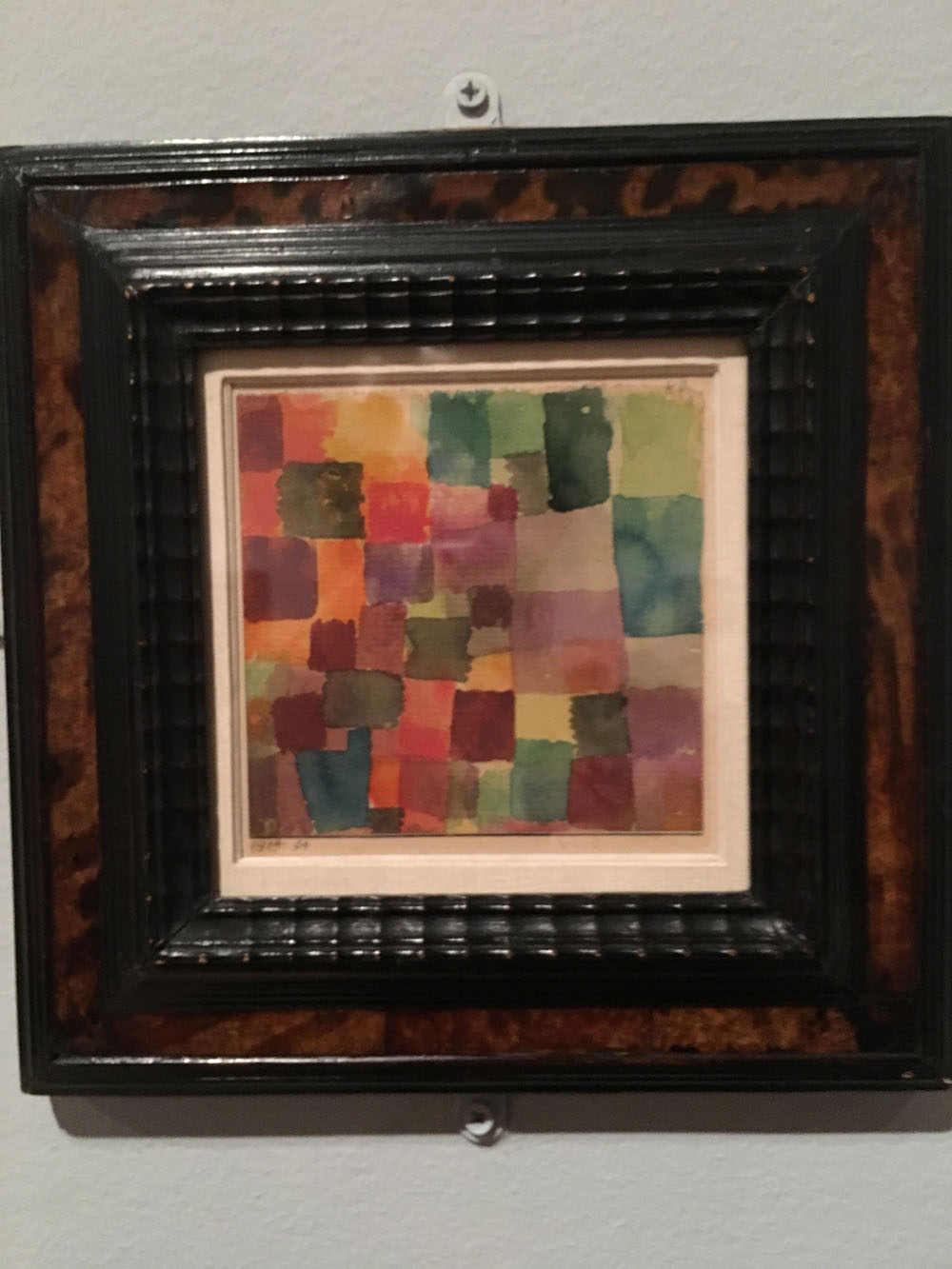
2016-11-12-14-41-42

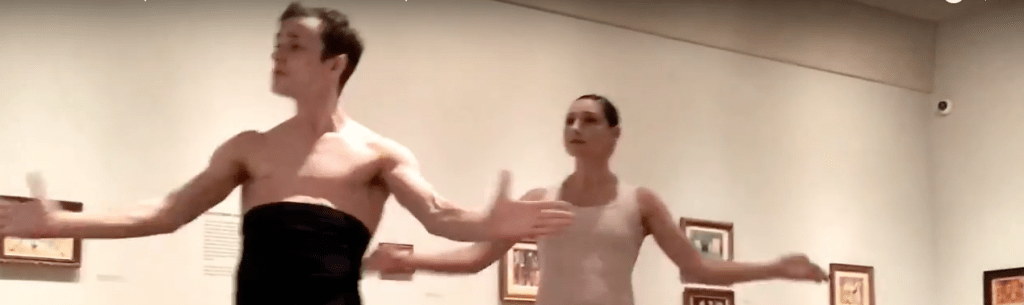
A dance program called Shutters Shut was performed among the Paul Klee work by two dancers from the Nederlands Dans Theater who danced in time to Gertrude Stein’s voice reciting her poem “If I Told Him: A Completed Portrait of Picasso.”

The dance looked like this:

Some cool art at galleries in Chelsea, New York City


Carol Bove, Polka Dots, at David Zwirner
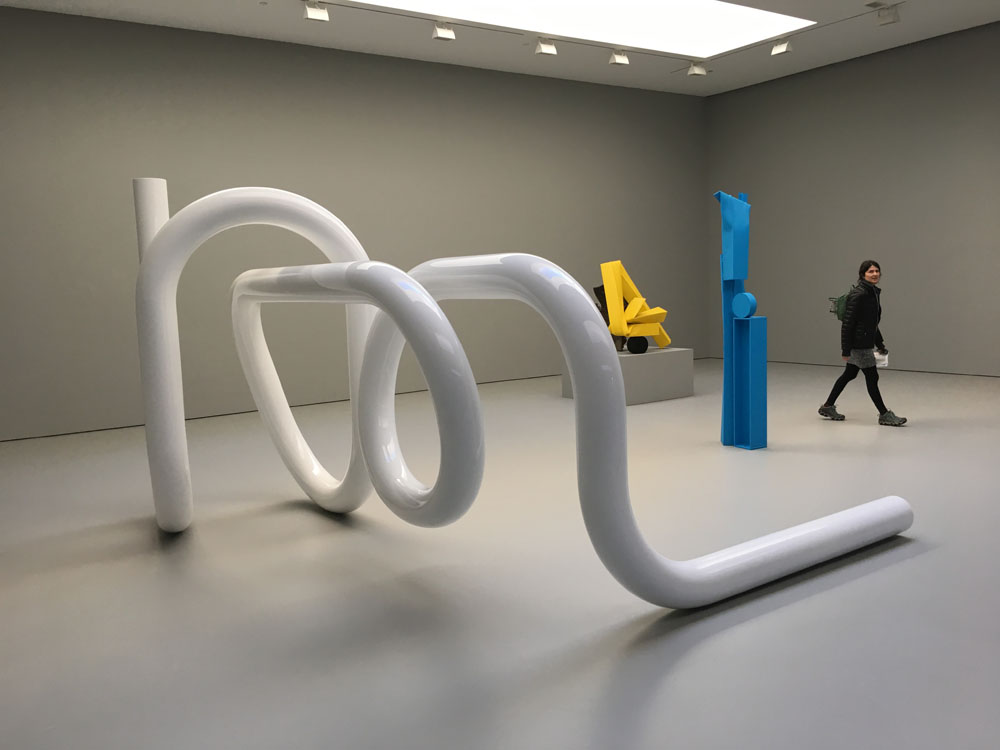
2016-11-11-12-59-35


Philip Guston, Laughter in the Dark, Drawings from 1971 & 1975, at Hauser Wirth
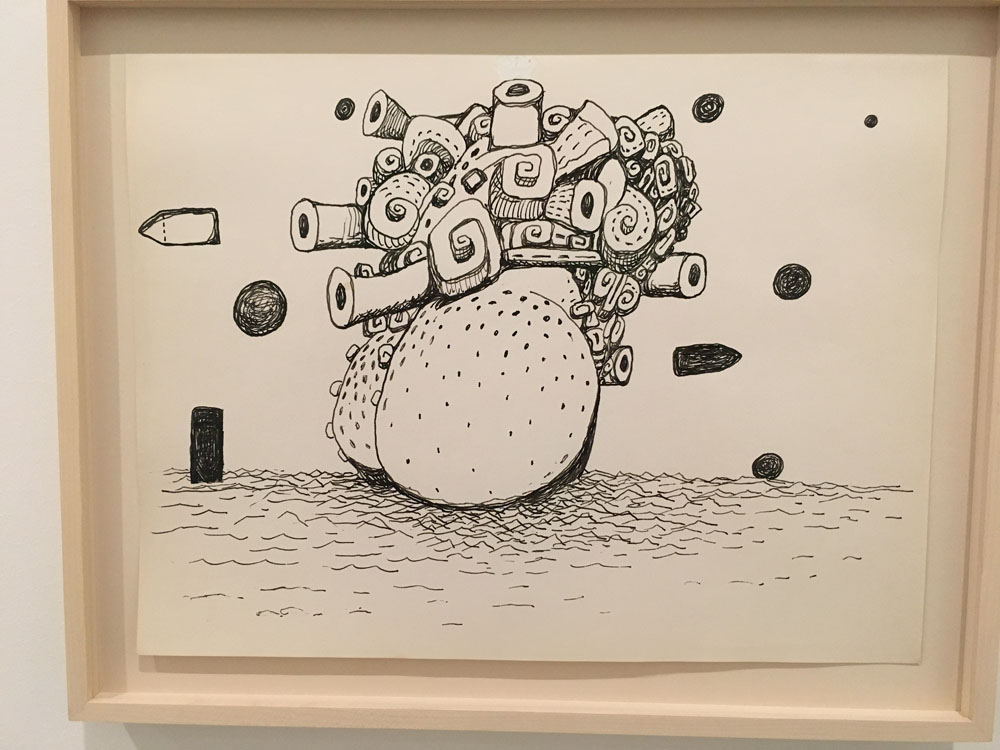
2016-11-11-14-12-51


Josef Albers, Grey Steps, Grey Scales, Grey Ladders, at David Zwirner
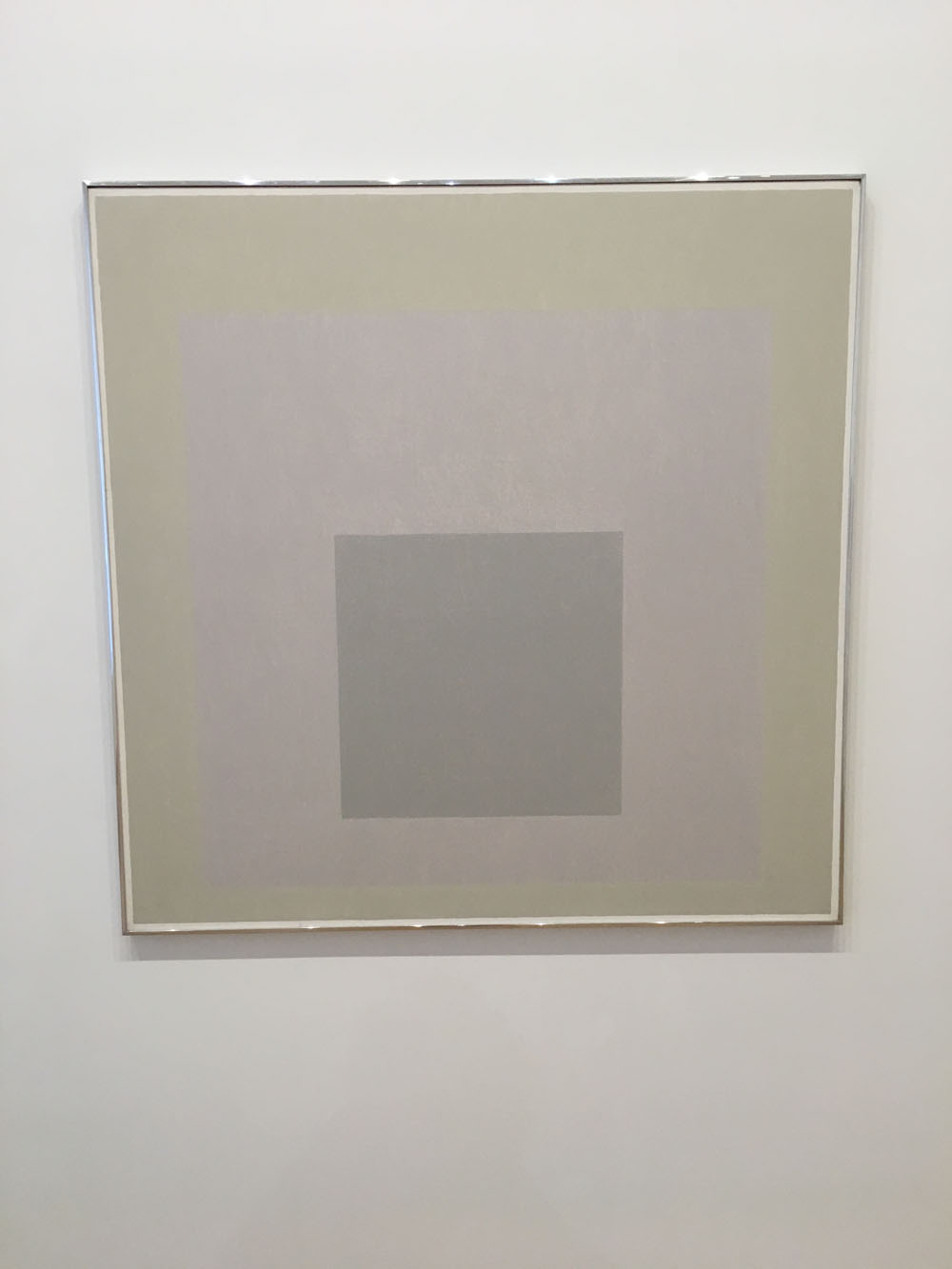
2016-11-11-13-11-06


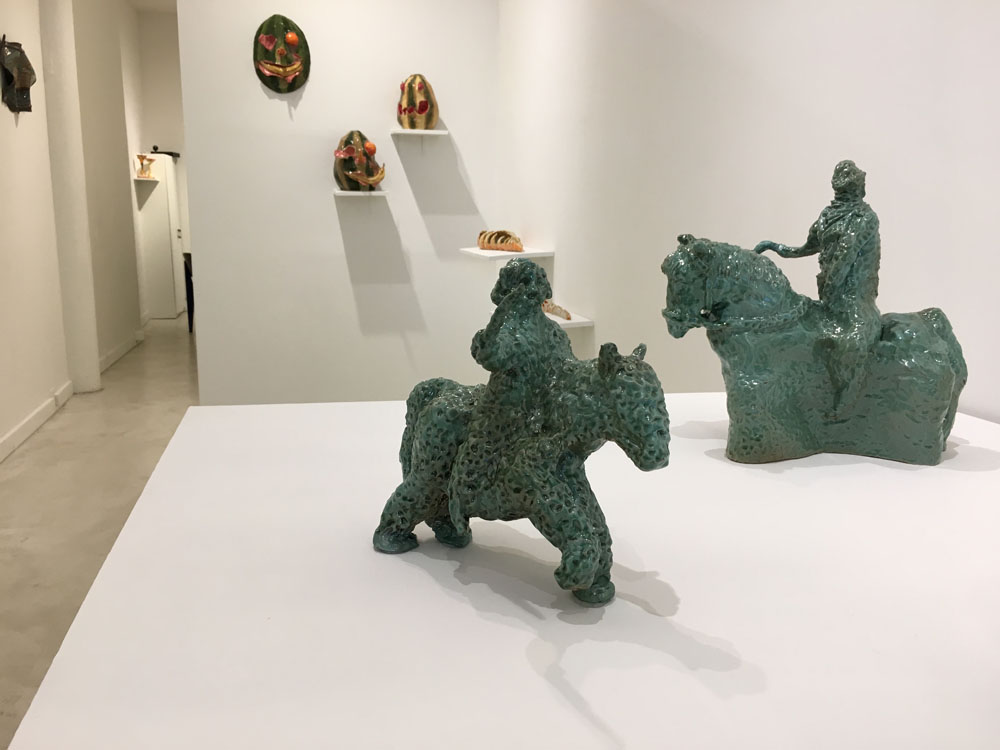
Arlene Shechet, Turn Up the Bass, at Sikkema Jenkins
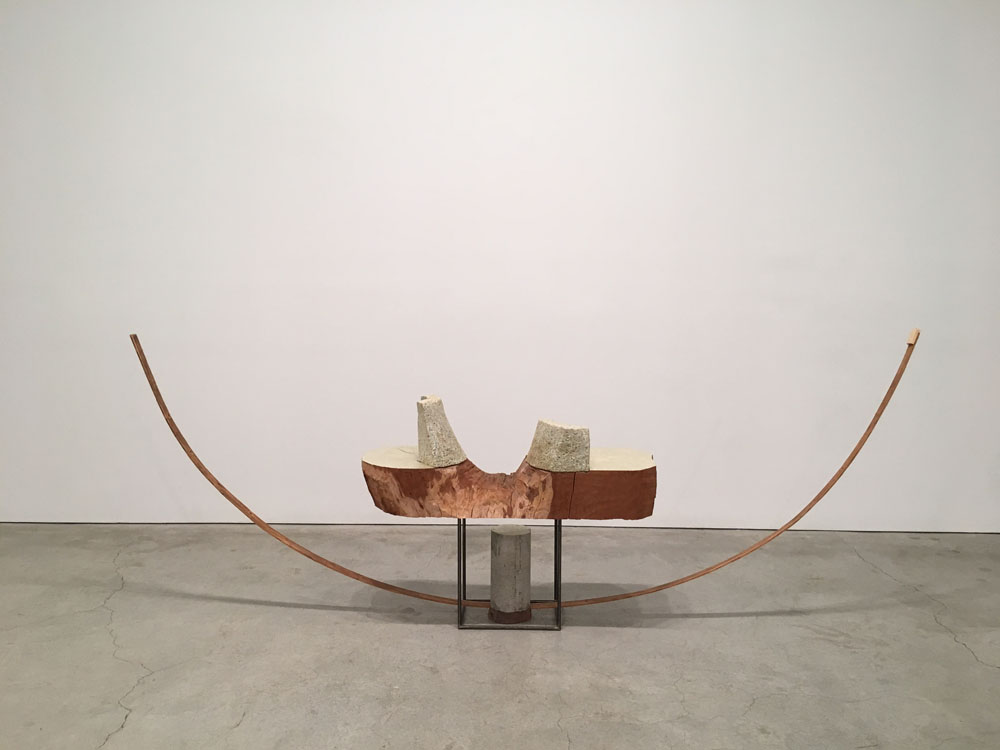
2016-11-11-14-30-41-1


Terry Winters at Matthew Marks

2016-11-11-14-38-09


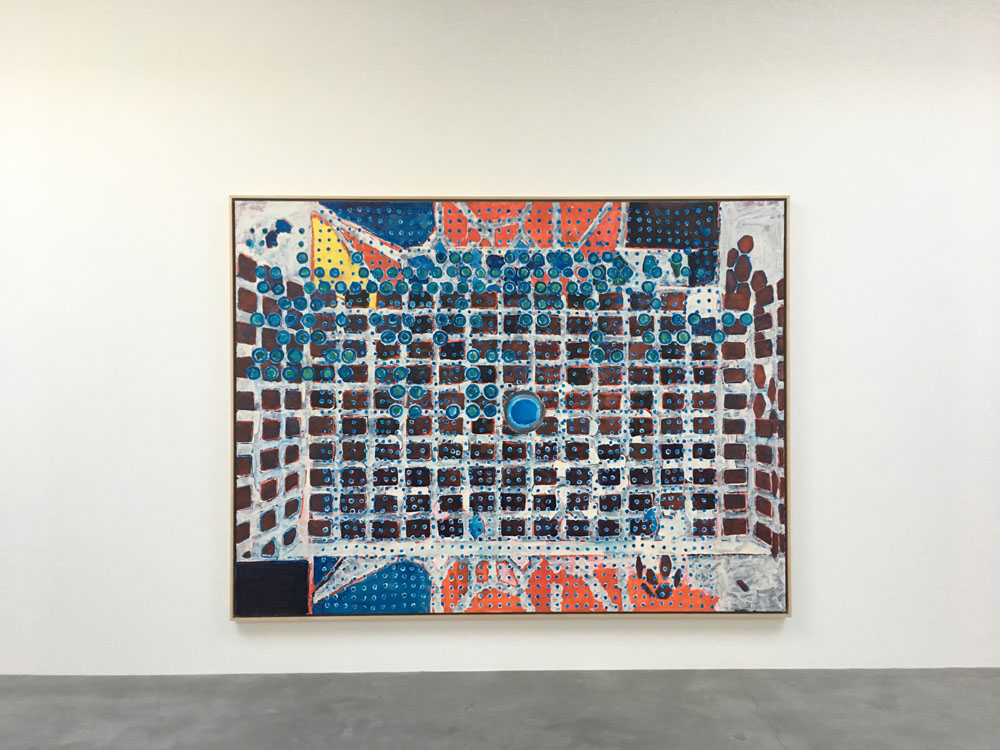
Valerie Hegarty: American Berserk at Burning into Water
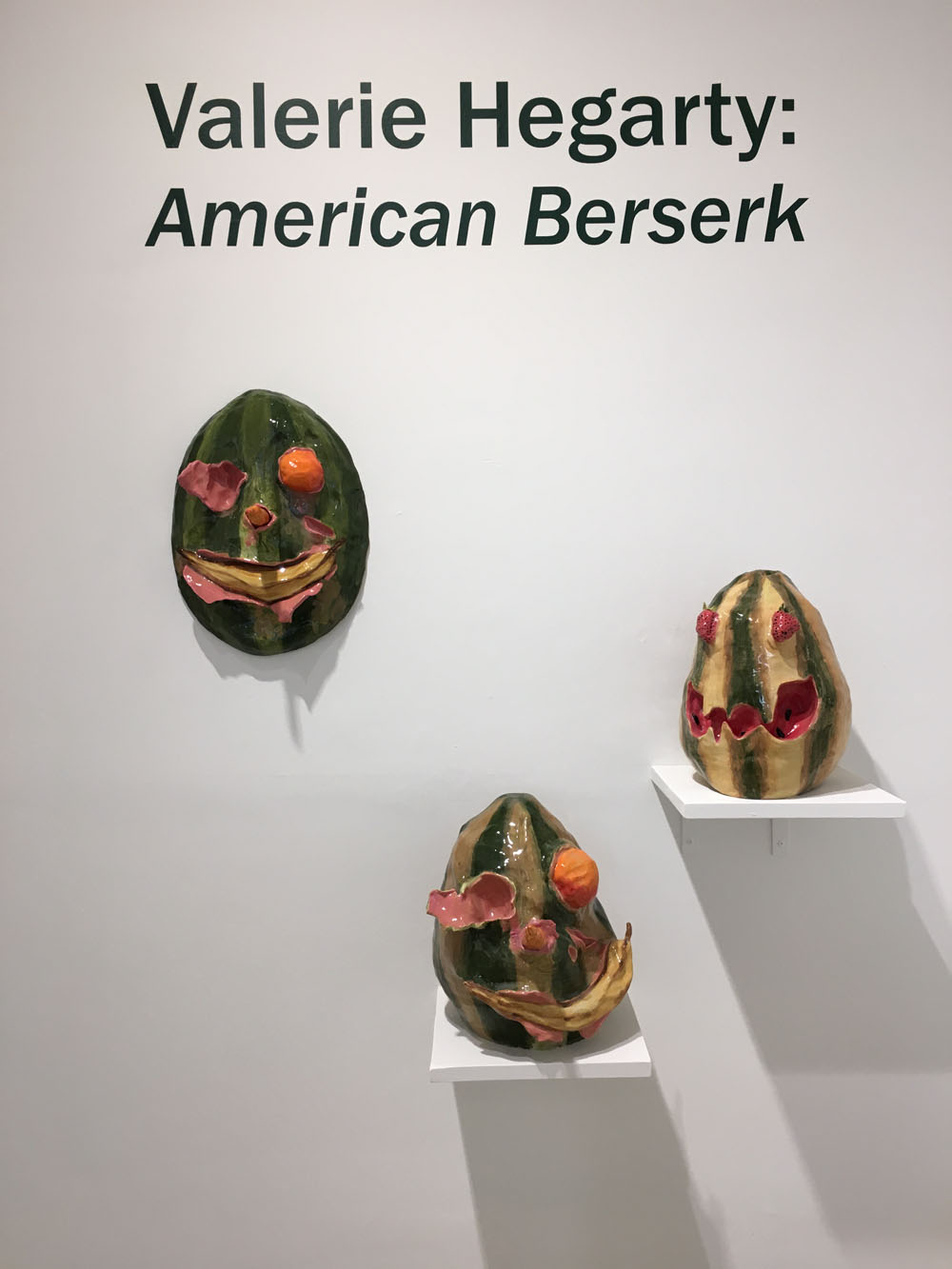
2016-11-11-15-17-51

2016-11-11-15-20-20


Paul Pfeiffer at Paula Cooper Gallery

screen-shot-2016-11-14-at-8-02-59-pm


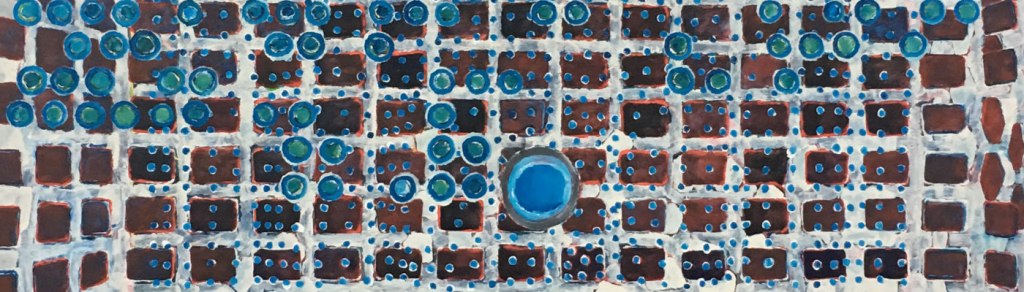
Joan Mitchell, Drawing into Painting, at Cheim and Read
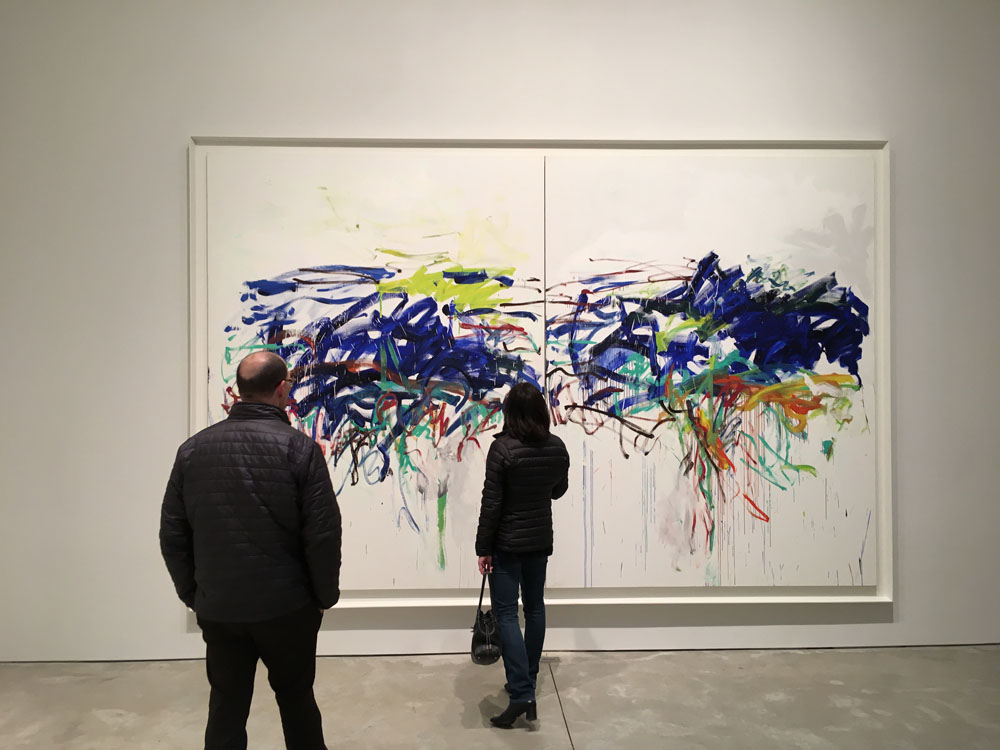
2016-11-11-15-02-17


Ernesto Neto, “The Serpent’s Energy Gave Birth To Humanity,” at Tanya Bonakdar Gallery

Images of various animals that have nothing to do with the election

10401117_46045394080_8918_n58422_438555169080_734476_n52466_457044984080_1346319_o297277_10150291097524081_7563496_n521420_10150860817239081_509189772_n532744_10150881689549081_2123311650_n563997_10150996686209081_1262100141_n616231_10151011310039081_1143295494_o10173716_10152193069874081_7827164718308340031_n1400336_10151776166984081_241697486_o1077323_10151609334994081_1336340761_o1074332_10151609347694081_525769431_o

My presidential election prediction map

screen-shot-2016-11-06-at-9-46-45-am

Here’s my best guess at how Tuesday’s presidential election will go down.

I’m not so sure about Florida — it could go to Clinton. But is anyone ever really sure of Florida?

I’m thinking that in Nebraska, which can split the electoral vote, that the Omaha area will go for Clinton, while the rest of the state’s electoral votes will go to the Republican.

And Utah — I’m thinking the Mormon vote will go against Trump and for the Utah native McMullin.

What do you think? Too optimistic? Too pessimistic?

You can make your own map over at Vox.com.

For those in need of inspiration: LeWitt, Hesse and Cumberbatch

Benedict Cumberbatch reads Sol LeWitt’s 1965 letter to Eva Hesse.

Here is the text of the letter:

Dear Eva,

It will be almost a month since you wrote to me and you have possibly forgotten your state of mind (I doubt it though). You seem the same as always, and being you, hate every minute of it. Don’t! Learn to say “Fuck You” to the world once in a while. You have every right to. Just stop thinking, worrying, looking over your shoulder wondering, doubting, fearing, hurting, hoping for some easy way out, struggling, grasping, confusing, itchin, scratching, mumbling, bumbling, grumbling, humbling, stumbling, numbling, rumbling, gambling, tumbling, scumbling, scrambling, hitching, hatching, bitching, moaning, groaning, honing, boning, horse-shitting, hair-splitting, nit-picking, piss-trickling, nose sticking, ass-gouging, eyeball-poking, finger-pointing, alleyway-sneaking, long waiting, small stepping, evil-eyeing, back-scratching, searching, perching, besmirching, grinding, grinding, grinding away at yourself. Stop it and just DO!

From your description, and from what I know of your previous work and you [sic] ability; the work you are doing sounds very good “Drawing-clean-clear but crazy like machines, larger and bolder… real nonsense.” That sounds fine, wonderful – real nonsense. Do more. More nonsensical, more crazy, more machines, more breasts, penises, cunts, whatever – make them abound with nonsense. Try and tickle something inside you, your “weird humor.” You belong in the most secret part of you. Don’t worry about cool, make your own uncool. Make your own, your own world. If you fear, make it work for you – draw & paint your fear and anxiety. And stop worrying about big, deep things such as “to decide on a purpose and way of life, a consistant [sic] approach to even some impossible end or even an imagined end” You must practice being stupid, dumb, unthinking, empty. Then you will be able to DO!

I have much confidence in you and even though you are tormenting yourself, the work you do is very good. Try to do some BAD work – the worst you can think of and see what happens but mainly relax and let everything go to hell – you are not responsible for the world – you are only responsible for your work – so DO IT. And don’t think that your work has to conform to any preconceived form, idea or flavor. It can be anything you want it to be. But if life would be easier for you if you stopped working – then stop. Don’t punish yourself. However, I think that it is so deeply engrained in you that it would be easier to DO!

It seems I do understand your attitude somewhat, anyway, because I go through a similar process every so often. I have an “Agonizing Reappraisal” of my work and change everything as much as possible = and hate everything I’ve done, and try to do something entirely different and better. Maybe that kind of process is necessary to me, pushing me on and on. The feeling that I can do better than that shit I just did. Maybe you need your agony to accomplish what you do. And maybe it goads you on to do better. But it is very painful I know. It would be better if you had the confidence just to do the stuff and not even think about it. Can’t you leave the “world” and “ART” alone and also quit fondling your ego. I know that you (or anyone) can only work so much and the rest of the time you are left with your thoughts. But when you work or before your work you have to empty you [sic] mind and concentrate on what you are doing. After you do something it is done and that’s that. After a while you can see some are better than others but also you can see what direction you are going. I’m sure you know all that. You also must know that you don’t have to justify your work – not even to yourself. Well, you know I admire your work greatly and can’t understand why you are so bothered by it. But you can see the next ones and I can’t. You also must believe in your ability. I think you do. So try the most outrageous things you can – shock yourself. You have at your power the ability to do anything.

I would like to see your work and will have to be content to wait until Aug or Sept. I have seen photos of some of Tom’s new things at Lucy’s. They are impressive – especially the ones with the more rigorous form: the simpler ones. I guess he’ll send some more later on. Let me know how the shows are going and that kind of stuff.

My work had changed since you left and it is much better. I will be having a show May 4 -9 at the Daniels Gallery 17 E 64yh St (where Emmerich was), I wish you could be there. Much love to you both.

Sol

Book review: Banana Yoshimoto’s ‘Hardboiled & Hard Luck’

The review originally appeared in September 2005 in the Albany Times Union.

99162475_amazoncom-hardboiled-hard-luck-booksSupernatural is a natural in ‘Hardboiled’

Banana Yoshimoto became a literary sensation in Japan with her first book, “Kitchen,” in 1987. Spare prose, novella-length stories and quirky characters combined to make difficult themes, such as sexual identity and death, easily accessible and emotionally involving.

Since then, her books have been translated around the world, but a typical reaction in the United States has been: “Who? Is that her real name?”

Banana Yoshimoto is the pen name for Mahoko Yoshimoto, which she chose because of the beauty of the banana flower. More importantly for American readers, her latest book, “Hardboiled & Hard Luck” (Grove Press; 150 pages; $21; translated by Michael Emmerich) , offers another chance to get to know this talented writer.

The novella “Hardboiled” presents a fascinating use of common tropes in Japanese literature: the power of nature and the presence of ghosts.

An unnamed narrator is hiking in the mountains and seems not to have any cares – or human connections. She believes relationships end not because of feelings, but because “periods in our lives end the way seasons change. That’s all there is to it. Human willpower can’t change that – which means, if you look at it another way, that we might as well enjoy ourselves until the day arrives.”

This attitude, however, doesn’t prevent her from encountering a lover – a woman who could see ghosts – she had left and who died in a mysterious fire a month after she had moved out. Odd things happen to the narrator at a shrine, in a noodle shop and at a hotel, and then she remembers it is the first anniversary of her former lover’s death.

Though “Hardboiled” is a ghost story, it isn’t a horror story. The dead appear as living people or in dreams, and the realms of the living and the dead interact in unexpected ways, with compassion, understanding and resolution.

The narrator of the second novella, “Hard Luck,” is also a young, unnamed woman. She recounts the unreal and heartbreaking period of time in which her family comes to terms with her sister’s vegetative state and impending death.

The narrator, a college student who has put her studies on hold, even calls it “a sacred time set aside for us survivors.” (That sentiment seems so much more appropriate than the media and political circus that surrounded Terri Schiavo, who died earlier this year.)

She finds herself in the midst of an odd flirtation with Sakai, the older brother of her sister’s fiance. The fiance, too grief-stricken to be at his intended’s bedside, has returned to his parents’ home a coward. Sakai takes his brother’s place at the hospital to preserve the family’s honor, it seems. But he later admits his interest in the narrator.

Sakai, a tai chi instructor in his early 40s, is otherworldy and oddly attuned to the narrator. Through their talks, she is finally able to cry. But she knows the budding relationship won’t go anywhere. She even describes him as “weird, and kind of a fraud … cold and unreasonably cheerful, and … no sense of responsibility.”

Yoshimoto’s power as a writer is evident here, with a straightforward description that works to reveal the characters of both Sakai and the narrator.

Throughout the story, strangeness, desire and humor are combined without ever once forgetting the brain-dead sister and the family’s grief. How the narrator sees her situation is also an appropriate description of the story: “And it struck me that if anything was a miracle, it was this: the lovely moments we experience during the small, almost imperceptible periods of relief. The instant the unbearable pain and tears faded away, and I saw with my own eyes how vast the workings of the universe were, I would feel my sister’s soul.”

With these two novellas, Yoshimoto again proves her fame is well deserved. She succeeds in showing the naturalness of the supernatural and in making the peculiar not only realistic, but also touching.

The deft translation by Emmerich (who previously translated Yoshimoto’s “Goodbye, Tsugumi” and “Asleep”) should help Yoshimoto gain a broader audience in the United States.