The question is: Can it shoot and move? (Doesn’t appear so.)
The question is: Can it shoot and move? (Doesn’t appear so.)
Or is it? What if your phone alerted you every time a new memory was stored in your mind? Or are memories only embedded in things outside us?
Discuss

2006: The first tweet: just setting up my twttr
2007: Twitter finds users: Everyone at SXSW is doing it, and now #hashtags
2008: Barack Obama blows up Twitter: #YesWeCan
2009: Finding followers becomes a thing followuback #ff fun
2010: One of the most popular accounts becomes @shitmydadsays (it later becomes a short-live sitcom starring William Shatner)
2011: Political activism found a voice in #ArabSpring
2012: Clickbait tweets arrive and you won’t believe what happens next (remember seeing tweets like this? They’ve all but disappeared)
2013: Twitter adds photos, and the #Oreo Cookie Superbowl power outage may have been the greatest of the year
2014: Then came Ellen Degeneres and the famous #OscarSelfie
2015: #LoveWins
2016: Remember when people thought 2016 was the worst year EVAH!
2017: We don’t need 280 characters to say “WE’RE ALL DOOMED!!!”
From the Chronicle of Higher Education, Lindsay Waters, the executive editor for the humanities at Harvard University Press, is calling for a “revolution in reading” by asking people at all levels to read slowly for the pleasure of the words, as opposed to reading quickly to synthesize the information.
This seems like a brilliant idea. In my teaching of university students (mostly writing courses), I find that they are able to synthesize material and engage readings in abstract ways, but they are ill-equipped to deal with the materiality of language — seeing how the words on the page work, or using words to make a logical argument or describe a vivid scene.
Here’s an excerpt from Waters’ essay:
There is something similar between a reading method that focuses primarily on the bottom-line meaning of a story in a novel and the economic emphasis on the bottom line that makes automobile manufacturers speed up assembly lines. If there is any truth to the analogy, it provides grounds for concern.
I want to ask what reading would look like if we were to reintroduce, forcefully, the matter of time. Let’s leave Evelyn Wood behind, and let’s leave Franco Moretti behind, too. The mighty imperative is to speed everything up, but there might be some advantage in slowing things down. People are trying slow eating. Why not slow reading?
Nietzsche defined philology as the art of teaching people “to go aside, to take time, to become still, to become slow.” If we look at the dynamics of what I call “slow reading,” we might be able to explore the values of a methodology that has links to what was once called “close reading” — but that goes beyond close reading in a number of ways that might prove particularly valuable today. The one thing necessary is that we put aside our normal adherence to punch-clock time, a universal measure that has us all in its grip.
The most skillful writers are always playing with our timing as readers, for example by retarding our progress through their works, causing us to linger and pay closer attention than we might have wanted. The late literary critic William Empson said that the poet uses the physical properties of words not to stop us, but to make us dally through the great amount of thought crushed into a few lines.
The full essay is behind a paywall.
Some other interesting links:
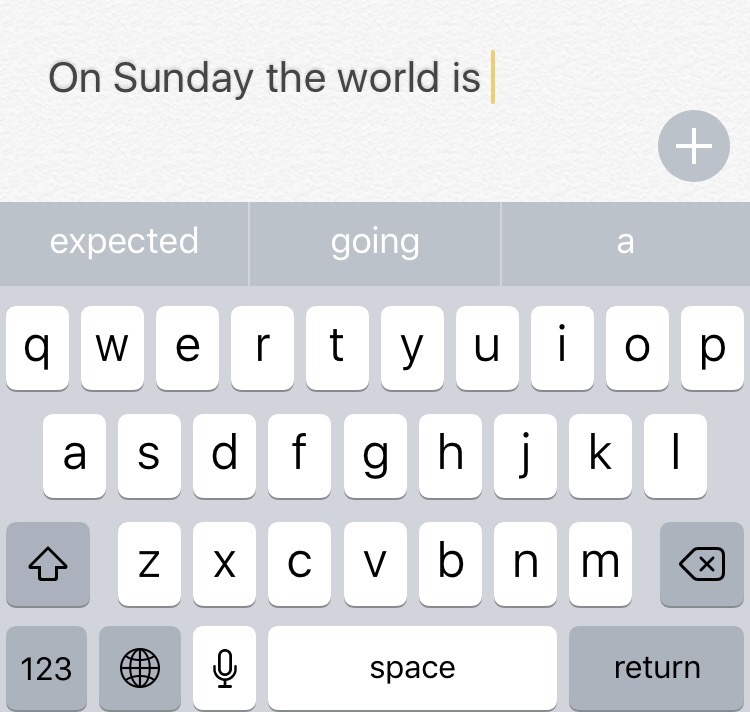
Just how predictive is predictive text?
To find out I began a sentence in my iPhone’s Notes app with the word “On” followed by the day of the week and the phrase “the world.” For the rest of the sentence I selected one of the three words suggested by the predictive algorithm to find out what’s in store for all of us.
Here is what I discovered:
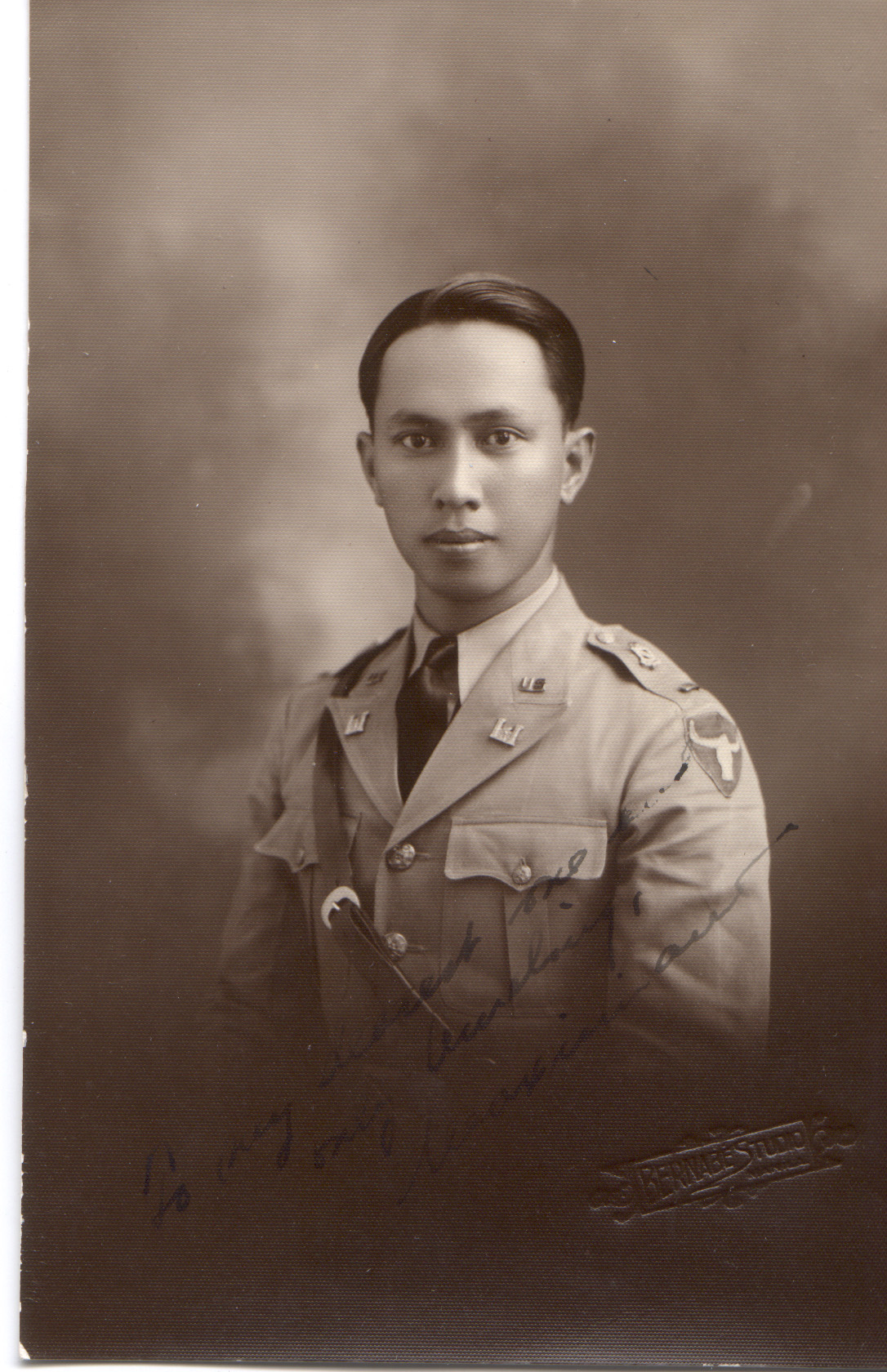
Here’s a photo of my Lolo, Maximiano Saqui Janairo.
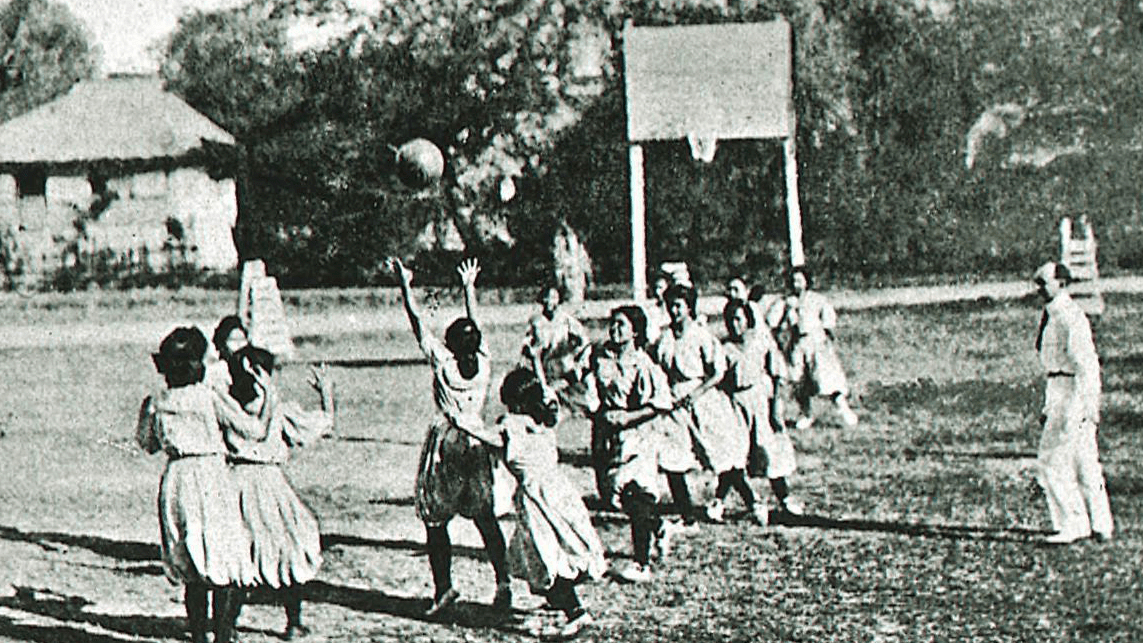
Basketball is a huge sport in the Philippines. In trying to figure out how that happened, I came across this image in the archives University of Michigan Library Digital Collections, which includes lots of images from the early interactions of the US in the Philippines.
First published: Sunday, October 7, 2007, in the Albany Times Union
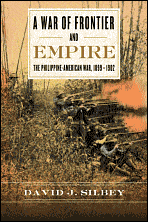 As President Bush tries to shape his legacy in regards to the Iraq war, he should pick up David Silbey’s engaging history “A War of Frontier and Empire: The Philippine-American War, 1899-1902” (Hill and Wang; 272 pages; $26).
Though both were wars of choice, the details are quite different. Still, the generalizations that can be gleaned from Silbey’s account are eerily familiar: a quick and stunning conventional military victory turns into longer-than-expected guerrilla warfare; a failure by the United States to understand its enemy; a sense of racial superiority that enflames troops and politicians in Washington; and a native population whose loyalties seemed to change depending on the time of day.

