Tag: literature

  • New poem: ‘Benevolent Assimilation’ in re:asian magazine

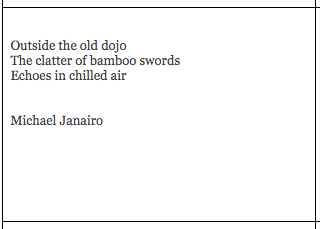
    Screen Shot 2017-05-30 at 10.14.29 PM

    Thank you, re:asian magazine, for including me in the “firsts” issue!

    The poem touches upon things I’ve been thinking about since grade school when I first read the phrase “benevolent assimilation” as a U.S. description of its colonial policy with the Philippines.

    The magazine has also published a photo I took of the home my Lolo — grandfather — grew up in Cavite.

    Here’s an excerpt from the poem:

    Something like fear structured my feelings around the word
    Philippines and whatever it was that connected me to it

    Check out the full poem on the re:asian website here and let me know what you think — either here or on the re:asian site.


  • Book review: Umberto Eco’s ‘The Mysterious Flame of Queen Loana’

    Book review: Umberto Eco’s ‘The Mysterious Flame of Queen Loana’

    This review originally ran in May 2005 in the Albany Times Union.
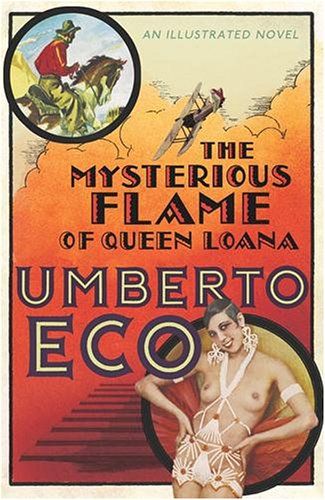
    78769-coverMemory, identity evaporate in ‘Queen Loana’

    Among life’s great chores is the sorting through of old papers, books, records and magazines long ago left in the attic. Few events combine such tedium with unexpected moments of rich nostalgia, in which a single image can rise from junk and make the past profoundly present and vital.

    This is the magic of the intriguing but ultimately disappointing new novel by Umberto Eco, “The Mysterious Flame of Queen Loana” (Harcourt; 469 pages; $27; translated from the Italian by Geoffrey Brock).

    In Milan, Italy, in late April 1991 (soon after the end of the Gulf war) our narrator has lost his memory. What happened isn’t clear, but all he can remember are things he’s read. The first few pages are filled with references to writers such as T.S. Eliot, Agatha Christie and Arthur Conan Doyle – and those are just the easy ones to spot for someone familiar with English literature.

    When a doctor asks the narrator his name, he responds with the first line of a novel by Edgar Allen Poe: “My name is Arthur Gordon Pym.” When the doctor tells him that isn’t true, he tries with: “Call me … Ishmael?”

    At once, Eco reveals his smarts and sly humor.

    Soon, we learn that the narrator is in his 60s, is an antiquarian book dealer and goes by the nickname Yambo. Yambo is mischievous. Having forgotten his personal life, including his relationship with his wife, he calls himself a 60-year-old virgin, even though he is a father and grandfather. His character raises the expectation of a wonderful tale of memory and identity. Unfortunately, moments of wonder are all too rare.

    Yambo returns to his family’s estate in the countryside in an attempt to regain his identity by going through the stuff in the attic. What he describes we see in reprinted lyrics and illustrations from posters, newspapers, comic books and magazines from the 1930s and ’40s.

    The time period is fascinating: Italian fascism, war and giddy pop culture. Yambo calls the mix of messages from the media “schizophrenic.” He says, “Allied troops were landing in Sicily, and the radio (in the voice of Alida Valli!) was reminding us that love is not that way, love won’t turn to gray the way the gold fades in a woman’s hair.”

    Yambo even finds an essay he wrote that praises fascism, but he doesn’t know if he was a true believer or if he had to play it safe at school. His predicament seems rich with possibility, as if Eco is suggesting that a new, multinational war (the Gulf war) is reminding Yambo’s generation how much of the past they had to forget in order to survive the horrors of war and fascism.

    Some of the novel’s best writing occurs in the retelling of Yambo’s adventure with a group of partisans, but what Eco is trying to say about these themes of struggle and violence gets muddled in the abundance of pop culture. The title even refers to a comic book, and the riveting, wartime passages aren’t sustained with the same vitality as Philip Roth’s great reimagining of Newark, N.J., in “The Plot Against America” or even John Dower’s social histories of Japan in “War Without Mercy” and “Embracing Defeat.”

    A 16-page section in the back of Eco’s book cites the sources for the illustrations, and a repeated phrase says that many of the images came from the “author’s collection.”

    Suddenly, all the illustrations and references are indulgent. They disrupt the novel. The particulars of Yambo’s life don’t point to any general truth of the human condition, they point to Eco. As the novel progresses, this conflation of narrator and author makes one think Eco is no longer exhibiting his pleasure of language, culture and life through writing; instead, he is writing lists about things that brought him pleasure.

    In the end, the “mysterious flame” that rises in Yambo’s (or is it Eco’s?) heart from seeing the pop culture of his youth has, unfortunately, left this reader feeling cold.

    Perhaps it would have been more enjoyable to sort through my old books and papers.

  • Book review: ‘Ash’ by Holly Thompson

    Book review: ‘Ash’ by Holly Thompson

    This review originally appeared in the March 2002 edition of Multicultural Review.

    ashAsh

    Thompson, Holly. Ash. Berkeley, Calif.: Stone Bridge Press, 2001. 292 pp. ISBN 1-880656-65-5, $16.95.


    Thompson excels in her first novel at making Japan, from the volcanic-ash strewn streets of Kagoshima to the temples around Kyoto, accessible while conveying her protagonist’s “rootless expatriate world.”

    Caitlin Ober, though, is unlike other foreigners. She is an American who returns to Japan 15 years after a traumatizing childhood experience in Kyoto, where her family lived while her father, a scholar, did research. She now teaches English in Kagoshima, but her real mission is to overcome the guilt, sadness and silence that surrounds events from when she was 8. This drama leads to some of the most affecting passages in the novel, especially when Caitlin is reunited in Kyoto with her “number-two family,” the family of her best friend from childhood. The novel is less effective, though, when the narrator, like Caitlin, withholds for many pages a clear explanation of what happened in the past.

    Nonetheless, Thompson’s straightforward narrative allows her to map out many fascinating aspects of Japanese life, such as the problems faced by a 14-year-old girl with a Japanese mother and an American father. The teen is bullied at schools and must choose between taking Japanese or American citizenship when she turns 20.

    Though the novel, at times, veers toward melodrama, and more could be said about the biracial’s teens problems, instead of having her resolution subsumed by Caitlin’s drama, “Ash” successfully shows a Japan through Western eyes that isn’t the exotic locale of samurai and geisha but a place where an American can have powerful, emotional connections.


  • Book review: After Birth by Elisa Albert

    Book review: After Birth by Elisa Albert

    I love this book. Get it. Read it. Now.

    “After Birth” by Elisa Albert tells the story of three months in one woman’s life around a year after giving birth who befriends a former “almost” rock star/poet who is about to give birth. The narrator says of the poet: “I’m a little obsessed with her, by which I mean a lot, which I guess is what obsessed means.”

    In that sentence, Albert achieves the creation of a distinctive character in her narrator: a sharp sense of humor, somewhat confessional, somewhat striving for clarity, while also somewhat muddled. Ari, the narrator, may not always be a sympathetic character (one of the first things she does is call the upstate city she lives – a fictional town called Utrecht, but an easily readable blend of Albany, Troy, Schenectady — a “shitbox”), but her language is so seductive that it can charm the reader, even in her most negative moments.

    After all, Ari seems to be suffering from a kind of post-partum depression, a severe disorientation in which she feels betrayed by a world that didn’t prepare her for life after having a child, she’s lost interest in completing her doctorate in women’s studies, she feels isolated in the aforementioned “shitbox” town, and all of it has been exacerbated by having undergone a c-section operation.

    If that weren’t enough, there is also that special kind of existential dread a parent faces by bringing a new life into the world: “I’m not going to pretend my kid is special, like other kids who starve and freeze and get raped and beaten and have to work in factories and get cancer from the fumes, too bad, so sad, but my kid is going to be warm and organic and toxin-free and safe and have everything he wants when he wants it and go to a good college and all is right with the world! Fuck that myopic bullshit. He’s going to suffer. He’s going to get mauled by some force I can’t pretend I can predict. We all live in the same fucked-up world.”
    (more…)

  • Audio book review: ‘Prophecies, Libels and Dreams’ by Ysabeau S. Wilce


    This was a fun listen: “Prophecies, Libels and Dreams” by Ysabeau S. Wilce, which I got in a giveaway from Small Beer Press (Thank you, Small Beer Press!).

    I didn’t know what to expect, and so this was my introduction to the fictional world of Califa that Wilce has written about in previous books, where there’s magic, magic boots, thieves, soldiers, deceptions, betrayals, and arranged marriages.

    The best part of these interconnected stories is Wilce’s exuberant facility with language. Here’s a long example from the story “Quartermaster Returns”:

    He died a hero’s death, Lieutenant Rucker did, trying to save, not another comrade, but rather the hog ranch’s entire supply of beer. The story is short and tragic: the freight train dropped fifteen cases of beer at the hog ranch, before proceeding on to Rancho Kuchamonga; an inexperienced drover off-loaded the beer in the arroyo below the hog ranch; when the storm came up, Pow organized his fellow whist players into a bottle brigade and supervised the shifting of fourteen cases to higher ground; the water was already foaming when Pow went back for the last case—refusing to allow the others to join him in harm’s way; Pow heroically managed to shove that case up the bank, just as a wall of water twenty feet high came roaring down the ravine.

    This minitale is a great example of the kind of tall tales that dominate the seven stories in this collection. And these stories are offset by short “corrections” in the guise of an academic critique, often decrying the inexactitude of the previous tale. It’s a nice movement to add this layer to deepen a sense of place and time.

    An unfortunate aspect of this audiobook is that the first story, which may be the whimsical, elicits from the reader some of the most forced interpreations that make him sound actorly in a too-forced storybook way. The audiobook does get better though.

  • When do you give up on a book?

    I quit a book the other day.

    I’ve seen Harlan Coben books everywhere, but I had never looked at one. At the library, I picked up the audiobook version of “Six Years,” read by Scott Brick (who I think has done a great job with Justin Cronin’s “The Passage” and “The Twelve”).

    I only made it through the first disc.

    The novel’s title “Six Years” refers to the length of time from when the narrator, Jake, attends his ex-lover’s wedding to when he reads of her husband’s death (and attends the funeral). He reads the obituary, and then he attends the funeral and is surprised to find out that the dead husband was a doctor, had a teenage son, and his wife was some other woman instead of Jake’s ex-lover.

    Here’s the problem: those facts (that he was a doctor, his wife’s name being different from the name of his ex-lover) are all things that should’ve been part of the obituary. Sure, I’ve worked in journalism for many years, and maybe that gives me a specialist’s knowledge about how a professional would write an obituary. Though I’m pretty sure most people would expect that kind of information. So it made me not trust this book. After all, Jake’s surprise – his need to get to the truth of the matter – seems to be the main engine of the book. But because it required him to go to this funeral, even though the obituary should’ve given him the same surprising information, the contrivance of the plot revealed itself too me far too readily.

    Have you quit a book because the author tried, and failed, to use something in your area of expertise?

  • Book review: Yasushi Inoue’s ‘Life of a Counterfeiter and Other Stories’

    counterfeiterOne of the dominant characteristics of Yasushi Inoue’s rhetorical style in “Life of a Counterfeiter and Other Stories” (Pushkin Press; 144 pages; $18) in is his use of “hedging” phrases, such as “for some reason,” “I’ll never know” and “I may simply be reading too much into things.”

    These phrases could be interpreted as creating a narrator who is so fraught with uncertainty that he can only suggest things with modesty rather than declare them with authority.

    These stories — written after World War 2 in the early 1950s, but often looking back through the haze of memory at events that took place long before and during the war — can then be seen as a reaction against the kind of narrative certainty about Japan’s prominence in the world that led the nation into its disastrous overreach in China, Korea, and South East Asia. In that sense, his narrative hedging can be seen as an attempt to be precise about the meaning of things that can’t be known.
    (more…)

  • #tbt book review: Elisa Albert’s ‘How This Night is Different’

    In anticipation of Elisa Albert’s new novel “After Birth” (slated to be published next month), here’s a review of her first collection of short stories. The review was published April 1, 2007.

    In the title story of Elisa Albert’s comic and irreverent debut collection, “How This Night is Different” (Free Press; 208 pages; $18), a young woman brings her boyfriend home to meet the family during Passover and to introduce him to his first seder.

    She describes him to her mother as “Kind of like a Jew for Jesus, but minus the Jew part.” And to him, she summarizes the meal as “You get constipated, you get sick on bad wine, you talk biblical mythology until everyone nods off in their bone-dry matzo cake.”

    The holiday doesn’t hold much meaning for her. Her parents treat her like a little kid. Worse yet, and this is a brilliant touch, during the holiday in which leavened bread is forbidden so Jews can remember the hardships of the Exodus, she is suffering from a yeast infection, “with yeast multiplying exponentially in her crotch, maybe enough by now to bake a loaf or two of forbidden bread.”
    (more…)