
Book review: ‘Ash’ by Holly Thompson

This review originally appeared in the March 2002 edition of Multicultural Review.

ashAsh

Thompson, Holly. Ash. Berkeley, Calif.: Stone Bridge Press, 2001. 292 pp. ISBN 1-880656-65-5, $16.95.


Thompson excels in her first novel at making Japan, from the volcanic-ash strewn streets of Kagoshima to the temples around Kyoto, accessible while conveying her protagonist’s “rootless expatriate world.”

Caitlin Ober, though, is unlike other foreigners. She is an American who returns to Japan 15 years after a traumatizing childhood experience in Kyoto, where her family lived while her father, a scholar, did research. She now teaches English in Kagoshima, but her real mission is to overcome the guilt, sadness and silence that surrounds events from when she was 8. This drama leads to some of the most affecting passages in the novel, especially when Caitlin is reunited in Kyoto with her “number-two family,” the family of her best friend from childhood. The novel is less effective, though, when the narrator, like Caitlin, withholds for many pages a clear explanation of what happened in the past.

Nonetheless, Thompson’s straightforward narrative allows her to map out many fascinating aspects of Japanese life, such as the problems faced by a 14-year-old girl with a Japanese mother and an American father. The teen is bullied at schools and must choose between taking Japanese or American citizenship when she turns 20.

Though the novel, at times, veers toward melodrama, and more could be said about the biracial’s teens problems, instead of having her resolution subsumed by Caitlin’s drama, “Ash” successfully shows a Japan through Western eyes that isn’t the exotic locale of samurai and geisha but a place where an American can have powerful, emotional connections.

 

Book review: After Birth by Elisa Albert

I love this book. Get it. Read it. Now.

“After Birth” by Elisa Albert tells the story of three months in one woman’s life around a year after giving birth who befriends a former “almost” rock star/poet who is about to give birth. The narrator says of the poet: “I’m a little obsessed with her, by which I mean a lot, which I guess is what obsessed means.”

In that sentence, Albert achieves the creation of a distinctive character in her narrator: a sharp sense of humor, somewhat confessional, somewhat striving for clarity, while also somewhat muddled. Ari, the narrator, may not always be a sympathetic character (one of the first things she does is call the upstate city she lives – a fictional town called Utrecht, but an easily readable blend of Albany, Troy, Schenectady — a “shitbox”), but her language is so seductive that it can charm the reader, even in her most negative moments.

After all, Ari seems to be suffering from a kind of post-partum depression, a severe disorientation in which she feels betrayed by a world that didn’t prepare her for life after having a child, she’s lost interest in completing her doctorate in women’s studies, she feels isolated in the aforementioned “shitbox” town, and all of it has been exacerbated by having undergone a c-section operation.

If that weren’t enough, there is also that special kind of existential dread a parent faces by bringing a new life into the world: “I’m not going to pretend my kid is special, like other kids who starve and freeze and get raped and beaten and have to work in factories and get cancer from the fumes, too bad, so sad, but my kid is going to be warm and organic and toxin-free and safe and have everything he wants when he wants it and go to a good college and all is right with the world! Fuck that myopic bullshit. He’s going to suffer. He’s going to get mauled by some force I can’t pretend I can predict. We all live in the same fucked-up world.”
Continue reading →

Audio book review: ‘Prophecies, Libels and Dreams’ by Ysabeau S. Wilce


This was a fun listen: “Prophecies, Libels and Dreams” by Ysabeau S. Wilce, which I got in a giveaway from Small Beer Press (Thank you, Small Beer Press!).

I didn’t know what to expect, and so this was my introduction to the fictional world of Califa that Wilce has written about in previous books, where there’s magic, magic boots, thieves, soldiers, deceptions, betrayals, and arranged marriages.

The best part of these interconnected stories is Wilce’s exuberant facility with language. Here’s a long example from the story “Quartermaster Returns”:

He died a hero’s death, Lieutenant Rucker did, trying to save, not another comrade, but rather the hog ranch’s entire supply of beer. The story is short and tragic: the freight train dropped fifteen cases of beer at the hog ranch, before proceeding on to Rancho Kuchamonga; an inexperienced drover off-loaded the beer in the arroyo below the hog ranch; when the storm came up, Pow organized his fellow whist players into a bottle brigade and supervised the shifting of fourteen cases to higher ground; the water was already foaming when Pow went back for the last case—refusing to allow the others to join him in harm’s way; Pow heroically managed to shove that case up the bank, just as a wall of water twenty feet high came roaring down the ravine.

This minitale is a great example of the kind of tall tales that dominate the seven stories in this collection. And these stories are offset by short “corrections” in the guise of an academic critique, often decrying the inexactitude of the previous tale. It’s a nice movement to add this layer to deepen a sense of place and time.

An unfortunate aspect of this audiobook is that the first story, which may be the whimsical, elicits from the reader some of the most forced interpreations that make him sound actorly in a too-forced storybook way. The audiobook does get better though.

When do you give up on a book?

I quit a book the other day.

I’ve seen Harlan Coben books everywhere, but I had never looked at one. At the library, I picked up the audiobook version of “Six Years,” read by Scott Brick (who I think has done a great job with Justin Cronin’s “The Passage” and “The Twelve”).

I only made it through the first disc.

The novel’s title “Six Years” refers to the length of time from when the narrator, Jake, attends his ex-lover’s wedding to when he reads of her husband’s death (and attends the funeral). He reads the obituary, and then he attends the funeral and is surprised to find out that the dead husband was a doctor, had a teenage son, and his wife was some other woman instead of Jake’s ex-lover.

Here’s the problem: those facts (that he was a doctor, his wife’s name being different from the name of his ex-lover) are all things that should’ve been part of the obituary. Sure, I’ve worked in journalism for many years, and maybe that gives me a specialist’s knowledge about how a professional would write an obituary. Though I’m pretty sure most people would expect that kind of information. So it made me not trust this book. After all, Jake’s surprise – his need to get to the truth of the matter – seems to be the main engine of the book. But because it required him to go to this funeral, even though the obituary should’ve given him the same surprising information, the contrivance of the plot revealed itself too me far too readily.

Have you quit a book because the author tried, and failed, to use something in your area of expertise?

Book review: Yasushi Inoue’s ‘Life of a Counterfeiter and Other Stories’

counterfeiterOne of the dominant characteristics of Yasushi Inoue’s rhetorical style in “Life of a Counterfeiter and Other Stories” (Pushkin Press; 144 pages; $18) in is his use of “hedging” phrases, such as “for some reason,” “I’ll never know” and “I may simply be reading too much into things.”

These phrases could be interpreted as creating a narrator who is so fraught with uncertainty that he can only suggest things with modesty rather than declare them with authority.

These stories — written after World War 2 in the early 1950s, but often looking back through the haze of memory at events that took place long before and during the war — can then be seen as a reaction against the kind of narrative certainty about Japan’s prominence in the world that led the nation into its disastrous overreach in China, Korea, and South East Asia. In that sense, his narrative hedging can be seen as an attempt to be precise about the meaning of things that can’t be known.
Continue reading →

#tbt book review: Elisa Albert’s ‘How This Night is Different’

In anticipation of Elisa Albert’s new novel “After Birth” (slated to be published next month), here’s a review of her first collection of short stories. The review was published April 1, 2007.

In the title story of Elisa Albert’s comic and irreverent debut collection, “How This Night is Different” (Free Press; 208 pages; $18), a young woman brings her boyfriend home to meet the family during Passover and to introduce him to his first seder.

She describes him to her mother as “Kind of like a Jew for Jesus, but minus the Jew part.” And to him, she summarizes the meal as “You get constipated, you get sick on bad wine, you talk biblical mythology until everyone nods off in their bone-dry matzo cake.”

The holiday doesn’t hold much meaning for her. Her parents treat her like a little kid. Worse yet, and this is a brilliant touch, during the holiday in which leavened bread is forbidden so Jews can remember the hardships of the Exodus, she is suffering from a yeast infection, “with yeast multiplying exponentially in her crotch, maybe enough by now to bake a loaf or two of forbidden bread.”
Continue reading →

#tbt Review: Zadie Smith’s debut novel White Teeth

White Teeth White Teeth by Zadie Smith
My rating: 5 of 5 stars

Originally written and published in the Times Union in August 2001.
“Clean white teeth are not always wise,” says an elderly British veteran in Zadie Smith’s stunning debut novel, “White Teeth,” setting up one of the major ideas of her book, which has been recently released in paperback (Vintage; 464 pages; $14). “When I was in the Congo, the only way I could identify the nigger was by the whiteness of his teeth … See a flash of white and bang!”

This brief passage contains everything Smith is writing against: stereotypical depictions of people with dark skins, most often natives of lands colonized by whites who are reduced to nothing more than targets of violence.

What makes this novel great, though, is that Smith uses a sharp wit, sensitive insights, humorous and sometimes uncomfortable situations and a rich cast of quirky, believable characters who struggle with their hopes and disappointments in North London. As opposed to the plot, which turns overly melodramatic at the end, Smith’s characters are where her true talents shine. Continue reading →

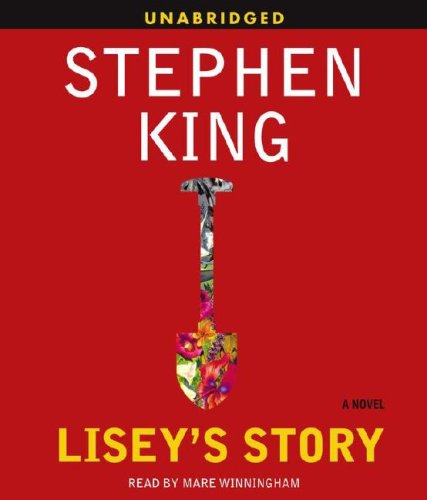
#tbt review: Lisey’s Story by Stephen King

This review originally appeared in the Times Union on March 1, 2007.

liseysstory

“Lisey’s Story” by Stephen King. Read by Mare Winningham. Unabridged, 19 hours, 16 CDs. Simon & Schuster. $49.95.

In ancient Greek drama, deus ex machina was used when the plot got so out of control that only divine intervention could resolve it. “Lisey’s Story” is the opposite.

Lisey is the widow of a famous author still dealing with grief two years after his death. Her loneliness is convincing, as is the magical place — Boo’ya Moon — where her husband found inspiration and confronted horrors.

What bedevils the plot, though, is an insane stalker who terrorizes Lisey for her husband’s papers. This one-dimensional, inexplicable character clearly arrives for some anti-divine intervention to create chaos. King, however, eventually keeps the plot tidy and unsurprising.

Winningham does a winning job of conveying Lisey’s melancholy as well as other characters’ madness.

sfm_banner_01b

#tbt review: World War Z by Max Brooks

2013-03-12-worldwarz_audiobookThis review originally appeared in the Times Union on Jan. 2, 2007, long before the Brad Pitt movie came out.

“World War Z,” by Max Brooks. Read by a full cast. Abridged, 6 hours. Random House Audio. $29.95.

The stellar cast includes Alan Alda, Carl Reiner, Mark Hamill, Henry Rollins, John Turturro, Rob Reiner and Brooks as the one compiling interviews with survivors of a worldwide war between zombies and humans.

While the variety of locales — China, Israel, South Africa, Canada, the United States, Cuba, Chile, Finland, Greenland, Barbados, Japan — puts to shame any James Bond story, the book lacks suspense.

Instead, it has realism to emphasize how the zombie wars upend how people live and what they hold sacred.

The best example occurs in South Africa, where a dreaded apartheid-era figure comes up with a plan to save the country by sacrificing parts of the population. Though most of the politicians are aghast, they accept it once the unnamed but recognizable Nelson Mandela figure approves.

The performances emphasize this human quality of physical and psychological struggle.

sfm_banner_01b