Reading at Readercon

Screen Shot 2014-07-01 at 7.51.57 AM

I’ll be one of the readers reading a story from the anthology “Long Hidden” at Readercon next week’s Friday.

What’s Readercon? It’s a literary conference that focuses on “imaginative” literature. It is like a sci-fi / fantasy conference but without the costumes, games, movies and music. It’s all about writers and writing, and readers and reading.

Photo: The Bloomsday readers in Troy

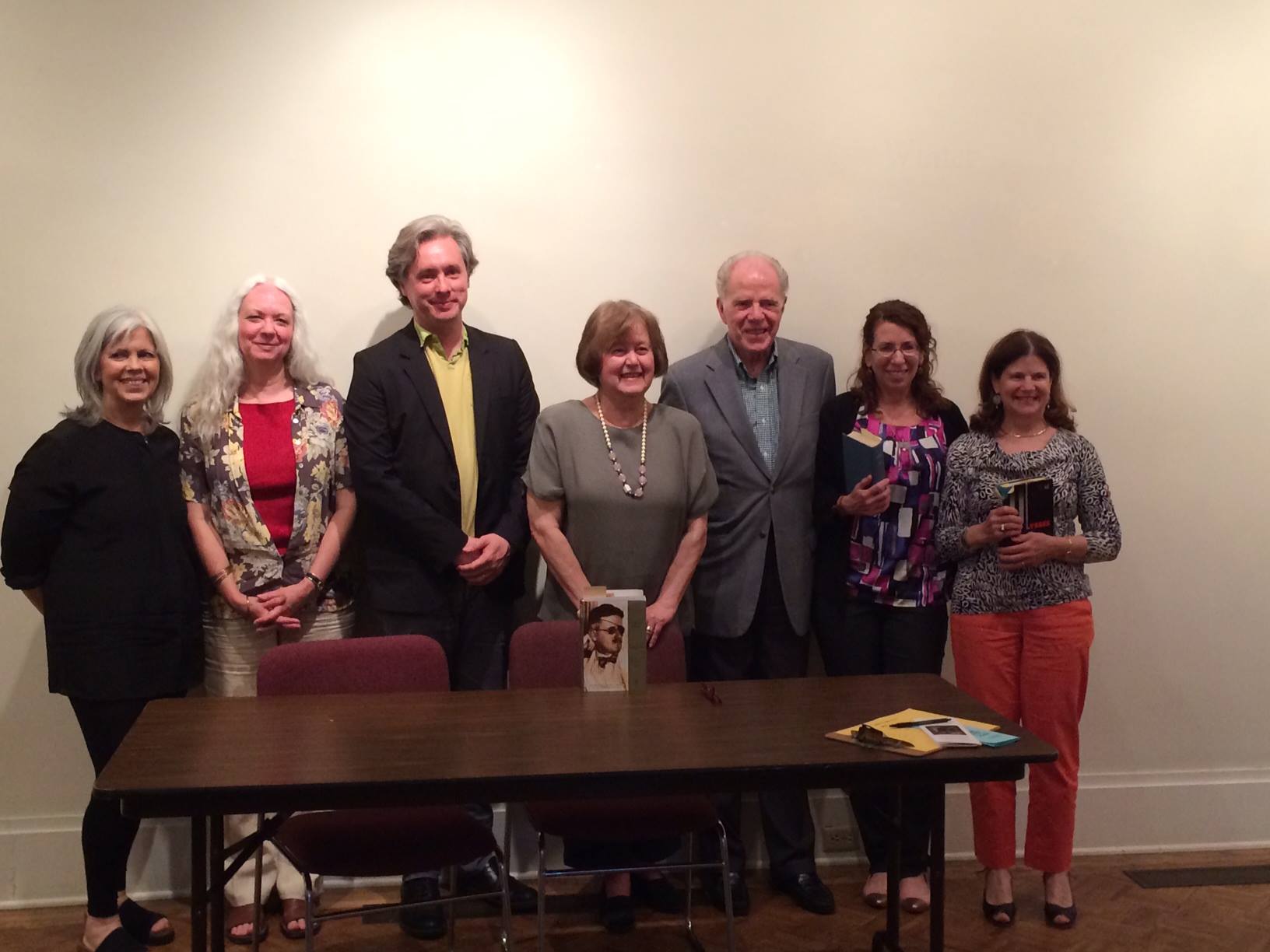
The Bloomsday readers at the Rensselaer County Historical Society

The Bloomsday readers at the Rensselaer County Historical Society in Troy, NY (photo by Brendan Kenndy)

What a great night earlier this week — June 16, aka Bloomsday — and what a great group of readers, with everyone adding new depths to my enjoyment of “Ulysses” through their takes on James Joyce’s novel. I hope everyone didn’t mind my singing (at least it was brief!): Lal the ral the ra The rocky road to Dublin …

In the photo are Patricia Lynch, left, Jeanne Finlay, me, Laudelina Martinez, William Kennedy, Tina Lincer, and Marea Gordett.

Who I’ll be reading with on Bloomsday

I’ll be taking part in a Bloomsday reading with a great group of people. Here is who will be reading, and which part of Ulysses they’ll be reading:

o Tina Lincer, Telemachus, Episode 1
o Michael Janairo, Nestor, Ep. 2
o Marea Gordett, Calypso, Ep. 3
o Michael Halloran, The Wandering Rocks, Ep. 10
o William Kennedy, The Cyclops, Ep12
o Patricia Lynch, Nausicaa, Ep. 13
o Jeanne Finlay, Ithaca, Ep. 17
o Laudelina Martinez, Penelope, Ep. 18

The event takes place from 6 to 8 p.m. Monday, June 16, at the Rensselaer County Historical Society, 57 Second St. in Troy, NY.

Read more about it here.


Review: ‘The Year of the Flood’ of The MaddAddam Trilogy by Margaret Atwood

Everything and nothing changes in “The Year of the Flood,” the second book of Margaret Atwood’s “MaddAddam Trilogy.”

I have to admit, when I first read “Oryx and Crake,” I didn’t know it was going to be part of a trilogy. When I first read “The Year of the Flood,” I thought of it as a “sequel,” not knowing it was the second book in the trilogy.

Upon first reading “The Year of the Flood,” I was filled with a desire – often thwarted — to learn what happens next: Where was Atwood going with this post-apocalyptic world? I wanted to know what happened after the end of “Oryx and Crake,” when Snowman (aka Jimmy) sees other living humans for the first time since most of humanity got wiped out by a human-made biological pandemic. That pandemic, caused by the title characters of the first novel, is now referred to as a “flood” in the second book’s title. I wanted to know where Atwood’s world would go after the end of the world.

“The Year of the Flood” is told (for the most part) from the points of view of two women: Toby and Ren. And, like “Oryx and Crake,” much of their stories are told in flashback, covering the years before the “flood,” which thwarted my plot-based desires. However, what stories they had to tell! Toby and Ren’s lives are deep in the pleeblands (as opposed to the compounds), and that space allows for some of the richest flowering of Atwood’s imagined world.

The cult-like group of off-the-grid people who call themselves “God’s Gardeners” is a brilliant creation. The try to live pure vegetarian lives, growing food on a rooftop garden and staying away from the Internet. They have days named for various saints, some named for recognizable figures such as Dian Fossey, Rachel Carson, Karen Silkwood and Sojourner Truth. (A blog lists these saints names here: http://theyearoftheflood.weebly.com/4/post/2010/11/saints.html.)

And they have songs – they are fully recorded with vocals and instruments in the audiobook version – to reflect a belief system in which they predict “a waterless flood.” And that prediction turns out to be true, via the pandemic that wipes out most of humanity, except for many of the members of God’s Gardeners and even some truly evil men known as “Painballers.” That is convicts who have turned into something like soulless gladiators and who survived not only the life-or-death arenas but also the “waterless flood.”

They roam the post-apocalyptic earth ready to wreak havoc on not just other people, but also any docile liobams (a genetic cross between a lion and a lamb – how’s that for a brilliant post-modern biblical allusion) or the more violent (and smarter) pigoons.

In fact, one of the painballers used to work as a manager at a Secret Burger (the secret was that you never knew the source of the meat; cow, or something else?), where he was known to “date” (aka rape) the women who worked there until he got tired of them and they mysteriously disappeared.

Toby worked at that Secret Burger. And soon after Toby caught the manager’s eye, and before she is raped and killed, the God’s Gardeners swoop in and rescue her, led by a man called Adam One, who speaks like a priest.

Toby is my favorite character in the novel. She joins the Gardeners, and even though she never truly believes the quasi-religion and always feels like an outsider, she absorbs many of their lessons and learns how to take care of herself, how to tend to bees (and talk to them), and how to survive as a God’s Gardener. She is a fully realized character whose predicament – before and after the Flood she is hounded by a murderous rapist – only deepens the precariousness of her situation.

Even more heartbreaking for her is that she has real feelings for one of the more mysterious figures of God’s Gardeners, a man named Zeb, who is often gone for long stretches of time on mysterious errands.

Ren, the other point of view character in the novel, is also a fully realized character, but she is much younger (she is actually the daughter of Zeb’s girlfriend) and, like a young person, often comes across as naïve and petulant. Nonetheless, her character allows for a child’s point of view of the God’s Gardeners, such as the mean nicknames they have for their teachers (they called Toby “Dry Witch” because she seemed strict and asexual), and for a young woman’s view of life in the pleeblands, because Ren becomes an exotic trapeze dancer at a sex club called Scales and Tails.

Through Ren and Toby, we get to see the rich diversity of the harsh dystopian pre-flood world that is Atwood’s creation. It is definitely a darkly humorous place to read about, though you would never want to go there.

Well, I take that back. When I reread the first book of the trilogy, “Oryx and Crake,” I found it rather claustrophobic (with its focus on Snowman’s point of view and his limited worldview that was shaped by growing up and working in various Compounds). What I was truly missing, though, were Toby and even Ren and their hard lives in the pleeblands.

Their characters give “The Year of the Flood” an emotional connection, and thus make the reading of it very rewarding – even if its connection to “Oryx and Crake” (the answer to who those other people are that Snowman sees) comes deep into the novel. It’s worth the wait.
James Joyce, Bloomsday and me

Jimmy Joyce

I’ve been asked to be one of the readers of a Bloomsday event, and I can’t wait.

I’ll be reading about six pages from the Nestor section — one of the sections from Stephen Dedalus’s point of view — of Ulysses starting at 6 pm Monday, June 16th, at the Rensselaer County Historical Society, 57 Second St. in Troy, NY.

In addition to my Irish heritage (County Cork, baby!) and having read Ulysses as an undergrad and as a graduate student, I also have a circuitous connection to the Joycean universe through the first short story I had ever gotten published, when I was in grad school.

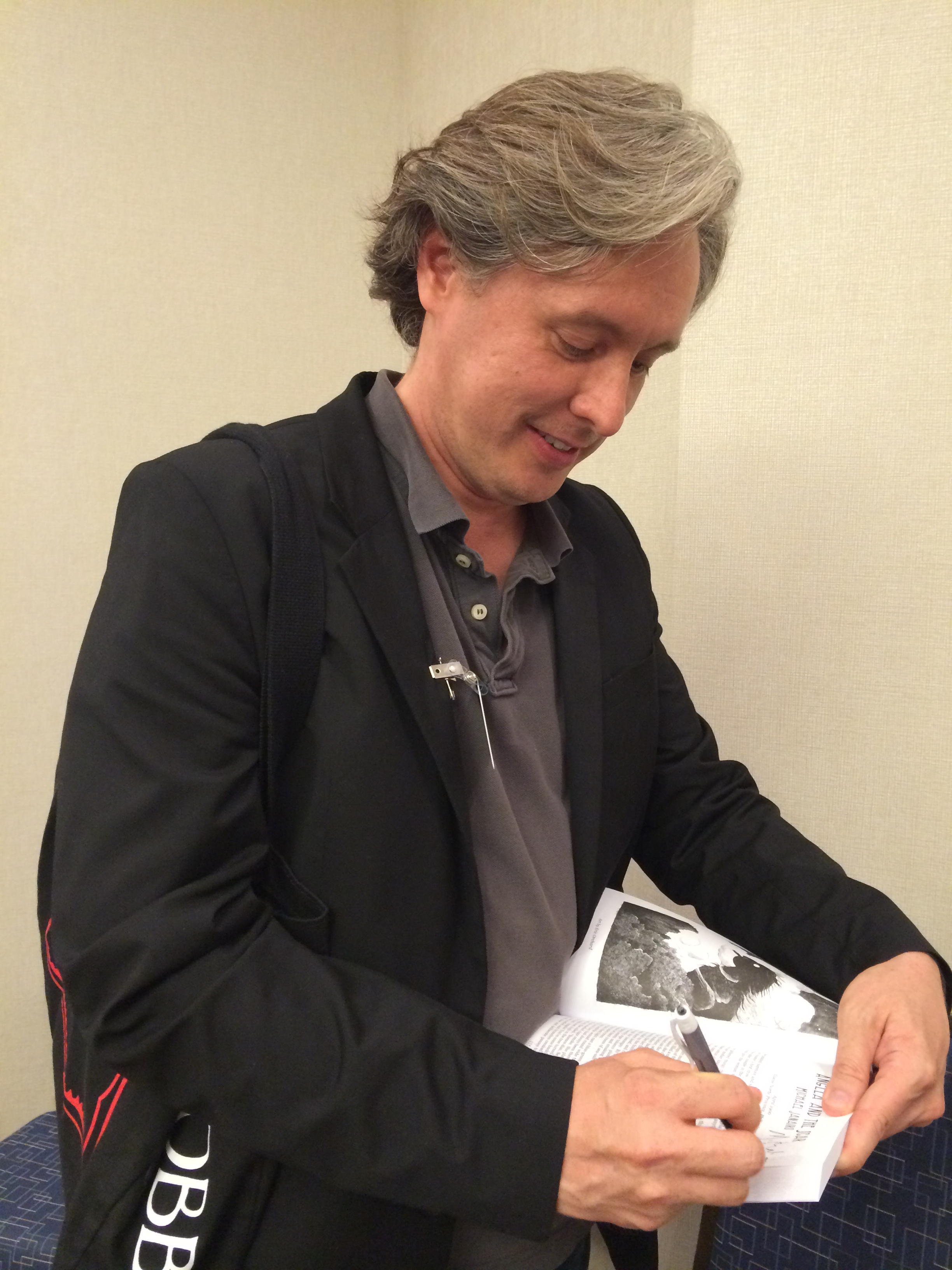
The story, “Out of Japan,” was published in a now-defunct literary journal that was called The Abiko Quarterly. It came out of Abiko, Japan, a town in the Chiba prefecture, about an hour or so outside of Tokyo. And though the journal included new, literary fiction, it also called itself “A Publication of the James Joyce Parlor Japan,” as its main purpose was to be a scholarly journal focusing on James Joyce’s Finnegan’s Wake.

Now that I’ll be reading at a Bloomsday event, I can’t help but think of it as me and Jimmy, together again.

‘No, where are you really from?’

This video is worth a couple minutes of your time, as it playfully upends the kinds of microagressions Asian-Americans often face.

First impression: MaddAddam in development for HBO

Today’s news that HBO will be adapting Margaret Atwood’s MaddAddam trilogy comes with mixed feelings.

That it is HBO? Awesome, because that will mean the three novels (Oryx and Crake, The Year of the Flood and MaddAddam) will get space and time to unfold and be more fully realized than they probably could be as one, or even three, feature films, and definitely more fully than if they were to be developed for network TV.

Of course, there is the worry that my imagined Toby, Amanda and Zeb (my favorite characters in the trilogy, and characters who don’t appear until the second novel), aren’t the ones who will appear on the screen.

And then there’s Darren Aronofsky. I think he’s strange, brilliant and, too often, brutal. Pi, Requiem for a Dream, The Fountain were all hard to get through. The Wrestler was more toned down, and frequently humorous, which made it more effective. But Black Swan? Hugely overrated, melodramatic (without an emotional core) and shallow.

I haven’t seen his Noah yet, but it does make an interested parallel considering the second book in Atwood’s trilogy is “The Year of the Flood.”

So will his vision of MaddAddam be open to the rich humor of Atwood’s dystopian world — from the explicit satire of fast food “secret burgers” (they’re secret because you don’t know what the meat comes from) to the heartbreaking irony of how so many members of the apocalyptic cult God’s Gardeners actually survive the apocalyptic “waterless flood”?

I guess we’ll just have to wait and see.

In the meantime, please read my review of “Oryx and Crake” and stay tuned for my reviews of “Year of the Flood” and “MaddAddam.”


Review: Oryx and Crake of The MaddAddam Trilogy by Margaret Atwood

oryx_and_crake_1.largeI recently started listening to the audiobook version of MaddAddam but then stopped after the first disc. I had read Oryx and Crake when it first came out 11 or so years ago (as well as The Year of the Flood when it first came out), and I realized I needed a refresher in Margaret Atwood’s trilogy — who was this Snowman again? What was his relationship to other characters?

So I went back to Oryx and Crake, as read by Campbell Scott, which is a rather simple story. A man nicknamed Snowman appears to be the last human in a post-apocalyptic world. He has been left to care for genetically modified humanoid creatures amid a ravaged landscape – no electricity — that has been taken over by other genetically modified creatures that have gone wild: giant and smart pigoons (pigs with human cells), and the friendly and sweet looking dog-like creatures that are actually fierce and killer wolves deep down inside, thus the name wolvogs.

The plot goes something like this: Snowman tells stories to the humanlike creatures, thus giving them a creation story about Oryx and Crake (these are both names of extinct animals taken as nicknames by a brilliant scientist and one-time friend of Snowman’s — that’s Crake — and a woman who is a love interest for both men, Oryx). One day, Snowman (his real name is Jimmy) goes in search of food and then returns to find that other humans may be around. The end. Continue reading →

GoT Episode 4.8 “The Mountain And The Viper” pre-reaction

got4_8

Oh! Sh*t! No effing way!

(Next week: Ep. 4.9 pre-reaction)