Here’s a view of a beach in Maine from August 2014 as a reminder that winter’s do end.
You’re welcome.
Here’s a view of a beach in Maine from August 2014 as a reminder that winter’s do end.
You’re welcome.
 I quit a book the other day.
I’ve seen Harlan Coben books everywhere, but I had never looked at one. At the library, I picked up the audiobook version of “Six Years,” read by Scott Brick (who I think has done a great job with Justin Cronin’s “The Passage” and “The Twelve”).
I only made it through the first disc.
The novel’s title “Six Years” refers to the length of time from when the narrator, Jake, attends his ex-lover’s wedding to when he reads of her husband’s death (and attends the funeral). He reads the obituary, and then he attends the funeral and is surprised to find out that the dead husband was a doctor, had a teenage son, and his wife was some other woman instead of Jake’s ex-lover.
Here’s the problem: those facts (that he was a doctor, his wife’s name being different from the name of his ex-lover) are all things that should’ve been part of the obituary. Sure, I’ve worked in journalism for many years, and maybe that gives me a specialist’s knowledge about how a professional would write an obituary. Though I’m pretty sure most people would expect that kind of information. So it made me not trust this book. After all, Jake’s surprise – his need to get to the truth of the matter – seems to be the main engine of the book. But because it required him to go to this funeral, even though the obituary should’ve given him the same surprising information, the contrivance of the plot revealed itself too me far too readily.
Have you quit a book because the author tried, and failed, to use something in your area of expertise?
 One of the dominant characteristics of Yasushi Inoue’s rhetorical style in “Life of a Counterfeiter and Other Stories” (Pushkin Press; 144 pages; $18) in is his use of “hedging” phrases, such as “for some reason,” “I’ll never know” and “I may simply be reading too much into things.”
These phrases could be interpreted as creating a narrator who is so fraught with uncertainty that he can only suggest things with modesty rather than declare them with authority.
These stories — written after World War 2 in the early 1950s, but often looking back through the haze of memory at events that took place long before and during the war — can then be seen as a reaction against the kind of narrative certainty about Japan’s prominence in the world that led the nation into its disastrous overreach in China, Korea, and South East Asia. In that sense, his narrative hedging can be seen as an attempt to be precise about the meaning of things that can’t be known.
(more…)
 In anticipation of Elisa Albert’s new novel “After Birth” (slated to be published next month), here’s a review of her first collection of short stories. The review was published April 1, 2007.
In the title story of Elisa Albert’s comic and irreverent debut collection, “How This Night is Different” (Free Press; 208 pages; $18), a young woman brings her boyfriend home to meet the family during Passover and to introduce him to his first seder.
She describes him to her mother as “Kind of like a Jew for Jesus, but minus the Jew part.” And to him, she summarizes the meal as “You get constipated, you get sick on bad wine, you talk biblical mythology until everyone nods off in their bone-dry matzo cake.”
The holiday doesn’t hold much meaning for her. Her parents treat her like a little kid. Worse yet, and this is a brilliant touch, during the holiday in which leavened bread is forbidden so Jews can remember the hardships of the Exodus, she is suffering from a yeast infection, “with yeast multiplying exponentially in her crotch, maybe enough by now to bake a loaf or two of forbidden bread.”
(more…)

The Fear Index by Robert Harris
My rating: 4 of 5 stars
A fun, though at times, implausible read about how a computer genius works for a hedge fund and creates a powerful algorithm that learns not only how to work the stock market, but how to leverage information it can glean from all sorts of digital sources, such as the news.
I felt like I learned a lot about algorithmic trading, in which computers buy and sell stocks in milliseconds.
The main character, though, was hard to like. He was a cranky genius, more concerned about his artificial intelligence than anything else. So when it seems like his identity is stolen and things happen to him that he seems to be the cause of (through orders made from his email and payments made from his accounts), and it is clear that his clever AI is behind it though no one believes him, it seems Harris is trying to make him sympathetic. But his cranky reactions (and over actions) and inability to communicate make him annoying.
Luckily, the super clever AI is still there, churning away dastardly plot points to keep the novel moving. It’s pure escapist fun, and enough of a framework with which to explore all the good research that went into making the speculative fiction seem somewhat plausible.
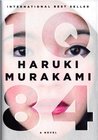
1Q84 by Haruki Murakami
My rating: 4 of 5 stars
The Little People are Watching You
“If something really existed, you had to accept it as a reality, whether or not it made sense or was logical. That was his basic way of thinking. Principles and logic didn’t give birth to reality. Reality came first, and the principles and logic followed.”
Murakami’s imaginative worlds — with preternaturally gifted girls, bewildered young men, misshapen men, magical creatures, violence, and passageways between various forms of reality — all set in a recognizable every-day mundaneness of contemporary Japan are the main element that attracts me to his work.
“1Q84” doesn’t disappoint. And the quote above does a great job of summing up the novelist’s approach to this novel and to writing in general — you have to go with wherever “reality” takes you. In “1Q84” that reality is a strange Japan in 1984, in which some characters can see two moons, and in which strange beings, called Little People, have such extraordinary powers that they help to power a religious cult, which rests at the heart of this really long novel.
(more…)
In my former career as an arts editor at a daily newspaper, the year-end best-of lists were a standard. And now that I’ve change jobs this year, and I’m reading so many other journalists’ best-of lists, I am impressed by how many cultural things they (and my past me) have been able to experience in a year. Now I also know how people who aren’t paid to experience so many things can find such lists to be impossible recommendations, a bunch of things that most people will never have the time to get around to. Though arts journalists try to present as complete as possible summaries, I think readers of such lists may only be looking for one thing that might inspire them to go out and experience that cultural thing for themselves.
So here’s a lean look back at 2014.
(more…)
Some random metrics about my life in 2014.
Blogging
Number of blog posts on michaeljanairo.com: 73
Most read blog post: Readercon wrap-up: ‘You don’t look Filipino’
Work
Number of jobs left: 1
Number of new jobs started: 1
Writing career
Number of short stories published: 3
Number of writing conferences attended: 1 (Readercon)
Music
Top Spotify artist: Bruce Springsteen
Travel
Number of countries outside the US visited: 1 (Guatemala)
Number of cities outside the US visited: 7 (Monterrico, Antigua Guatemala, Panajachel, Santa Catarina, San Antonio, Santiago Atitlan, Guatemala)
Number of US cities visited outside the Capital Region: 14 (NYC, Pittsburgh, Providence, New Haven, Boston, Cambridge, Williamstown, North Adams, Freeport, Prospect Harbor, Lincoln, Omaha)
Social media
Number of tweets: 512
Most impressions on one tweet: 40,461
The tweet: https://twitter.com/mjanairo/status/420222698036289536
Most looped Vine: Dance @yaleartgallery
Number of new FB friends: 89
Number of lost FB “friends”: About 200
FB year in review: Here
Most liked Instagram post: Found at work today.
Instagram year in review: Here
 White Teeth by Zadie Smith
My rating: 5 of 5 stars
Originally written and published in the Times Union in August 2001.
“Clean white teeth are not always wise,” says an elderly British veteran in Zadie Smith’s stunning debut novel, “White Teeth,” setting up one of the major ideas of her book, which has been recently released in paperback (Vintage; 464 pages; $14). “When I was in the Congo, the only way I could identify the nigger was by the whiteness of his teeth … See a flash of white and bang!”
This brief passage contains everything Smith is writing against: stereotypical depictions of people with dark skins, most often natives of lands colonized by whites who are reduced to nothing more than targets of violence.
What makes this novel great, though, is that Smith uses a sharp wit, sensitive insights, humorous and sometimes uncomfortable situations and a rich cast of quirky, believable characters who struggle with their hopes and disappointments in North London. As opposed to the plot, which turns overly melodramatic at the end, Smith’s characters are where her true talents shine. (more…)
