Yes, the story is exactly 50 words long. That’s it.
You can read it here: http://fiftywordstories.com/2015/12/16/michael-janairo-whats-on-the-menu/
Take a look, click on the “Like” button, and come back and let me know what you think.

Spectre (2015)
Throwback to Spectre
A wonderful reminder
Bond can be boring
Jupiter Ascending (2015)
Queen’s kid wants the Earth
Mila Kunis has other plans
— Toilet-scrubber’s might
Check out these previous Haiku movie reviews.
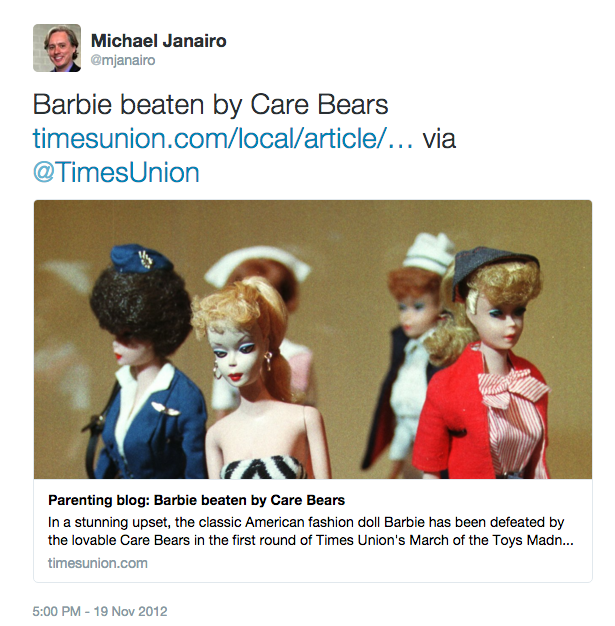
When I worked at a newspaper, I didn’t often get to write silly headlines. This is one I got to write as part of a bracket contest in which readers voted for their favorite toys.
Happy Thanksgiving!

American Sniper (2014)
Why show so much death
Dealt by this U.S. soldier,
But not his killing?
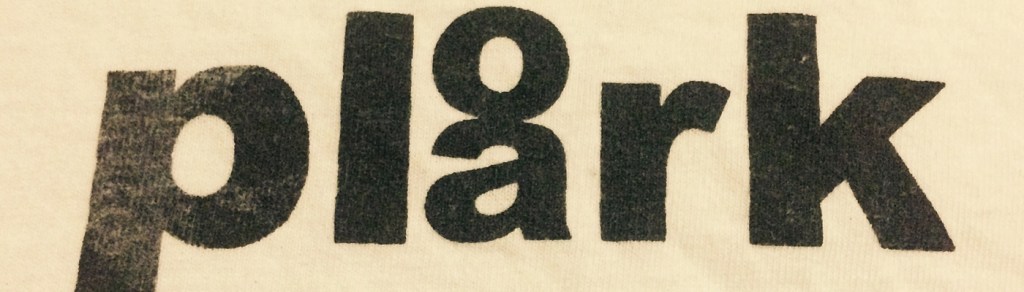
My wife has created a new word: plårk.
It could rhyme with “park” or “pork” — either way seems to be fine.
She has the word printed on T-shirts that she gives to her first-year drawing students. The idea she is trying to impress upon them is that making art is a combination of “play” and “work.” Thus, “plårk.”
I imagine the word being used as follows:
I suppose a sample declension would look something like this:
She says that in every class period at least one or two (sometimes more) students are wearing their “plårk” T-shirts.
With about 50 students a semester, maybe in a few years the word will be in common usage by scores of young artists, plårking their way through the world.
What do you think: Will plårk catch on?

Two Days One Night (2014)
Co-workers are asked:
Vote for or against her job.
Is this a real thing?
John Wick (2014)
This guy is angry
He’ll mess you up very bad
Dressed in a sharp suit
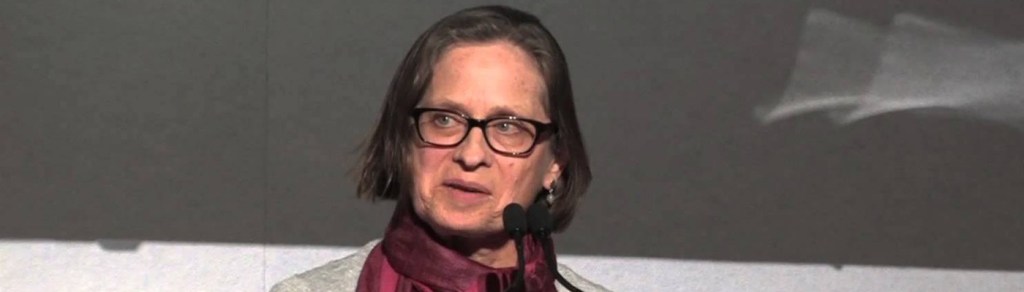
For five weeks, on Tuesday nights in October and the beginning of November, I’ve spent a few hours in a room at the University of Albany with a few fellow writers and the multiple-award winning writer Lydia Davis.
My classmates — all published writers — were talented and well-spoken, even if a few weren’t as gregarious as others.
Speaking of gregarious, Lydia encouraged all of us to track metaphors in are daily lives — to include them in the things we overhear and read as part of our writer’s diaries — and that common abstract words like “gregarious” were derived from metaphors, because the word stems from a Greek word for “herd.”
As for what to include in our writer’s diaries, Lydia suggested that she writes “whatever goes into my mind that interests me.”
Most of the class was a writers workshop, reading fellow writers’ stories-in-progress and talking about them, which is always interesting to me. And we got to know each other by sharing what we’ve read in the past year — and that “reading diary” moment generated a long reading list for me.
In terms of talking about the craft of writing, Lydia shared what she called five different kinds of narration, which she wasn’t sure if she had ever seen before but thinks she may have made up as a way of taking a writerly approach to reading to discover what a writer was doing in certain passages (and how a reader may want to make use of those moments in his or her own writing).
These five categories aren’t anything new, but they offered a practical way of reading:
1. Action: characters do things
2. Comment: a reflection on something from a point of view
3. Description: things shown through sensory detail
4. Dialogue: characters talk
5. Exposition/back story: things get explained, or histories get filled in
It was all good stuff, and I enjoyed my fellow students’ writings immensely.
So even though this all came right in the crush of the new website I have been working on, I’m glad I was able to take part. And it was free, courtesy of the New York State Writers Institute.